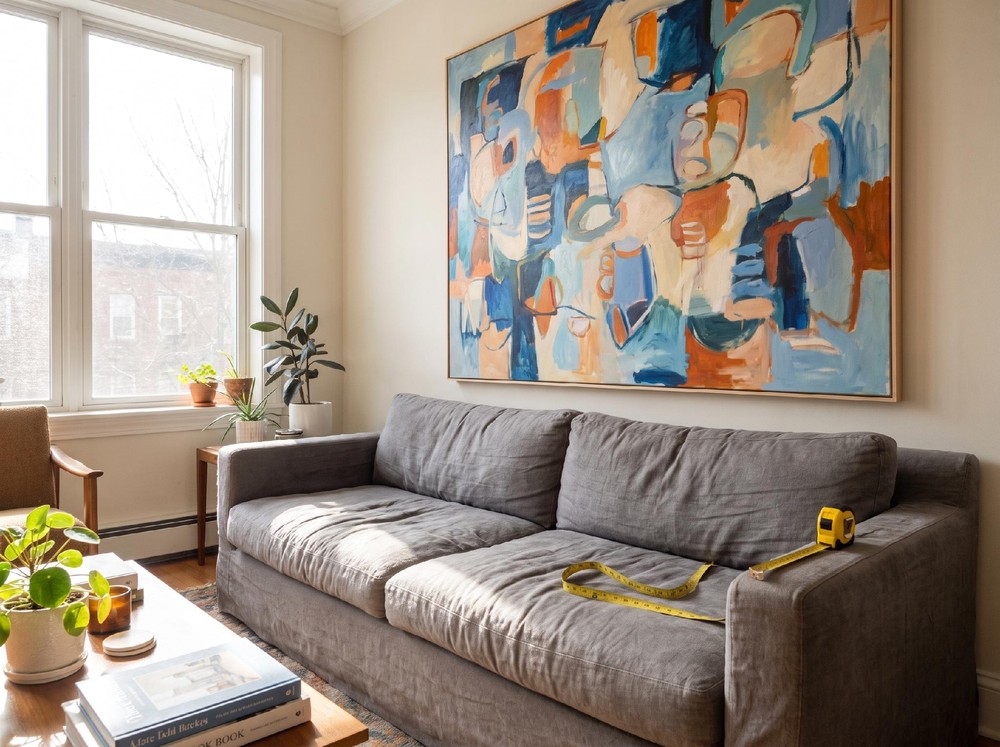
A single oversized abstract painting hangs centered above a sofa, with a tape measure left on the arm after the final check.
Most living rooms have one wall that looks unfinished. It might be the long stretch behind the sofa or the blank space beside the entry. People often cover it with a few small frames, step back, and feel that something’s off. The problem is rarely taste. It’s scale.
One big piece usually beats several little ones, but only if it’s the right size and hangs in the right spot. Here’s how to measure the wall, pick the piece, and keep it looking good for years.
Pick the Piece After You Measure the Wall
Before choosing a painting, measure the wall and the furniture beneath it. Say you’ve got a ten-foot wall with a seven-foot sofa along it. A good starting point is artwork that spans roughly two-thirds to three-quarters of the sofa’s width. That gives the piece enough presence without making the furniture look undersized.
When choosing the best extra large wall art for living room walls, pay attention to both width and height. A horizontal canvas usually works well above a long sofa, while a taller piece can help balance a narrow wall or an empty corner. Check the available space around windows, shelves and light fixtures so the artwork doesn’t feel crowded.
Before ordering, use painter’s tape to outline the proposed dimensions directly on the wall. Step back and look at the rectangle from different parts of the room. If it feels too small or dominates everything around it, adjust the measurements until the proportions look natural.
Leave the tape up for a few days. Check it from the doorway, from the sofa and from the kitchen.
Hang It at the Right Height
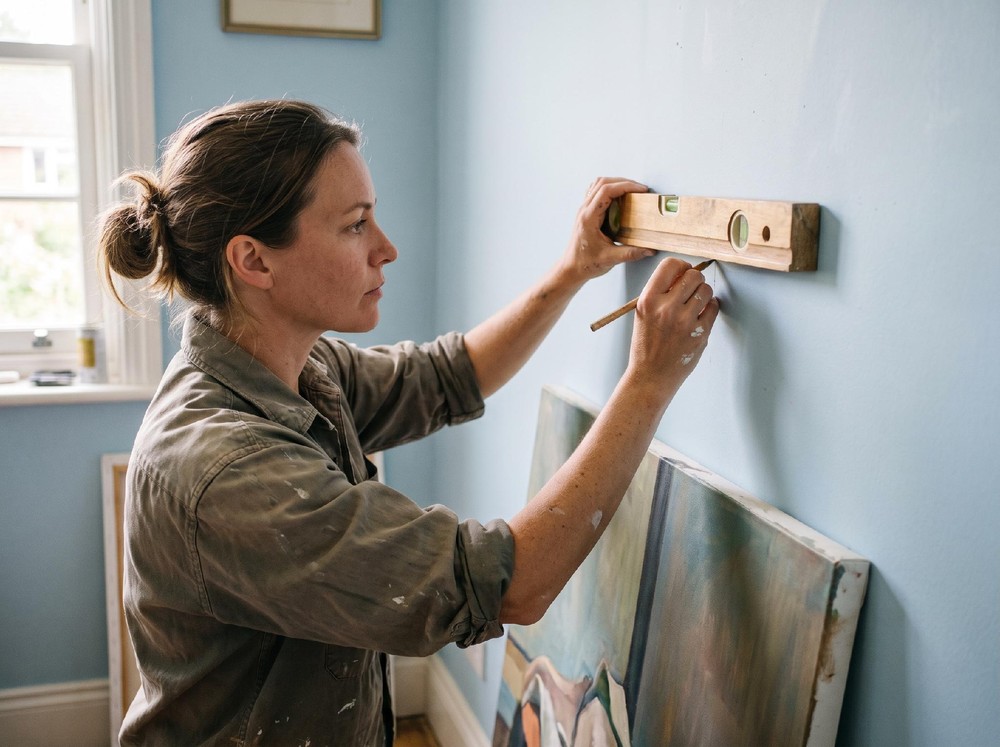
A level and pencil mark the hanging point at eye height before the canvas goes up.
The Trout Gallery at Dickinson College says that “eye height” is about 60 inches from the floor, and that the number refers to the middle of the image, not the top edge. The gallery’s installers add that it’s fine to hang a frame a handful of inches above the back of a couch, and that 60 inches is a general rule, not an absolute. Fireplaces, tall chairs and stairwells all change the answer.
Work from the center point. Measure half the canvas height, add it to 60 inches to find the top edge, then locate the hook relative to the wire or hanger on the back. If you hang above a sofa, keep the bottom edge close enough that the two read as one group rather than two separate things.
Plan the Delivery Before You Order
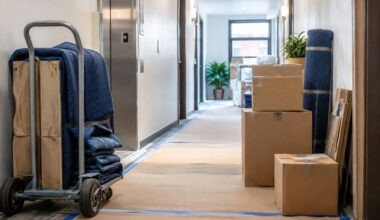
Oversized pieces have to travel. A large canvas can be awkward to carry up stairs and easy to ding in a narrow hallway, so measure doorways and the path to the wall. If you’re getting a heavy, wide item moved by freight, it helps to read the guide on LTL freight preparation first, since the same packing and labeling habits apply to big framed pieces.
Check how the artwork will arrive before placing your order. Some canvases come stretched over a wooden frame and ready to hang, while others arrive rolled in a tube and need professional stretching. Ask whether mounting hardware is included and confirm the packaged dimensions and weight. Leave enough time for delivery, unpacking and any framing work so you can install the piece without rushing or risking damage.
Watch the Light on the Wall
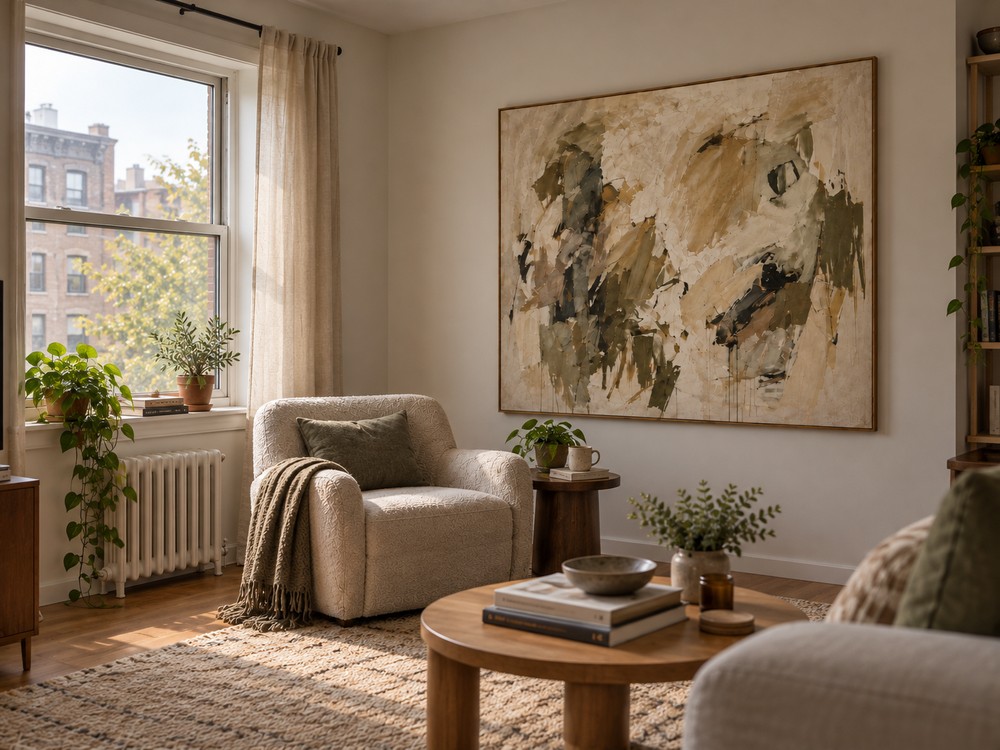
Large abstract painting in soft indirect light beside a living room window.
Sunlight is the quiet enemy of paint. The Canadian Conservation Institute reports that daylight averaging 30,000 lux can fade highly sensitive paint noticeably in as little as a day to two weeks, while medium-sensitivity paints take between two weeks and a year. It also notes that unfiltered window UV can cause medium-sensitivity paint to chalk and varnish to crack within three years.
You don’t need to live in the dark. Choose a wall that doesn’t take direct sun, add sheer curtains, or put UV-filtering film on the window. Rotate lamp positions so no spotlight sits close to the surface for hours.
Keep the Rest of the Room Calm
Walls rarely work alone. Once the big piece is up, the rest of the room has to support it, and that mostly means restraint. An oversized painting already draws the eye, so surrounding it with too many decorative objects can make the space feel crowded.
Keep the furniture lines simple, pull one or two colors from the canvas into pillows or a throw, and leave some breathing room around the frame. You don’t need to replace everything to make the room feel more put together. Small changes, such as rearranging furniture, switching out textiles or updating a few accessories, can make a noticeable difference. For more inspiration, these budget-friendly makeover ideas can help you refresh the space without overspending.
Finish with a walk-through. Stand in the doorway, then sit on the sofa, then check the view from the other side of the room. If the artwork feels balanced from all three spots, you’ve probably found the right placement. If something still looks off, try adjusting the height or shifting the piece slightly before filling any holes. A well-placed painting should make the room feel complete, not compete with everything around it.