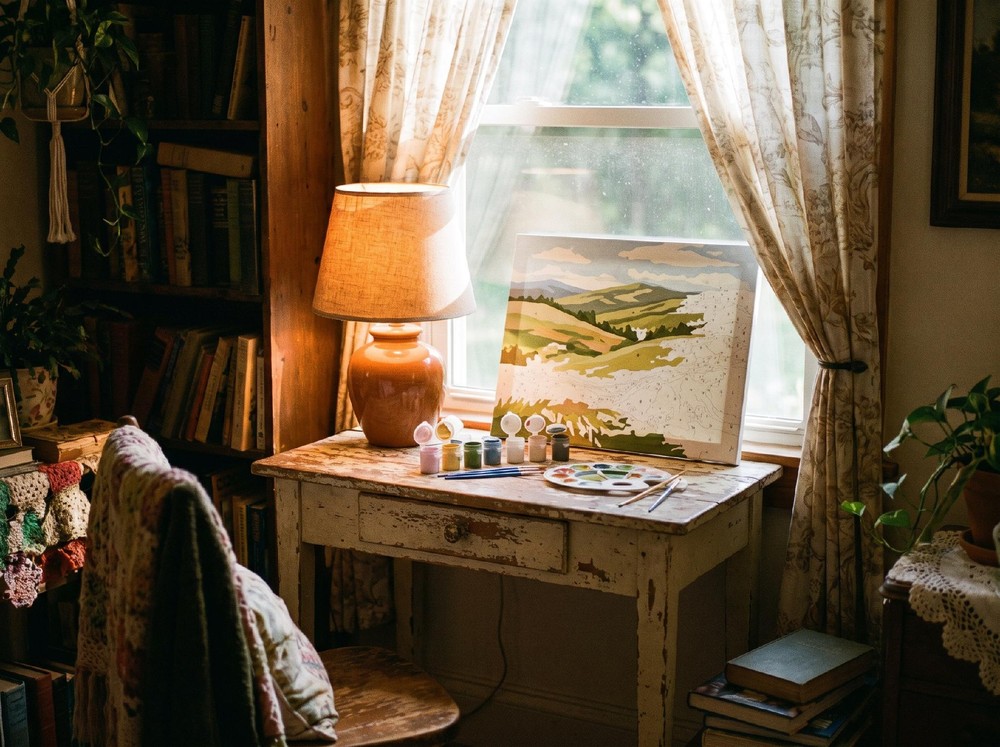
Cozy screen-free creative corner with a paint-by-numbers canvas, art supplies, and warm table lamp.
Most evenings follow the same script. Dinner ends, the phone comes out, and an hour disappears into a feed you won’t remember tomorrow. It isn’t a moral failing; it’s just the easiest default in the room.
The fix doesn’t need a hobby room or any artistic talent. A small table, decent light and one low-pressure project can change how the evening feels. Here’s how to set up a creative corner, pick an activity you’ll actually finish, and keep the habit going without turning it into another chore.
Set Up the Space: Light, Table and Supplies
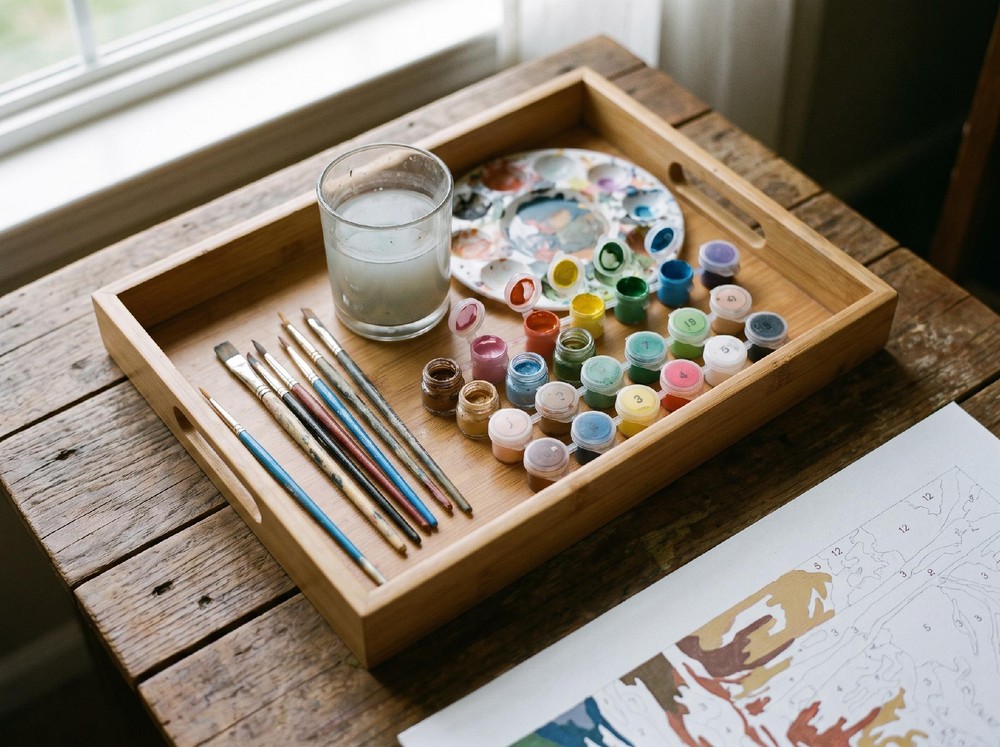
Wooden tray organizing paint pots, brushes, and water beside a partially completed paint-by-numbers canvas.
The biggest enemy of a new habit is setup time. If you need ten minutes to find brushes and clear the table, you’ll skip the session. So build the corner once and leave it ready.
Start with an activity that doesn’t require much preparation or experience. Paint by numbers is a good option for beginners because the canvas comes with numbered sections that match specific paint colors. There’s no need to sketch or plan what to paint. You can see all available designs and choose something you’ll enjoy working on, from quiet landscapes to colorful florals.
Once you’ve picked your project, set up a space that makes it easy to return to:
- Choose a table you can leave out. A small desk or a corner of the dining table works, as long as the project can stay put between sessions.
- Light the work from the side or above with a warm, adjustable lamp. Shadows from your own hand make numbered shapes hard to read.
- Keep everything in one tray: brushes, paint pots, a water cup, paper towels. Pick up the tray and you’re ready.
- Sit comfortably. A supportive chair matters more than most people expect, especially for sessions of 30 minutes or more.
Small touches make a difference, but convenience matters most. When your creative corner is comfortable, organized, and ready to use, sitting down to paint becomes an easy part of your evening rather than another task to prepare for.
Pick a Low-Pressure Activity
Not every hobby suits every person. Sketching gives you freedom, but freedom is exactly what stalls beginners. Jigsaw puzzles are calming but take over the table. Knitting travels well but has a learning curve.
Paint by numbers sits in a useful middle ground. The structure removes the blank-canvas fear, and the work breaks into small, finishable pieces. Start with the large, simple areas so you get early wins, then move to the fiddly details once your hand settles in. Sessions of 30 to 45 minutes tend to work well; they’re long enough to get absorbed and short enough to fit on a weeknight.
The tradeoff is that you’re following a plan rather than inventing one. If you crave open-ended expressions, you may outgrow kits. Plenty of people use them as a warm-up and move on to freehand work later, and that’s a perfectly good outcome.
What the Research Actually Says
Creative hobbies have a good reputation for mental health, but the evidence deserves a careful read. An Anglia Ruskin University analysis of 7,182 participants in the UK Taking Part survey found that arts and crafts activity influenced wellbeing about as much as sociodemographic factors do.
A 2026 update of a Jackson’s Art survey of 2,000 UK customers found that 21% of artists say art helps them relax, and 20% say it boosts their confidence. Those are the retailer’s own customers, so treat the numbers as a snapshot rather than proof.
That caveat applies more broadly. Most of this research is correlational: people who feel well may simply be more likely to pick up a brush. Mental Health America makes a similar point about hobbies, noting they support wellbeing but don’t replace professional care. If you’re dealing with persistent anxiety or low mood, a creative corner is a good addition to therapy, not a substitute for it.
Make It a Shared or Weekly Ritual
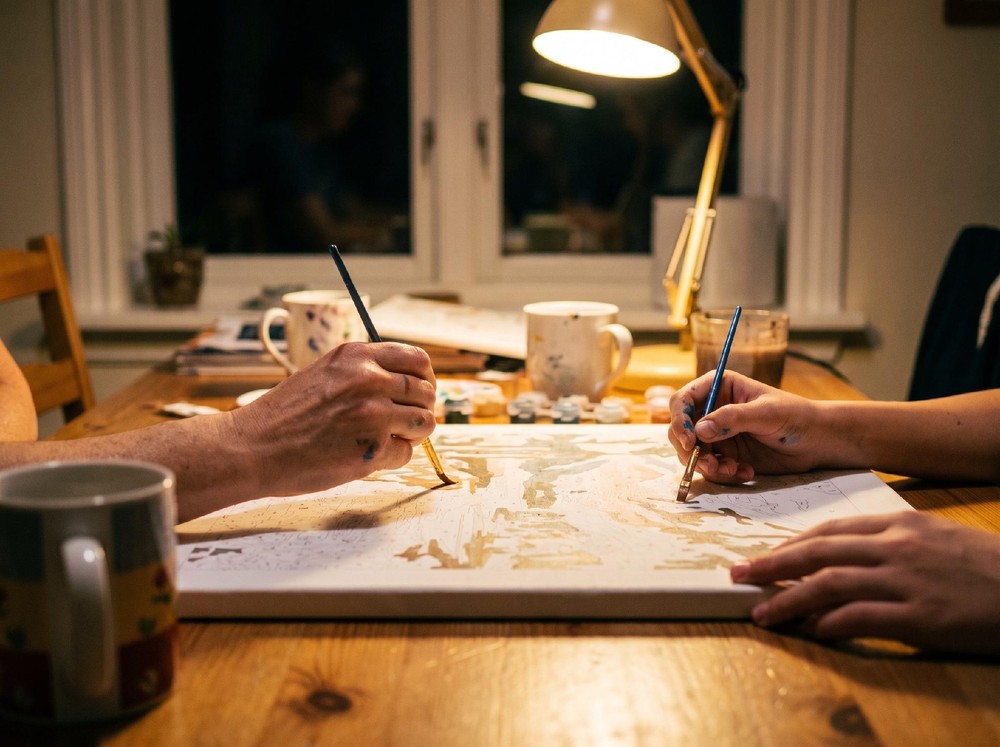
Two people enjoying a screen-free evening painting a shared paint-by-numbers canvas under warm lamplight.
A project that lives on the table invites company. Couples can work on separate canvases side by side, and grandparents and kids can trade colors across one table. Because the steps are simple, nobody needs to be an expert.
Families with teenagers should keep expectations modest. A 2025 systematic review of 28 adolescent studies, published in a ScienceDirect journal, found mostly positive links between arts engagement and wellbeing, but the experimental evidence was weaker. Invite teens rather than assign the activity, and let them pick the design.
Rituals give you something to look forward to and help mark the end of a busy day. Some people unwind with a massage appointment or dedicated personal care routines, but relaxation doesn’t always require leaving the house. A quiet painting session, a warm drink, and some soft music can serve the same purpose: creating a little time that’s just for you. Try setting aside Tuesday and Thursday evenings or a quiet Sunday afternoon. Over time, that familiar routine can make it easier to put your phone away and settle into something you enjoy.
Start Small
You don’t need a studio, a budget or a free weekend. One table, one evening and one canvas is enough to find out whether this suits you. If it does, the corner will earn its place in the house. If it doesn’t, you’ve lost a few quiet hours and gained a clearer idea of what does help you unwind.