California rewards organic berry growers who match varieties and production systems to their exact site. A coastal field with foggy mornings behaves nothing like an inland valley with 100-degree spikes, and Sierra foothills bring an entirely different set of chill and frost considerations. Before ordering plants or laying drip tape, define your microclimate, test your soil and water, and choose a training and harvest strategy that fits your labor and markets. This article outlines a practical, constraint-first approach to planning organic strawberry, blueberry, raspberry, and blackberry blocks that hold up through the season.
1. Pinpoint Your Microclimate Before You Choose a Berry Type
Heat units, night temperatures, and winter chill shape what thrives. Along the Central Coast, day neutral strawberries often shine with steady summer production, while southern highbush blueberries suit mild winters and early springs. In hotter valleys, short day strawberries can deliver a strong spring flush before peak heat, and primocane raspberries or erect blackberries may need afternoon shade or evaporative cooling near pack out to protect fruit. Higher-elevation sites with more chill support floricane caneberries that produce on second-year canes with earlier, concentrated harvests.
Two nearby fields can require different choices. A fog-kissed acre outside Santa Cruz may push day-neutral strawberries and southern highbush blueberries on raised beds for airflow. Forty miles inland, a Sacramento Valley block might lean on short-day strawberries to avoid the hottest weeks and select trailing blackberries with a trellis that opens the canopy. For perspective, many organic berry growers in California use microclimate notes from degree-day tools, local extension advisories, and on-farm temperature loggers to guide variety and planting-window decisions.
2. Test Soil and Water: pH, Salinity, and Organic Matter Drive Success
Soil pH sets the ceiling on blueberry performance. Blueberries want acidic conditions and high-organic-matter media; without them, chlorosis and weak growth follow. Pre-plant sulfur applications, acidified irrigation using organic-compliant inputs, and generous pine bark or peat alternatives in the root zone can help. Strawberries and caneberries prefer slightly acidic to neutral soils, but still suffer when salinity creeps up. Water tests that include alkalinity and electrical conductivity reveal whether you need periodic leaching irrigations or acidification to keep nutrients available.
Consider a well on the west side of the San Joaquin Valley with high alkalinity. Planting blueberries there without amending is a common mistake that leads to yellowed leaves and stunted bushes by midsummer. A better plan blends raised mounds rich in coarse organic matter, careful acidification of irrigation water, and ongoing pH checks during the season. For strawberries, incorporating compost before planting, combined with frequent, light drip cycles, can maintain uniform moisture without waterlogging, which limits root rot.
3. Design the Bed and Irrigation for Organic Weed and Water Control
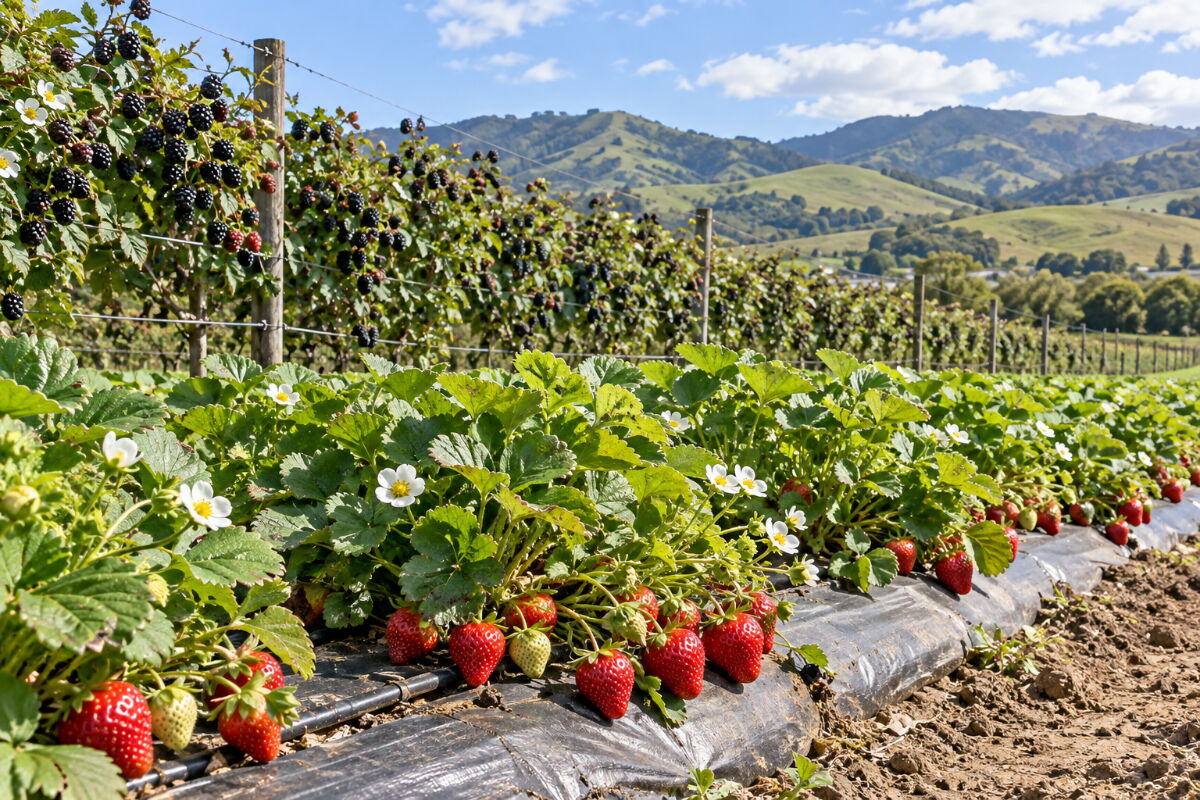
Raised beds warm faster, drain better, and lift fruit above splash zones that spread botrytis. Under mulch drip tape with consistent emitter spacing keeps crowns and canes dry while feeding the root zone. Caneberries often benefit from two drip lines per row to reach the full canopy width, while strawberries may use a single centered line on narrow beds. Schedule short, frequent irrigations to avoid swings between saturation and drought, and plan occasional deeper sets to leach salts when tests warrant.
Mulch is your front line for organic weed suppression and moisture retention. Straw and wood chips reduce germination and buffer soil temperatures; pine needles can complement acidic programs for blueberries. Woven fabric works well in aisles to block perennials and provide clean footing, but it limits soil and microbe interaction beneath the barrier. Paper or biodegradable mulches offer cleaner disposal but may break down before peak season. Straw enriches soil as it decomposes, yet it can invite slugs; inspect regularly and set traps where canopy stays humid.
4. Time Planting and Pruning Around Your Harvest Window
Plant timing sets your market calendar. Along the coast, fall-planted strawberry plugs settle in under mild weather and hit a long spring-to-fall window. In colder inland areas, late winter plantings can avoid frost on young crowns. Primocane raspberries cropped on new canes are simple to prune each winter (cut to the ground), often producing a late summer to fall harvest. Floricane blackberries and raspberries need winter selection and tying of last year’s canes, then deliver earlier, concentrated pickings that can align with school out traffic at farm stands.
Match biology to your sales channel. A U-pick farm might prefer short-day strawberries and floricane blackberries for big, predictable weekend surges. A CSA offering weekly boxes benefits from day-neutral strawberries and primocane raspberries for steady trickles across months. Trellis choices reinforce these aims: a T-bar or V trellis opens blackberry canopies for air and picking speed, while low tunnels over strawberry beds can extend shoulder weeks and protect against light showers that drive botrytis.
Plan for Organic Pest Pressure, Pollination, and Postharvest Handling
Spotted wing drosophila thrives in soft fruit. Limit habitat by thinning canopies, removing culls daily, and using fine mesh exclusion netting where feasible. Harvest frequency matters; picking ripe fruit every day or two narrows the infestation window. Drip in the early morning and keep berries dry to reduce botrytis risk. For aphids and mites, establish insectary strips and hedgerows that host predators, and avoid broad-spectrum sprays during bloom to protect pollinators. Scout leaves for stippling, honeydew, and webbing, and respond with targeted, organic-compliant controls before populations surge.
Secure the cold chain at the field edge. Shade picking totes, move filled flats to a cooled space quickly, and pre-chill with forced air or well-ventilated refrigerators calibrated for your crop. Label lots by variety and date to flag problems early. Maintain prunings, netting, and row covers; repair holes promptly, and retrain new canes to stay inside trellis lines where pickers can see fruit and airflow remains strong. Renew strawberry beds after their productive peak, and reapply mulch annually to keep weeds and evaporation in check.
California’s range of climates can make organic berries look easy or punishing, often within a single county. Start with your constraints, not your wish list. Microclimate directs variety choice and planting windows; soil and water chemistry shape amendment and irrigation strategy; canopy design and harvest goals guide pruning, trellising, and labor. Tie those decisions together, and you get fields that hold fruit quality longer, simplify organic weed and pest control, and keep pick rates steady when it counts.