Two Ways to Put Down Roots
Adding a tree to a property can feel like adopting a very quiet, very leafy roommate. It does not complain about the thermostat, but it does have strong opinions about sunlight, drainage, soil space, and watering. Before a shovel touches the ground, property owners usually face one important choice: install a nursery grown tree or transplant a tree that already lives somewhere else.
These options may look similar from the sidewalk, but underground they are completely different adventures. Installation introduces a tree to a new landscape while its root system is still relatively compact and adaptable. Transplanting asks an established tree to leave familiar soil, tolerate root disturbance, and settle into a new location without throwing a botanical tantrum.
The right choice depends on the tree, the site, the season, and the amount of patience available after the work is finished. A young tree may need years to create shade, while a transplanted tree may provide instant character but require careful recovery care.
What Makes New Tree Installation So Adaptable
Nurseries raise trees for movement. Their roots are usually in a root ball, container, or soil bed. They are easier to move and place than a mature tree with a spaghetti-like root system.
Installation begins with choosing a tree that matches the property rather than simply choosing the prettiest tree at the garden center. A sunny yard may welcome a species that needs several hours of direct light. A shaded corner may call for a more tolerant variety. Soil texture, drainage, wind exposure, overhead branches, and nearby structures also matter.
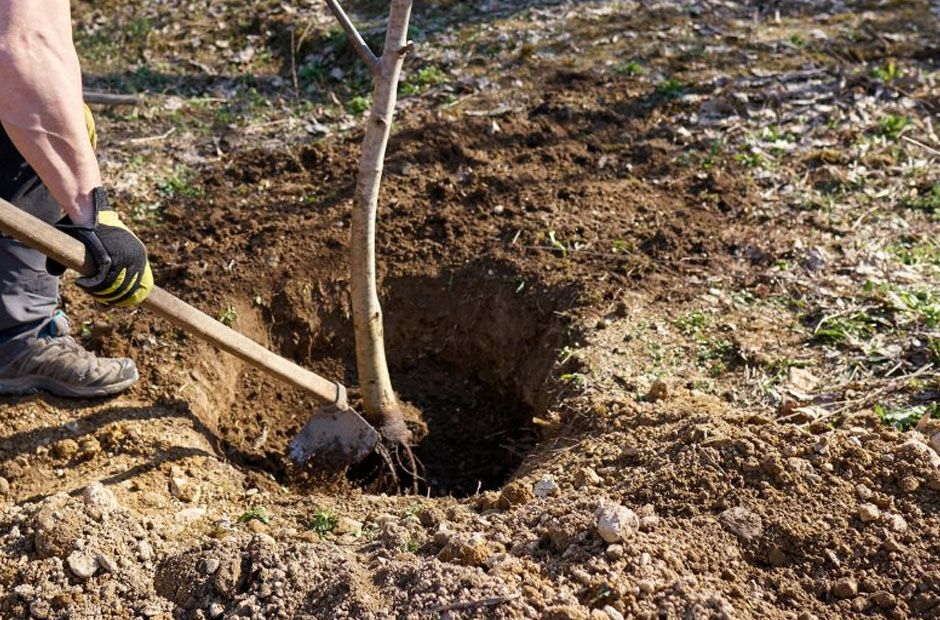
The planting hole should provide enough room for the roots to spread outward. Many planting problems begin when a tree is placed in a hole that is too deep. The trunk flare, where the trunk widens into the roots, should remain visible above the soil. Burying it can trap moisture against the bark and create health problems later.
Once the tree is positioned, the surrounding soil should be firm enough to remove large air pockets without becoming packed like a sidewalk. Mulch can help conserve moisture and moderate soil temperature, but it should remain several inches away from the trunk. A mulch volcano may look impressive to a bored landscaper, but it can invite decay, insects, and other unwanted guests.
The Early Years After Installation
A newly installed tree is not finished when the crew loads the truck. In many ways, that is when the important part begins. The tree needs regular watering while its roots expand into the surrounding soil. A deep, thorough soaking is usually more useful than a daily sprinkle that wets only the surface.
Support pegs may aid in windy areas or with higher young trees, but they should be removed eventually. A firmly knotted tree never learns to move with the wind, resulting in a weak trunk. Instead of growing up as a green flagpole, flexible support and inspections strengthen the trunk.
Pruning should also be modest. Removing damaged, broken, or poorly positioned branches may be necessary, but heavy shaping immediately after planting can take away valuable leaves. Those leaves act like small solar panels, helping the tree produce energy while its roots recover and grow.
The greatest advantage of installation is control. Property owners can select the species, size, location, and spacing from the beginning. They can create a future canopy that avoids windows, power lines, driveways, and roof gutters. The tree may look modest at first, but patience turns a twiggy newcomer into a landmark.
Why Transplanting Is a More Complicated Operation
Transplanting involves moving a tree that has already established itself in the soil. Its roots may extend far beyond the trunk canopy, and many of those roots are fine, delicate structures responsible for absorbing water and nutrients. Digging around the tree inevitably removes some roots, which can create stress even when the work is performed carefully.
The tree’s size plays a major role. A small ornamental tree may be moved with hand tools and a few strong people who have made questionable decisions about their weekend plans. A larger tree may require a tree spade, lifting equipment, transport machinery, and a crew experienced in handling heavy root balls.
Preparation can begin well before moving day. Root pruning creates a more compact root system near the trunk, giving the tree a better chance of retaining enough roots during excavation. This preparation is not a quick haircut. The timing depends on the species, tree size, soil conditions, and climate.
Root balls should be kept hard during excavation. If the soil falls away from the roots, the tree loses underground support and absorption. Wrap or fasten the root ball for lifting and transport. Although heavy, the tree can make a small crane look like the sole adult in the room.
Matching the New Site to the Old Tree
A transplanted tree cannot simply be dropped into any empty patch of ground and told to make itself comfortable. The new location should provide conditions similar to those the tree previously experienced, unless the original site was clearly unsuitable.
Sunlight is especially important. A tree accustomed to open exposure may struggle in deep shade, while one grown beneath taller trees may suffer when suddenly placed in harsh afternoon sun. Soil drainage also deserves attention. Saturated soil can deprive roots of oxygen, while extremely dry or compacted ground can make recovery much harder.
Be sure to check planting depth. Even if everything goes smoothly, a tree transplanted too deeply may have issues. To stabilize without crushing the root zone, gently settle the dirt around the root ball and leave the root flare visible.
Transport time matters as well. Roots should not dry out during the move, and the tree should be planted as soon as practical. A tree waiting beside a driveway with exposed roots is not enjoying a scenic vacation.
Recovery Care After a Tree Move
Transplanted trees often need more attentive care than newly installed nursery trees. Watering should reach the root ball and the surrounding soil, but the schedule must account for rainfall, soil type, temperature, and the tree’s condition. Too little water can cause wilting and dieback. Too much can suffocate roots and create conditions favorable to disease.
The canopy may show stress before the root system has recovered. Leaves can droop, yellow, brown, or fall earlier than expected. These symptoms do not always mean the tree is doomed, but they should not be ignored. A professional can assess whether the issue involves water, root damage, soil compaction, pests, or another problem.
Mulch conserves moisture when put in a wide, shallow layer rather than heaped against the trunk. Not everyone fertilizes after transplanting. A stressed tree needs healthy roots to use nutrients. Sometimes water, time, and restraint are kindest.
Pruning should focus on broken or hazardous branches. Removing too much live growth can reduce the tree’s ability to produce energy during recovery. The tree may need more than one growing season to regain balance between its remaining roots and its canopy.
Comparing Cost Time and Landscape Impact
Installation is often simpler to schedule because nursery grown trees are available in a range of sizes and can be selected for the exact site. Smaller trees generally cost less to move and establish, although they require patience before providing substantial shade.
Transplanting a mature tree can preserve it and add visual impact. A huge tree can make a vacant lot look like it’s been there since sidewalks were invented. The work may require specialized machinery, preparation visits, transportation, permissions, and extensive aftercare.
Cheapest on paper isn’t necessarily cheapest in actuality. A badly chosen installation tree may overrun its location and need removal. A hasty transplant can fail after costly work and equipment. Comparing the first invoice is less clear than evaluating the tree’s life.
When Professional Planning Matters Most
Professional assistance becomes especially valuable when a tree is large, rare, close to buildings, near utility lines, or growing in difficult soil. Crews can evaluate access routes, identify underground obstacles, estimate root ball dimensions, and determine whether equipment can reach the site without damaging lawns or paving.
A property owner searching for tree service near me may find help with both planning and execution. The evaluation should cover more than the tree itself. Drainage, future canopy spread, irrigation, foot traffic, soil compaction, and local planting rules can all influence the outcome.
Some properties also contain protected trees or lie within areas where removal and relocation require approval. Ignoring those requirements can turn a landscaping project into a paperwork jungle, complete with permits hiding behind every branch.
FAQ
Is planting a young tree safer than moving a mature tree?
A young tree usually adapts more easily because it loses fewer roots during installation and has less canopy to support. A mature tree can also survive relocation, but it needs careful preparation, specialized handling, and consistent recovery care.
How long should a tree be watered after installation?
Watering needs are greatest during the first growing season, although hot, dry, or windy conditions may extend that period. The soil should be checked regularly so the root zone remains moist without becoming saturated.
Can every tree be transplanted?
No. Species, size, age, health, root structure, soil type, and access conditions all affect transplanting potential. A tree with poor health or a damaged root system may not tolerate the move.
Why is root pruning performed before transplanting?
Root pruning encourages new feeder roots to develop closer to the trunk. This can create a more compact root system that is easier to move while preserving more roots inside the protective root ball.
Should a transplanted tree be heavily pruned?
Usually not. Removing dead or damaged branches is appropriate, but aggressive pruning can reduce the leaves needed for energy production. The tree generally benefits from a restrained approach while its roots recover.
What is a common mistake after planting a tree?
Planting too deeply is one of the most common mistakes. Other problems include piling mulch against the trunk, watering only the soil surface, leaving support ties in place too long, and ignoring nearby utilities or structures.