Salem’s mild summers and long, wet winters are tough on wood. If you are planning a new fence or evaluating recent work, the details that matter most are often the ones you do not see at first glance: how posts meet the soil, how boards shed water, and which fasteners hold everything together through months of rain. This guide explains the construction choices, site conditions, and small layout decisions that determine whether a fence holds its line for years or starts to lean, rot, and rust long before it should.
1. Posts and Footings: Where Moisture Meets Structure
Fence longevity starts with ground contact decisions. Posts should be rated for ground contact and set below the frost line into firm subsoil. A properly formed concrete footing should shed water away from the post with a slight dome rather than forming a birdbath around it. Many builders add a few inches of compacted gravel at the base of the hole for drainage before pouring concrete. In heavy clay soils, which are common around the Willamette Valley, that drainage layer helps keep the post heel from sitting in a puddle through winter.
There is a tradeoff between burying posts directly in concrete and using a pier-and-bracket system that keeps wood above grade. Direct burial is common and cost-effective, but it requires good water management at the footing. A pier-and-bracket system adds hardware and labor but keeps the post above wet soil, making future replacement simpler. If you are comparing wood fencing services in Salem, ask specifically about footing shape, gravel bases, and whether the concrete will be crowned above surrounding soil to prevent standing water.
2. Boards, Styles, and Airflow: Managing Rain and Wind
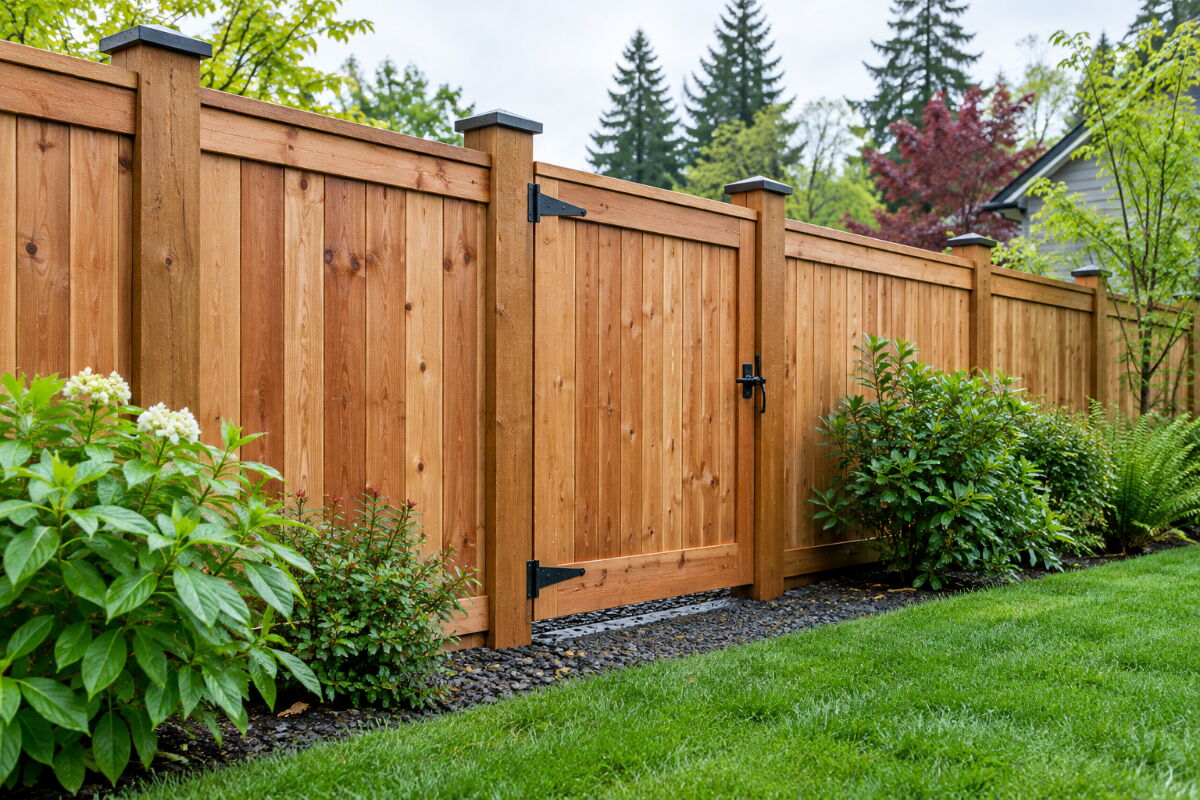
Cedar pickets are a popular choice in the Pacific Northwest because their natural oils resist decay, but even cedar fails early if it constantly wicks moisture. Keep a small ground clearance below the bottom of the pickets rather than burying boards in mulch or soil. Cap and trim designs protect rail and picket end grain with a horizontal cap, helping water shed instead of soaking in. For full privacy, an overlapping board pattern blocks sightlines while providing small breathing gaps that reduce trapped moisture and wind load.
Horizontal slat fences can look sharp but rely on very straight rails and consistent fastener spacing to prevent sagging. On windy corners, a partial privacy style such as alternating pickets or a lattice top reduces the solid surface effect that strains posts during storms. Two practical examples illustrate the point: an alley fence tucked behind blackberries benefits from extra ground clearance and a cap to shed rain and irrigation splash. At the same time, a backyard along a breezy ridge may last longer with a style that lets some air pass through rather than a fully solid panel.
3. Fasteners and Hardware That Withstand Wet Seasons
Using the right metal is as important as choosing the right lumber. Hot-dip galvanized or stainless steel fasteners resist the corrosion that accelerates around treated wood and wet cedar. Ring shank nails offer strong holding power in soft, damp boards, while exterior-rated screws allow later removal for repairs without tearing fibers. Avoid interior drywall screws because they can snap or rust quickly outdoors, staining boards and loosening connections within a season or two.
Gate assemblies magnify hardware differences. Gates need full-length strap hinges or T hinges sized for the gate’s width, adjustable hinge pins for seasonal swelling and shrinking, and a diagonal brace from the lower latch side to the upper hinge side to prevent drooping. Latches and hinges should be secured with bolts and washers rather than lightly screwed into end grain. Stainless hardware costs more upfront, but on shaded, north-facing runs that never fully dry out, it can reduce repeated hinge and screw replacements over the life of the fence.
4. Slope, Layout, and Code Related Checks
Few Salem yards are perfectly flat. On a gradual slope, racking a panel allows pickets to follow the grade while keeping a consistent top line, while stepping creates level sections that drop in increments. Racked panels minimize ground gaps under the fence but require careful spacing so picket bottoms do not dig into the soil. Stepped layouts simplify carpentry, though they can leave triangular openings at the bottom that may need small infill pieces or landscaping.
Before any digging, call 811 to locate utilities and confirm property lines to avoid encroachment issues. At corners and driveways, visibility rules and front-yard height limits may apply. Check local zoning or talk with your permitting office so an otherwise solid project does not violate a sight triangle or setback.
A simple string line and batter boards help align posts on long runs, especially along alleys where fences often drift over decades. On a South Salem slope, for instance, racked dog-ear pickets may keep pets in while maintaining uniform clearance. On a short, steeper section near steps, a stepped panel could look cleaner and avoid custom angles.
Planning for Years of Service: Practical Aftercare That Pays Off
After installation, let new lumber dry to an even color before applying a finish. Then use a quality exterior stain or clear sealer that repels water and includes UV inhibitors. Semi-transparent stains highlight cedar grain while blocking sunlight that grays boards. Recoat intervals vary by exposure and product, but shaded, constantly damp runs often need attention sooner than sunlit sections. Clean mildew with a gentle detergent, a soft brush, and low-pressure rinsing rather than aggressive power washing that can damage wood fibers.
Keep soil, bark dust, and plants away from the fence line to prevent constant moisture absorption. Trim vines that trap moisture against rails, and sweep soil away from concrete so the footing’s crown can shed water. Expect to adjust gate hinges after the first wet season as boards swell and settle. A few adjustments to an appropriate hinge system can restore smooth latching.
Once a year, walk the fence line and tighten loose screws, secure lifted ring shank nails, and check that post tops, caps, and cut ends remain protected. These small habits cost little compared with resetting a leaning section or rehanging a sagging gate, and they can extend the service life of the wood chosen for privacy, pets, and curb appeal.