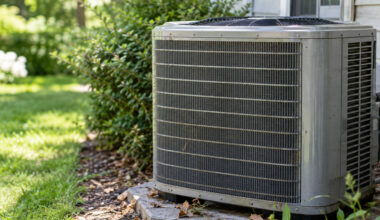
Where a standby generator sits on your property does more than affect curb appeal. Siting drives safety, code compliance, startup reliability, noise levels, and even how much your installation will ultimately cost. A good location keeps exhaust away from doors and windows, allows clean airflow to the engine, shortens fuel and electrical runs, and protects the unit from flooding and wind. A poor location can cause nuisance shutdowns, voltage drop under load, and difficult service access. This guide walks through the constraints that matter and shows how to weigh real-world trade-offs before you pour a pad or schedule trenching.
Clearances, Airflow, and Safety Dictate the Envelope
Before you pick a spot, map the clearances required by local code and the generator’s manual. Combustion engines must breathe, vent exhaust, and sit away from openings like doors, windows, and dryer vents. Technicians also need room to service the unit’s alternator, air filter, and control panel without climbing through shrubs. If you are planning a new pad, discuss these constraints with a licensed installer; you can review what is typically involved by reading about Select Power whole house generator installation and using it as a checklist to validate on your own property.
A frequent mistake is tucking the unit under a deck, beside tall hedges, or directly beneath a soffit to hide it. That can trap hot exhaust, starve the intake, and direct carbon monoxide toward occupied spaces. Another avoidable error is placing a generator beneath a bedroom window because it is close to the service panel. Prioritize an open-to-air location, maintain vegetation clearance for the enclosure louvers, and keep walk-around space for oil changes, battery replacement, and controller diagnostics.
Short, Straight Utility Paths Improve Performance and Cost
Every additional foot of conduit between the generator, transfer switch, and main service panel adds labor, fittings, and voltage drop. Sharp bends and long runs can make pulling conductors harder and may force upsizing from aluminum to copper to maintain acceptable voltage under load. When possible, choose a location that allows a direct route for the feeder and control wiring, with minimal elbows and no unnecessary crossings of driveways or patios. Trenching across mature roots or through hardscape often means restoration costs that exceed the savings of a slightly cheaper pad location.
Fuel path matters just as much. Natural gas-fed units need adequate meter and regulator capacity to meet the generator’s BTU demand along with your furnace, water heater, and stove. Long gas piping with many elbows increases pressure drop, which can cause rough running during peak loads. Propane systems add their own constraints: tank placement setbacks, regulator venting, and the distance between the tank, first-stage regulator, and the generator’s second-stage regulator. When space is tight, it can be smarter to choose a spot that shortens the gas run and tolerate a modestly longer electrical run, or vice versa, to keep both systems within spec.
Noise, Orientation, and Neighbor Awareness
Most modern residential generators are quieter than older models, but distance and direction still matter. Orient the enclosure so the exhaust and cooling air discharge face away from bedrooms and neighboring patios. If the best utility path passes the primary bedroom, consider rotating the unit and adding a code-compliant hardscape surface that doubles as an acoustic break. Placing a generator beside a garage or near a side yard with less nighttime use can materially reduce perceived noise during weekly exercise cycles.
Acoustic fencing and landscaping can help, but they cannot obstruct airflow. Avoid building sound walls too close to the intake louvers or muffler outlet, and choose materials that withstand radiant heat. A vibration-isolating composite pad or properly anchored concrete slab can reduce structure-borne noise transmitted into a nearby wall. Whatever you add, keep enough clearance so a technician can remove panels, swap a starter battery, and connect a temporary load bank if diagnostics call for it.
Weather, Drainage, and Long-Term Durability
Think about the site after a heavy downpour and during high winds. A generator should sit on a level, well-compacted base with positive drainage so water does not pool around the enclosure or wick into conduits. Many homes benefit from a concrete slab or precast composite pad set on compacted crushed stone, with anchor bolts or hurricane straps where required. In sstorm-proneor coastal regions, use corrosion-resistant hardware and sealed electrical connections. A slightly elevated pad extends enclosure life and protects terminals and the automatic transfer switch from moisture intrusion.
Plan for the next decade, not just opening day. Leave space to swing open the controller door and to replace air filters, oil filters, and spark plugs without moving the unit. If your model includes Wi Fi or cellular monitoring, verify signal strength at the chosen location or plan for an external antenna. Think through snow loads in colder climates, fall leaf buildup under louvers, and how a gutter downspout might send water toward the intake. Small site tweaks now prevent hard-to-diagnose shutdowns during the first storm that stresses both your generator and your home’s loads.
Two Real World Siting Scenarios and a Practical Plan
Scenario one: a narrow side yard sits directly outside a pair of bedroom windows, but it is the shortest path to the main panel. Placing the generator here would simplify conduit runs but increase nighttime noise and challenge window-clearance rules. A better solution might be outside the garage, where a slightly longer electrical run is offset by quieter operation and cleaner airflow. The gas meter is on that wall as well, simplifying regulator placement and piping without snaking around tight corners.
Scenario two: a coastal property with an HOA limits visibility from the street, and the backyard has a low spot that floods after summer storms. A rear corner behind a masonry wall keeps the unit out of sight, but you must verify airflow and service access. Elevating the pad above known puddling, using stainless fasteners, and orienting the exhaust away from the wall preserves cooling while meeting appearance guidelines. Routing propane piping along the foundation line avoids crossing pavers the HOA wants undisturbed.
To decide on your spot, walk the property with a notepad. Sketch the shortest feasible routes for both the electrical feeder and fuel line, check local setback and clearance requirements, and confirm doors, windows, and vents stay outside the exhaust envelope. Confirm gas meter or tank capacity with your utility or fuel provider and note where regulators will mount. Choose a pad type and anchoring method that fit your soil and wind exposure, and confirm transfer switch placement near the service panel. Finally, consider neighbors: schedule weekly exercise for midday and orient the unit so routine runs are least noticeable.
Good siting is a design decision, not an afterthought. By balancing airflow and safety clearances with utility-path efficiency, noise orientation, and storm resilience, you can place a generator where it starts cleanly, runs within spec, and stays serviceable for years. The result is a system that feels invisible most days and dependable when it matters. Taking a few extra steps now to evaluate clearances, drainage, and utility routes will pay dividends the first night the lights go out, and every maintenance visit after.