When walls become active parts of the home
Walls work hard despite being quiet. Family photos, school calendars, art prints, mirrors, plants, certificates, maps, and the occasional forgotten purchase all in there. Many homes have walls that show every decorating phase. Some nail holes near the sofa. Patchwork above the desk. One crooked anchor beside the door that has been disregarded for three years since shifting it requires a ladder and emotional guts.
The problem is not that people enjoy changing their rooms. Change is one of the pleasures of living in a home. The problem is that traditional hanging methods make every change feel permanent. A new frame requires a measurement. The measurement requires a pencil. The pencil requires confidence. Then comes the drill, the dust, the discovery that the frame is slightly too low, and the familiar sentence, “It is probably fine.”
A ceiling edge hanging system offers another way to think about the room. Rather than treating each wall object as a separate project, it creates a continuous place from which art and décor can be suspended. The wall remains intact while the arrangement above it stays adjustable.
The forgotten architecture above eye level
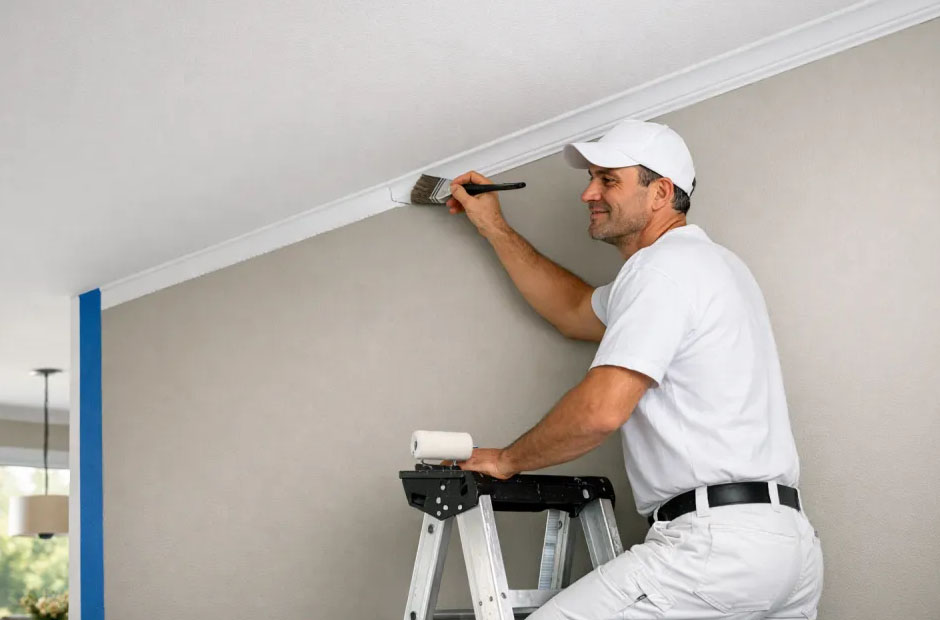
People often spend considerable time choosing wall colors and furniture, then treat the upper perimeter of the room as if it were the backstage area of a theater. Yet the line where the wall meets a recessed or suspended ceiling has a powerful visual role. It can sharpen the shape of the room, soften it, or make the ceiling seem to float.
That edge also creates a natural organizing line. Artwork hung from it can follow the proportions of the room instead of scattering across the wall like confetti. In a narrow hallway, a sequence of frames can establish rhythm. In a living room, several objects can form a calm vertical arrangement. In a home office, a changing display can sit above a desk without competing with the keyboard, lamp, and pile of papers that has somehow become a second monitor stand.
The effect is subtle because the supporting hardware is designed to stay visually quiet. The eye notices the artwork first. The practical mechanism does its job without demanding applause.
Decorating without making a permanent promise
Many decorating decisions are made as though they will last forever. The sofa is selected for the next decade. The paint color is described as timeless. The gallery wall is measured with the seriousness of a bridge construction project.
Real life is less obedient.
A room may need to host a new baby, a new business, a visiting relative, or a teenager with strong opinions about posters. A dining room can become a temporary classroom. A spare room can move from guest bedroom to craft studio and back again after the craft supplies multiply beyond all known laws of nature.
A ceiling edge track supports these transitions by allowing hanging points to move horizontally. Objects can be repositioned without creating fresh holes each time. The arrangement can become wider, tighter, more symmetrical, or deliberately uneven depending on the room and the mood.
This is useful for people who like experimenting. They can test a visual idea without treating the first attempt as a legally binding contract. If the composition feels too crowded, the frames can shift. If a new painting arrives, it can join the arrangement without forcing every existing piece into exile.
Creating visual rhythm in long rooms
Long spaces can be difficult to furnish because they often lack obvious stopping points. A hallway may feel like a runway designed for carrying laundry from one room to another. A narrow living area can look stretched, especially when furniture is pushed against the walls.
Hanging artwork from the ceiling edge can help create a visual rhythm along the length of the space. Repeated frames, alternating sizes, or a steady line of photographs can guide the eye from one end to the other. The display becomes connected, even when each object is different.
Perfect symmetry is not needed for this method. Adding a little variety can avoid the waiting room look. A huge print can anchor smaller pieces. The rectangular frames can be interrupted by a spherical mirror. A cloth can soften a glass-and-paper display.
The key is that the pieces share an invisible support line. That common origin makes variation look intentional rather than accidental.
A practical solution for changing displays
Some collections are designed to change. Children’s artwork, rotating photography, seasonal prints, and small business displays all benefit from accessible adjustment. A traditional wall arrangement can make these changes tedious. The household may eventually stop updating the display simply because the wall has become too much work.
A ceiling mounted hanging system reduces that friction. Picture cords or adjustable hooks can be moved along the track, allowing the display to evolve without repeatedly touching the wall surface. This makes it easier to feature new work, rearrange family photographs, or remove pieces for cleaning.
The method is useful in houses with multiple decorators. One person may appreciate an organized grid, while another thinks every wall requires a fish-shaped object. A flexible track allows bargaining. Peace may return before dinner if the fish moves three inches left.
Planning the installation thoughtfully
Even though it looks easy, planning important. Track should match ceiling construction, room size, and load. Before installation, consider wall length, doorways and windows, ceiling height, and artwork distance from furniture.
The display should also be viewed from several positions. A grouping that looks balanced from the sofa may appear crowded from the entryway. A frame that seems perfectly placed while standing beneath it may look unexpectedly high from across the room.
Weight is also significant. Lightweight prints, framed photos, and decorative textiles may need different hanging hardware than large mirrors or artwork. Supporting hardware, wires, hooks, and attachment points should be chosen for each piece, not interchangeable.
A little measurement at the beginning prevents a great deal of theatrical sighing later.
Making rented and older spaces more adaptable
Renters often face strict limits on drilling, patching, and repainting. Older homes present a different challenge. Their walls may contain plaster, uneven surfaces, historic finishes, or paint colors that are impossible to match after several decades of sunlight and mysterious household activity.
A ceiling edge hanging approach can reduce the number of wall penetrations needed for displays. It may also help preserve decorative surfaces that would otherwise collect a growing constellation of holes. This does not eliminate the need to follow property rules or use appropriate installation methods, but it can make flexible decorating more realistic.
For heritage interiors, the visual benefit can be particularly appealing. Artwork can be introduced without covering the wall in hardware or creating a busy field of visible fasteners. The room keeps its character while gaining a more useful display structure.
Using the system beyond framed art
The most obvious application is picture hanging, but the possibilities extend further. Lightweight textile panels can add color without the commitment of wallpaper. Small acoustic treatments can help soften an echoing room. A series of botanical illustrations can bring a garden feeling into an urban apartment. In a workspace, diagrams, planning sheets, and inspiration boards can remain visible while still being easy to replace.
Retail spaces, studios, galleries, and hospitality settings can also benefit from a flexible upper hanging line. Displays may need to change for events, seasons, product launches, or exhibitions. A permanent arrangement is rarely practical when the room itself is part of the presentation.
Even in a home, the system can support layered displays. A large artwork can remain in place while smaller pieces move around it. A mirror can become the center of a temporary arrangement, then return to a quieter position when the room needs less visual energy.
FAQ
What is a ceiling edge hanging system?
A ceiling edge hanging system is a track installed near the perimeter where the wall meets the ceiling. Adjustable cords, hooks, or other hanging components connect to the track, allowing artwork and décor to be positioned without installing a separate wall fastener for every object.
Is the track visible?
Many systems are designed to remain discreet once installed. The exact appearance depends on the track profile, ceiling design, finish, and viewing angle. When placed neatly along the ceiling edge, the display hardware usually recedes while the artwork remains the main visual feature.
Can the hanging points be moved?
Yes. The main advantage is adjustability. Hanging points can generally slide along the track, allowing frames or other objects to be repositioned as the room changes. The movement method depends on the particular system and its accessories.
What can be hung from the track?
Common choices include framed artwork, photographs, mirrors, textiles, lightweight panels, and decorative objects. Each item should be matched with suitable cords, hooks, and attachment hardware based on its weight and shape.
Does this eliminate the need to measure?
It reduces repeated measuring, but it does not eliminate planning. The track still needs to be positioned correctly, and each object should be hung at a safe height with enough space around it. The difference is that future adjustments become much easier.
Is this useful in a home office?
Yes. A home office can use the track for rotating reference material, certificates, calendars, mood boards, or artwork. When the office changes function, the wall display can change with it instead of preserving the visual history of every former desk arrangement.
Can it work in a hallway?
Hallways are excellent candidates because they often have long walls and limited furniture. A track can support a connected sequence of frames, helping the corridor feel designed rather than merely passed through on the way to the kitchen.
What should be checked before installation?
Review the ceiling construction, track length, mounting requirements, object weights, and desired hanging height. It is also wise to check for nearby lighting, vents, doors, and other features that could interfere with the display.