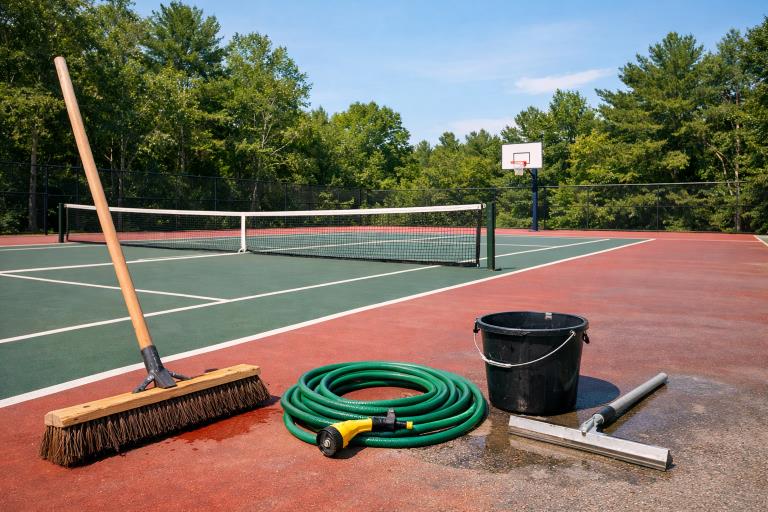
Outdoor sports courts are constantly attacked. Players try every inch with running shoes, basketballs, tennis racquets, and passionate celebrations as the sun bakes, rain soaks, and wind throws leaves like little unwanted gifts. Neglected courts can become slippery, cracked, discolored, and cranky.
A reliable maintenance routine keeps the surface safer, the equipment sturdier, and the playing experience more enjoyable. It also helps facility managers avoid the expensive surprise of discovering that a small crack has evolved into a full scale renovation project.
Learn the Personality of the Court
Every court has its own maintenance personality. A tennis court surrounded by trees may collect leaves constantly, while a basketball court in an open schoolyard may suffer more from dust, litter, and intense sunlight. A multipurpose court has to tolerate a little bit of everything.
First, determine the surface type, drainage pattern, landscape, weather, and daily use. Acrylic coatings, asphalt, concrete, and specialty synthetic surfaces react differently to cleaning and repair. Every court being treated the same is like watering a cactus like a water lily. Something will gripe.
Usage patterns matter as well. A court hosting weekend games may need a different schedule from one used by students between breakfast and dismissal. High traffic areas near hoops, baselines, entrances, and service lines often show wear before the rest of the surface.
Build a Cleaning Routine That Actually Happens
Cleaning is best done regularly rather than in emergencies. A short sweep several times a week can remove grit, leaves, flower petals, food wrappers, and odd objects that occur wherever people assemble. Sand and small stones can diminish traction and function like little sandpaper under players’ shoes.
Use soft bristle brooms, court-safe blowers, or other tools approved for the surface. Hard metal edges and aggressive scraping can leave scratches that collect water and dirt. When using a blower, direct debris away from the court instead of simply relocating the mess to the nearest corner.
Spills deserve immediate attention. Drinks, food, grease, and mud can create slick patches or permanent stains. Blot liquid when possible, then clean the area with a surface-appropriate solution. Avoid turning the court into a chemistry experiment. Strong household cleaners may damage coatings, fade colors, or leave a residue that feels like invisible banana peel.
Schedule deep cleaning during low-use periods. Stain treatment, gentle washing, and cautious rinsing may be used. Never drive water toward cracks, joints, fencing, or equipment bases. A harsh pressure washer can remove more than dirt—including the surface finish everyone wants to maintain.
Watch for Small Changes in the Surface
A court rarely announces its problems with a trumpet. More often, it offers subtle clues: a hairline crack, a shallow puddle, a faded patch, or an area that feels slightly different underfoot. Regular inspections help staff notice these signals before they become expensive declarations of disaster.
Walk the entire court slowly. Inspect playing lines, corners, edges, expansion joints, and areas around posts or hoops. Look for lifting, bubbling, flaking, loose aggregate, soft spots, and changes in color. Pay special attention after storms, freeze and thaw cycles, or unusually heavy use.
Cracks should be documented with photographs and approximate measurements. Tracking their size over time helps determine whether they are stable surface imperfections or evidence of ongoing movement. A crack that grows after every cold season is not being dramatic. It is providing useful information about what is happening below the surface.
Repairs should match the existing material and coating system. Filling a crack with an incompatible product may create a bump, discoloration, or weak seam. Patching without addressing the reason for the damage can also lead to a repeat performance. If water is moving beneath the surface, a cosmetic repair may last about as long as a snowman in July.
Make Water Leave Quickly
Water is one of the most persistent troublemakers on an outdoor court. A little rain is harmless when it drains properly. Water that sits in the same location for hours or days can stain the surface, encourage biological growth, weaken coatings, and seep into small imperfections.
After rainfall, observe where water collects. Mark recurring puddles and check whether nearby drains, channels, and gutters are blocked. Leaves and sediment can turn a drainage opening into a decorative hole with no actual job.
The ground around the court also matters. Soil, mulch, and landscaping should not wash onto the playing area during storms. Overgrown plants can clog drainage routes and drop organic debris across the surface. Keeping the perimeter orderly reduces the amount of maintenance required in the middle.
Do not assume a puddle is caused by a dirty drain. It may point to low spots, settlement, poor grading, or surface deformation. Repeated standing water deserves careful evaluation because it can reveal a larger structural problem hiding beneath the court’s cheerful painted lines.
Prepare for Heat, Cold, and Everything in Between
Outdoor courts experience weather with the enthusiasm of a reality television contestant. Intense sunlight can fade colors and gradually weaken coatings. Heat can soften some materials, while rapid temperature changes may cause expansion and contraction. Cold weather introduces freezing water, icy surfaces, and the dreaded freeze and thaw cycle.
Snow should be removed with tools that will not gouge or scrape the surface. Metal shovels and sharp ice chippers can leave permanent scars. Allowing packed snow to melt naturally may be safer when conditions permit, provided the resulting water can drain away.
De icing products require caution. Some salts and chemicals may harm coatings, nearby vegetation, metal equipment, or concrete edges. Use only products compatible with the court and apply them according to their intended purpose. More product does not mean more safety. It may simply mean more cleanup and a surface that feels strangely crunchy.
During hot months, schedule intensive work outside the hottest part of the day when practical. Fresh coatings and repair materials often require specific temperature and moisture conditions to cure properly. Shade is also valuable for staff, because a maintenance worker should not have to resemble a tomato by lunchtime.
Keep Hardware From Becoming a Hazard
A beautiful surface cannot compensate for a loose hoop, sagging net, rusty fence, or wobbly post. Equipment inspections should cover everything players touch, lean against, kick, throw at, or occasionally attempt to climb despite clear evidence that this is a poor idea.
Bolts, brackets, anchors, hinges, net attachments, backboards, rims, fence connections, gates, benches, and padding should be checked See corrosion, sharp edges, bent metal, exposed fasteners, frayed netting, and unstable parts. When necessary, tighten hardware and replace weak pieces.
Moving parts may need appropriate lubrication, and exposed metal may need cleaning and protection. If extreme weather or seasonal closure warrants removal, store nets properly. A springtime repair parade might result from leaving equipment outside in severe circumstances for months.
Keep an inventory of replacement parts and record completed work. A simple log can prevent repeated inspections from becoming a memory contest. It can also show which components fail most often and help with future budgeting.
Use Maintenance Records as a Warning System
A maintenance log does more than prove that someone swept the court on Tuesday. It reveals patterns. Record cleaning dates, weather events, repairs, drainage observations, equipment problems, coating work, and areas of concern.
Patterns can expose hidden trouble. If the same corner develops algae after every storm, drainage may be involved. If one baseline fades faster than the opposite baseline, sunlight or water movement may be uneven. If a gate needs tightening every month, the issue may involve alignment rather than a stubborn bolt.
Photos are particularly useful because they provide a visual timeline. A picture taken from the same location each month can show changes that are difficult to notice during ordinary use. The court may look perfectly fine on Monday and slightly more suspicious by Friday.
Schedule Skilled Evaluations
Routine staff care is essential, but some problems require specialized knowledge and equipment. A qualified court professional can assess coating failure, subsurface movement, drainage performance, color fading, and structural concerns that may not be obvious during a casual inspection.
An evaluation is especially valuable after major storms, flooding, fallen trees, severe freeze and thaw conditions, or visible changes in the surface. Professional attention can help determine whether a problem needs cleaning, patching, recoating, resurfacing, or a more extensive repair.
Timing also matters. Waiting until the court becomes unsafe often limits repair choices and increases downtime. Early evaluation gives facility managers a clearer picture of the work involved and helps coordinate repairs around league schedules, school calendars, and community events.
FAQ
How often should an outdoor court be swept?
A lightly used court may need sweeping once a week, while a court surrounded by trees or used heavily may require cleaning several times each week. The best schedule is based on visible debris, weather, and foot traffic. If players are kicking up grit like miniature dust storms, the court is overdue.
Can household cleaners be used on a sports court?
Not automatically. Some household cleaners contain chemicals that can discolor coatings, weaken finishes, or leave slippery residue. Use cleaning products approved for the specific court surface and follow the product instructions carefully.
What is the safest way to remove snow?
Use a soft, nonmetal tool designed to avoid scraping the surface. Remove snow gradually when possible and prevent piles from blocking drains or trapping water against the court edge. Avoid sharp tools that can cut into coatings.
Why does water keep collecting in one area?
Recurring puddles may result from blocked drainage, poor grading, surface settlement, or changes beneath the court. Cleaning a nearby drain may solve the issue, but persistent pooling should be evaluated to identify the underlying cause.
How frequently should court equipment be inspected?
Monthly inspections are a practical minimum for many facilities. High use, coastal air, severe weather, vandalism, or aging equipment may require more frequent checks. Inspect equipment immediately after storms or any incident that could cause damage.
When should a court be professionally evaluated?
An annual evaluation is useful for identifying developing problems. Additional assessments are appropriate after flooding, major storms, severe winter conditions, visible cracking, unusual puddling, or rapid coating deterioration.