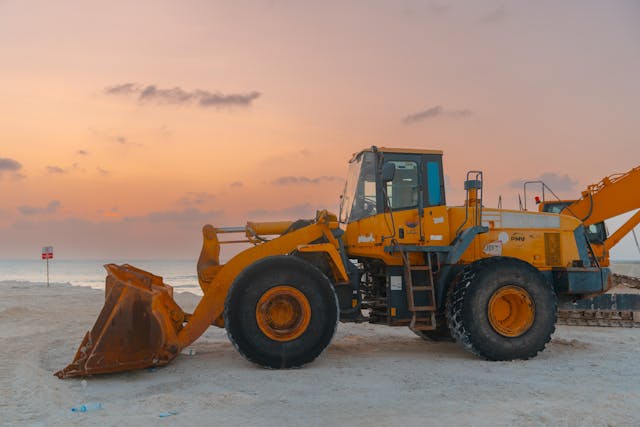
Heavy machinery is unforgiving of guessing. A loader, crane, excavator, or telehandler may look tranquil while parked, but when the engine begins, it becomes a strong moving system with weight, momentum, and personality. Casually treating it is like giving a rhinoceros a steering wheel and hope it reads the site rules.
Operating safely requires more than understanding which lever does what. It requires preparation, communication, equipment condition, ground awareness, and the ability to spot problems before they escalate. A well-organized safety system helps operators make good decisions in noisy, congested, dirty, or changing environments.
Start With a Machine That Is Ready to Work
A reliable safety routine begins before the machine moves. Operators should inspect the equipment at the start of each shift, paying attention to tires, tracks, hydraulic lines, fluid levels, attachments, warning lights, steps, handrails, and mirrors.
This inspection is not a ceremonial walk around the machine while holding a clipboard like a sleepy detective. It is an opportunity to identify small defects before they become large and expensive problems. A cracked mirror can hide a worker. A loose hydraulic connection can turn into a high pressure leak. A damaged step can cause an injury before the operator even reaches the seat.
Controls should be tested in a safe area, and unusual noises, smells, vibrations, or warning signals should be reported immediately. If a machine does not behave normally, it should not be bullied into service. Heavy equipment is not impressed by confidence.
Treat the Ground as Part of the Machine
Ground conditions influence stability, traction, braking, and lifting performance. Mud, loose fill, hidden voids, steep slopes, wet clay, and recently excavated areas can all change how equipment behaves.
Operators should understand the surface before positioning a machine. A path that appears solid may collapse under a loaded crane or a fully equipped excavator. Water can also create deceptively soft areas, especially near trenches, drainage channels, and stockpiles.
Outrigger pads, matting, and other ground supports distribute pressure. This stabilizes the working platform and reduces outrigger sinking. Support equipment is not flooring magic. Select it for the machine, load, terrain, and predicted conditions. Tiny pads under large machines are more like optimistic coasters than safety solutions.
Before lifting or digging, crews should identify slopes, edges, underground services, recently backfilled areas, and overhead hazards. The machine should be positioned with enough clearance to avoid forcing the operator into awkward or unstable movements.
Create a Clear Exclusion Zone
The area around operating machinery should have clearly defined boundaries. People on foot need to know where they can stand, where they cannot stand, and how they should move around equipment.
Barriers, cones, signs, temporary fencing, and spotters can help create a visible exclusion zone. The size of the zone depends on the machine, task, load, movement pattern, and possible swing or drop area. A crane lifting a load requires a very different buffer from a compact loader moving soil.
No one should enter a blind region because the machine appears immobile. A machine may move unexpectedly, and an operator may not see someone behind a counterweight, bucket, boom, or attachment. The safest assumption is that the operator cannot see someone without direct confirmation.
Ground workers should avoid walking behind reversing equipment or passing beneath suspended loads. These habits may seem obvious, yet busy worksites have a strange talent for making obvious things disappear from memory.
Use One Communication System
Communication becomes especially important when engines, alarms, generators, and tools are competing to be the loudest object on the planet. Hand signals, radios, headsets, and agreed stop signals help teams coordinate movements safely.
Every person involved in a lift or complex maneuver should understand the communication plan before work begins. If a signal is unclear, the movement should stop until the message is confirmed. Guessing is not a recognized form of signaling, even when the guess comes from someone wearing a very serious expression.
A designated signal person should guide the operator during controlled movement. Multiple persons delivering various instructions can confuse an operator focusing on a load, attachment, or restricted view. All construction workers should understand a universal stop signal.
Radio users should keep messages short and specific. Instead of saying, “Move it over there,” a useful instruction might identify the machine, direction, distance, and intended action. Clear words reduce the chance that a rushed message becomes a dangerous puzzle.
Make Visibility a Planned Feature
Many incidents occur because the operator cannot see a person, object, edge, or obstacle. Visibility should therefore be considered during site planning rather than treated as a problem to solve after the machine is already moving.
Clean windows, mirrors, camera lenses, and lights are basic but essential. Dust, mud, rain, glare, and darkness can reduce visibility quickly. Operators should adjust mirrors and seats before starting work, not while maneuvering through a crowded area.
Cameras and proximity sensors can improve awareness, but they do not eliminate blind spots or replace observation. Screens may become dirty, sensors can malfunction, and a person may enter the detection area from an unexpected angle. Operators should combine technology with controlled speed, deliberate checks, and communication with people nearby.
Lighting should illuminate travel paths, work zones, access points, and hazards without creating blinding glare. A floodlight pointed directly into an operator’s line of sight is not helpful illumination. It is a portable miniature sun with poor manners.
Manage Loads With More Than Intuition
Lifting and carrying tasks require careful attention to weight, reach, height, attachment type, and machine configuration. The same load may be safe close to the machine but unsafe when extended outward or raised high.
Operators should know the machine’s rated capacity and understand how attachments affect performance. A bucket, fork, grab, hook, or lifting beam changes the way weight is distributed. The load should be secured, balanced, and kept as low as practical during travel.
Load monitoring systems can provide useful information about pressure, weight, angle, and capacity. These systems are valuable because human beings are not always accurate at estimating weight. A load that “looks light” may be filled with dense material, awkwardly balanced, or hiding a considerable amount of trouble.
If an alarm activates, the operator should stop and reassess rather than attempting to outsmart the warning. Alarms are not personal criticism. They are the machine politely announcing that physics is becoming uncomfortable.
Protect the Operator From Fatigue
Fatigue reduces concentration, reaction time, memory, and judgment. It can make a familiar control feel unfamiliar and turn a simple reversing task into an elaborate negotiation with a concrete barrier.
Comfortable seating, adjustable controls, reduced vibration, climate control, and good cabin visibility all help operators remain alert. Breaks are also essential, especially during repetitive work, extreme temperatures, night shifts, or tasks requiring constant precision.
Supervisors should watch for signs such as delayed responses, repeated mistakes, poor communication, wandering attention, or unusual irritability. Fatigue is not a character flaw. It is a physical condition that requires sensible management.
Operators should also avoid using phones or engaging in distractions while machinery is moving. A few seconds of divided attention can cover a surprising distance when several tonnes are involved.
Prepare for Fire and Mechanical Emergencies
Emergency equipment should be accessible, clearly marked, and regularly checked. Fire extinguishers, first aid supplies, spill kits, eye wash stations, emergency stops, and evacuation routes all need to be part of the site plan.
Operators should know how to shut down equipment quickly and how to respond if a machine catches fire, loses hydraulic pressure, contacts a power line, or becomes unstable. Emergency procedures should be practiced before an emergency arrives with its usual lack of patience.
Fuel, oil, batteries, and hot engine components create fire risks. Leaks should be reported and cleaned up promptly. Smoking, open flames, and unauthorized repairs near fuel storage or refueling areas should be controlled.
If a machine contacts an electrical line, people nearby should avoid touching the equipment and remain at a safe distance unless trained emergency personnel provide instructions. Jumping down from the cab can create additional danger if the ground is energized.
Train for Decisions Not Just Controls
Training should cover more than starting, steering, lifting, and parking. Operators need to understand load charts, ground conditions, exclusion zones, emergency actions, attachment limits, weather effects, and communication procedures.
Practical training is particularly valuable because it allows operators to rehearse unusual situations without the pressure of a live worksite. Simulators and controlled exercises can demonstrate blind spots, unstable loads, poor positioning, and sudden equipment alarms.
Refresher training should follow changes in machinery, attachments, work conditions, or site procedures. An operator who is excellent with one excavator may need additional instruction before using a different model with unfamiliar controls and capabilities.
Experienced workers also benefit from training. Familiarity can create confidence, and confidence can occasionally wander into overconfidence wearing a hard hat.
Build Safety Around Consistent Habits
Safe machinery operation becomes stronger when good practices are repeated every day. Pre-start inspections, planned travel routes, clear signals, controlled speeds, stable positioning, and proper shutdown procedures should become routine rather than occasional bursts of enthusiasm.
Incident reporting also matters. Near misses can reveal weaknesses before someone is injured. A machine that nearly strikes a barrier, a load that shifts unexpectedly, or a person who enters a blind spot should trigger a review of the process.
The goal is not to create a worksite where nothing ever changes. Construction and industrial environments change constantly. The goal is to build routines that help people notice change, respond early, and keep powerful equipment under deliberate control.
FAQ
What is the most important safety check before operating heavy machinery?
A thorough pre-start inspection is crucial. The operator should check for apparent damage, leaks, worn parts, defective alarms, tire or track concerns, attachment issues, and restricted visibility. Test controls and safety systems in a safe place.
Why are exclusion zones necessary around machinery?
Exclusion zones keep people away from moving parts, blind spots, swinging equipment, falling materials, and suspended loads. They give the operator clear working space and reduce the chance of a person entering an area that cannot be seen or controlled safely.
Can cameras and sensors replace a spotter?
No. Cameras and sensors improve awareness, but they can be affected by dirt, weather, damage, or limitations in detection range. A trained spotter and direct communication may still be necessary during reversing, lifting, or work in crowded areas.
How do outrigger pads improve stability?
Outrigger pads distribute machine weight over a larger surface area. This helps reduce ground pressure and limits sinking or shifting on soft or uneven terrain. They must still be correctly sized and placed on suitable ground for the equipment and task.
What should an operator do when a machine alarm activates?
The operator should stop the relevant movement, place the machine in a safe condition, and identify the reason for the alarm. Continuing to work while ignoring a warning can increase the risk of equipment damage, instability, or injury.
How does fatigue affect machinery operation?
Fatigue can slow reaction time, reduce concentration, impair judgment, and increase the likelihood of missed signals or control errors. Regular breaks, comfortable operating conditions, suitable scheduling, and honest reporting of tiredness help reduce this risk.
Why is one designated signal person useful?
A single designated signal person reduces conflicting instructions. The operator knows whose directions to follow, while the rest of the crew can focus on staying clear, monitoring hazards, and maintaining the exclusion zone.
What should happen after a near miss?
The task should be paused and the event reported. The team should examine what happened, identify contributing factors, and adjust the procedure, equipment, communication method, or site layout before similar work continues.