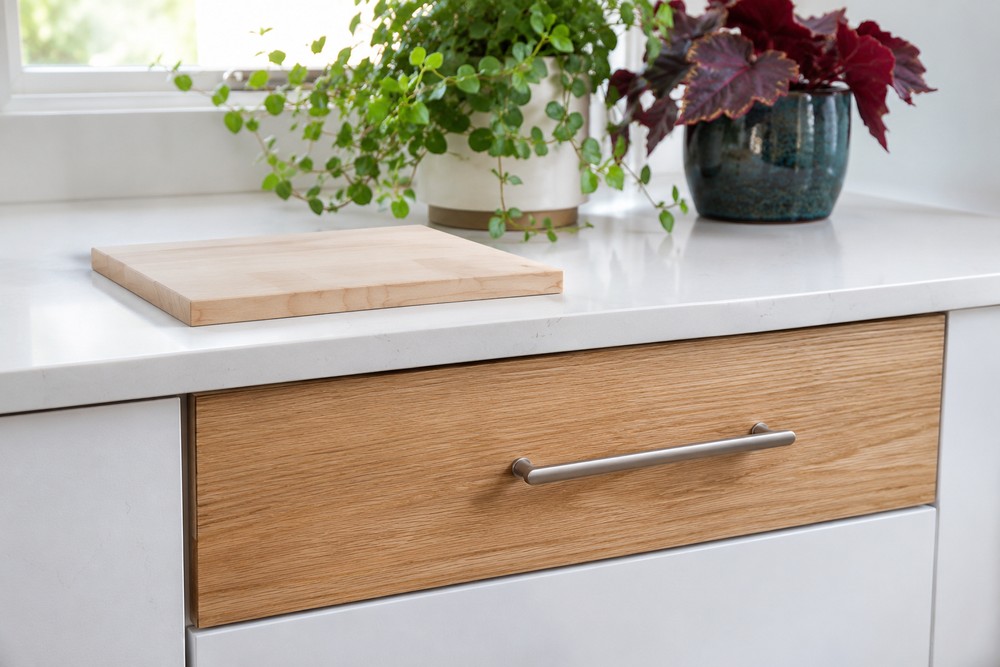
Drawer fronts are small compared with the doors above them, but they do a lot of work in a kitchen or bath. They set the visual rhythm of a cabinet run, take the most daily wear, and often determine whether a refresh looks seamless or slightly off. If you are updating cabinets without replacing every box, new fronts are one of the most cost-effective changes you can make.
Slab styles are especially popular right now because they suit nearly every design direction. A flat, clean face works in a minimalist kitchen, blends into a warm traditional room, and gives you a neutral base for hardware, color and wood grain to do the talking. Their simplicity also makes them easier to wipe down than profiles with grooves and corners.
If you are shopping for a slab drawer front, a few practical details are worth understanding before you place an order. Cabinet Doors offers edge-banded slab options, and the guidance below applies no matter where you buy.
Know What Slab Means
A slab front is a flat panel without raised or recessed profiles. That minimalism makes it versatile, but it also means that materials, edges and finish matter more. Without moldings to hide small flaws, the quality of the panel and the edge treatment is front and center. Cabinet Doors also break down slab drawer front for readers who want to dig further.
Understand Edge Banding
Edge banding is a thin strip of material applied to the edges of a panel to seal and finish them. On an engineered core, it provides a clean, consistent edge and protects against moisture and wear. Ask how the banding is attached and whether it matches the face material. A well-made edge should feel smooth and hold up to everyday use.
Pick the Right Material and Finish
Slab fronts can come in thermally fused laminate, veneer, painted finishes or other surfaces. Each has a different look, price and care routine. Laminates are durable and easy to clean, while veneers show real wood grain. Think about the room: kitchens face grease and steam, while a bathroom vanity deals with humidity. Choose a finish that suits the conditions.
Check Air Quality Standards
Engineered wood often contains adhesives, so it is reasonable to ask about emissions. The U.S. Environmental Protection Agency has frequently asked questions for consumers about the formaldehyde standards for composite wood products. Buying from a supplier who can explain how their products meet these requirements adds peace of mind.
Measure Accurately and Plan Hardware
Measure each drawer opening and decide whether the fronts will be full overlay, partial overlay or inset. Make a list of widths and heights, and check them twice. Consider the hardware you want, such as pulls or knobs, and decide where to drill. Some suppliers offer pre-drilled options, which can save time and avoid mistakes.
Compare Quality, Not Just Price
Consumer Reports offers a helpful kitchen cabinet buying guide that discusses materials, construction and what to look for. Apply the same thinking to drawer fronts: look at the thickness, the smoothness of the finish and the consistency of the edges. A slightly higher price can be worth it for a front that stays flat and looks new for years.
Planning the Project
Updating drawer fronts is a manageable project for many homeowners. Collect measurements, choose a finish that suits your space, confirm lead times and decide who will install. Taking care at each step makes the result look intentional and polished.
Think About Longevity and Cleaning
Drawer fronts are touched constantly, so cleanliness matters. A smooth, sealed surface is easy to wipe with a soft cloth and mild cleaner, while textured finishes may need a little more care. Avoid abrasive pads and harsh chemicals that can dull the surface. If your kitchen sees heavy use, ask how the finish stands up to heat, grease and moisture, and keep a small sample piece to test cleaning products before using them on the full set.
Coordinate With the Rest of the Cabinets
New fronts should work with what remains. If you are keeping existing doors, match the color, sheen and grain direction as closely as you can, or choose a deliberate contrast that looks intentional. Pay attention to the reveal, the small gap between each front, since uneven spacing is more noticeable on a flat face than on a profiled one. Careful planning keeps everything aligned and tidy.
Ask About Lead Times and Returns
Made-to-order fronts take time to produce, so confirm the schedule before you start any demolition or painting. Ask whether samples are available, how orders are packaged to prevent damage in transit, and what the policy is if a size is wrong or an item arrives damaged. Clear answers up front make the project run more smoothly and protect you from costly delays.
A Simple, Lasting Upgrade
A well-chosen slab drawer front gives a room a clean, finished look without a major renovation. Focus on material, edges and measurements, ask good questions and order with care. The reward is a set of cabinets that look fresh, feel solid and make everyday tasks a little more pleasant.