The first sixty minutes of a building emergency often determine how much damage spreads, how safely people can move, and how quickly operations resume. Whether you manage a retail space, a manufacturing floor, or a multi-tenant office, the same core systems show up in every incident: electrical distribution, domestic water and gas, HVAC, and life safety. Knowing where your main disconnect is, how to close an isolation valve without shutting down the sprinkler riser, and when to shed noncritical loads can keep a contained issue from becoming a multi-day outage. This playbook focuses on decisive actions you can take immediately, using on-hand equipment like spill kits, panel schedules, and basic hand tools, while you wait for professional responders.
1. Stabilize Hazards: Power, Water, and Gas Controls
Start by making people safe and stopping the source if you see arcing, smoke at a panel, or water near energized equipment; clear the area and locate the appropriate breaker panel or the building’s main disconnect. Verify the panel schedule labeling before opening any covers, and use proper lockout/tagout when possible. For a localized short, tripping only the affected breaker can preserve egress lighting, elevators, and the fire alarm panel. Once you have called a qualified provider, such as BH3 Industries emergency service, confirm the dispatcher has gate codes, the best entry door, and the electrical room location to reduce time to fix.
For water, close the closest isolation valve upstream of the leak rather than the building main, so restrooms and other zones remain usable. Avoid closing valves on the fire sprinkler riser unless a qualified technician directs you, since impairing the sprinkler system creates a life safety exposure. If you smell gas or hear it hissing, do not operate electrical switches; evacuate, and if it is safe and you are trained to do so, close the exterior meter valve using the correct wrench. Document which valves or disconnects you touched to help the incoming crew restore service methodically.
2. Contain Damage: Leaks, Drains, and Temporary Barriers
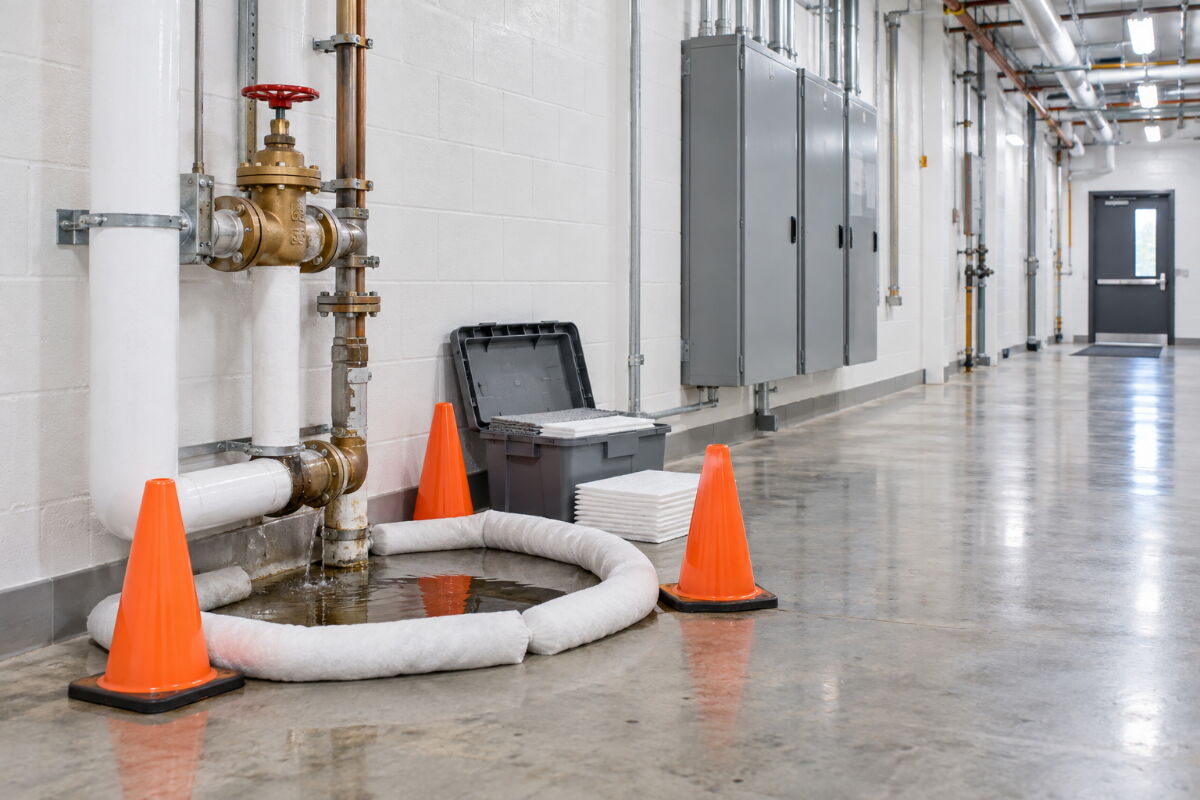
With sources controlled, focus on keeping water, smoke, or debris from migrating. Deploy absorbent socks or booms around door thresholds and along baseboards to contain water. Open floor drains and remove debris from strainers so flow can reach the trap, and locate nearby cleanouts if a backed-up line needs relief. For overhead leaks, position trash cans with liners and place plastic sheeting above suspended ceiling tiles to channel drips safely. On stormy days, check roof drains; ponding near a roof hatch often signals a clogged drain bowl that can escalate into ceiling saturation below.
Ventilation can help or hurt, depending on the incident. During a small smoke event from a belt failure on an air handler, shutting the unit down prevents smoke distribution through supply ducts. Still, it also removes circulation that might disperse odor safely outdoors. If you do ventilate, use exhaust fans or crack dock doors under supervision, keeping security in mind. A common mistake is running portable fans over saturated carpet without dehumidification; that can drive moisture into wall cavities. Instead, use wet vacs for extraction, follow with air movers, and, when available, pair them with dehumidifiers to actually remove moisture from the space.
3. Preserve Operations: Prioritize Loads and Environmental Control
In partial outages, triage which loads must stay energized. You can shed noncritical lighting, decorative signage, and some plug loads at the subpanel to free capacity for refrigeration, point-of-sale systems, and network equipment. If you have an automatic transfer switch and generator, verify the generator is running and that life safety circuits are live; if not, check for a tripped breaker on the generator output and review the ATS status indicator. For small server rooms without dedicated backup cooling, close doors to limit heat gain and deploy a portable spot cooler on a dedicated circuit if available. Extending uninterruptible power supply runtime by shutting down nonessential racks can buy valuable minutes to prevent a hard crash.
Temperature and air quality decisions require trade-offs. For example, keeping a rooftop unit (RTU) running during a minor roof leak may maintain humidity control in a pharmacy or print room, but it risks pulling moisture into ductwork. Conversely, shutting the RTU down limits moisture movement but could let humidity spike and damage stock. Use a handheld thermometer and hygrometer, if you have them, to guide decisions. If refrigeration compressors cycle oddly after a brownout, isolate the affected case or walk-in, document temperatures, and avoid repeatedly resetting ground-fault circuit interrupters, which can mask a genuine fault.
4. Document and Communicate: Photos, Logs, and Vendor Dispatch
Clear documentation helps outside technicians act faster and supports any insurance claim. Take wide and close-up photos of affected panels, valves, ceilings, and floors, and include the panel schedule or valve tag in at least one frame. If safe, read and record utility meters; a spinning domestic water meter with all fixtures off signals a hidden leak. Grab Building Management System (BMS) alarm screenshots, note timestamps, and export trend logs for supply air temperature, pump status, and any variable frequency drive fault codes. Keep a running log of each step, including breaker numbers and valve tags.
Share access details early. Text the responding crew a brief description, two or three photos, and where to park to reach the mechanical room quickly. If the site uses a roof hatch, confirm ladder access is clear and list the hatch location. For chemical storage rooms, have Safety Data Sheets available. In a retail scenario, for instance, a burst pipe over an entry vestibule turns a wet floor into a slip hazard; cordon off the area with cones, place absorbents at the threshold to prevent tracking, and alert the crew to the exact tile bay with the failed fitting. In a second scenario, a data room hot alarm at 86 degrees calls for prioritizing temporary cooling and preserving UPS runtime while you await HVAC service.
After the First Hour: Short-Term Safeguards and Recovery Steps
Once the site is stable and help is en route, put short-term safeguards in place. Place signage at affected doors, install temporary barricades near tripping hazards, and verify exit paths remain open. If you performed water extraction, spot-check baseboards and drywall with a moisture meter and schedule follow-up drying to prevent mold. Reset only clearly tripped breakers once, and if they trip again, leave them off and note the circuit. After a water shutoff, flush drinking fountains and ice machines once repairs are complete, and test backflow preventers on their regular schedule. If the event involved roof penetration, schedule a follow-up inspection once the roof is dry, and keep tarps in place until you can install a lasting patch.
Close the loop by updating your incident playbook. Add panel photos and accurate schedules to your binder, clearly label isolation valves, and stock spill kits with extra absorbent pads and socks. Walk the site with your team to review the main disconnect, ATS, sprinkler riser, and key cleanouts. Confirm the call tree, vendor contacts, and entry instructions are current, and run a short tabletop exercise so each shift knows who handles shutoffs, documentation, and communication. Emergencies never arrive on a convenient timetable, but a focused first-hour response can keep people safe, protect critical equipment, and shave days off recovery time.