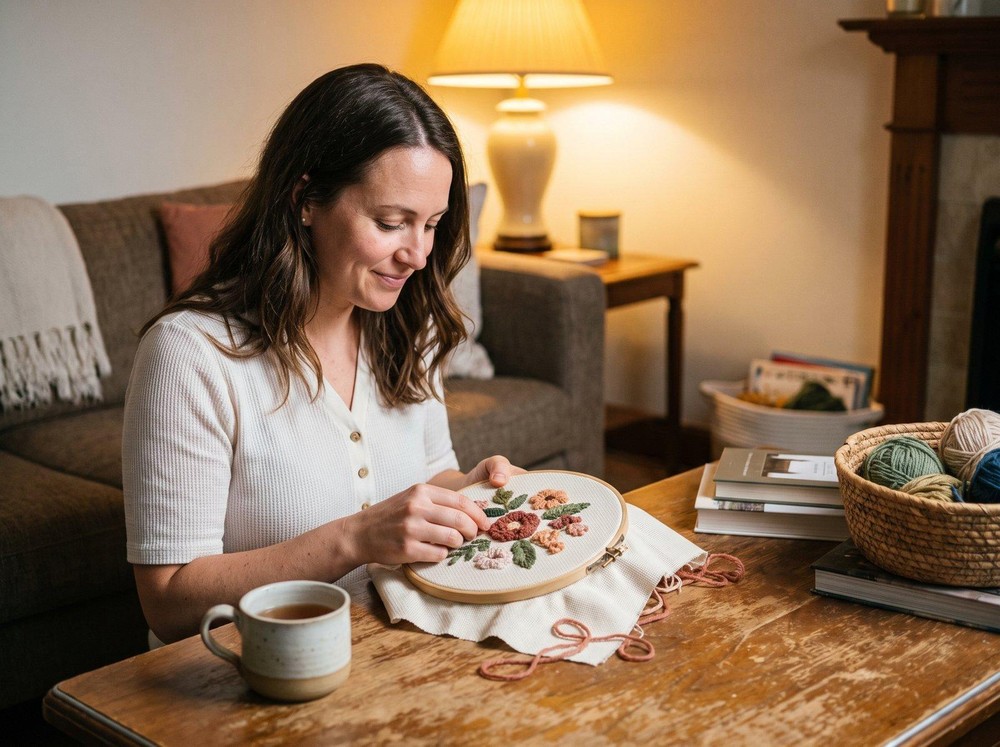
Woman enjoying a relaxing punch needle embroidery project at home in a cozy living room.
It’s 9 p.m., the dishes are done, and your thumb is already hovering over the phone. Most of us know the feeling. We want to unwind, but an hour of scrolling rarely leaves anyone calmer. A hands-on hobby does the job better, provided it’s cheap, forgiving, and doesn’t demand a spare room or a class schedule.
Punch needle fits that description better than most crafts. You push yarn through fabric with a hollow needle and end up with a soft, textured piece you can hang or display. This guide covers what you need to buy, what to skip, how a first session goes, and the mistakes that trip up nearly every beginner.
What Punch Needle Is and Why It Suits Busy Households
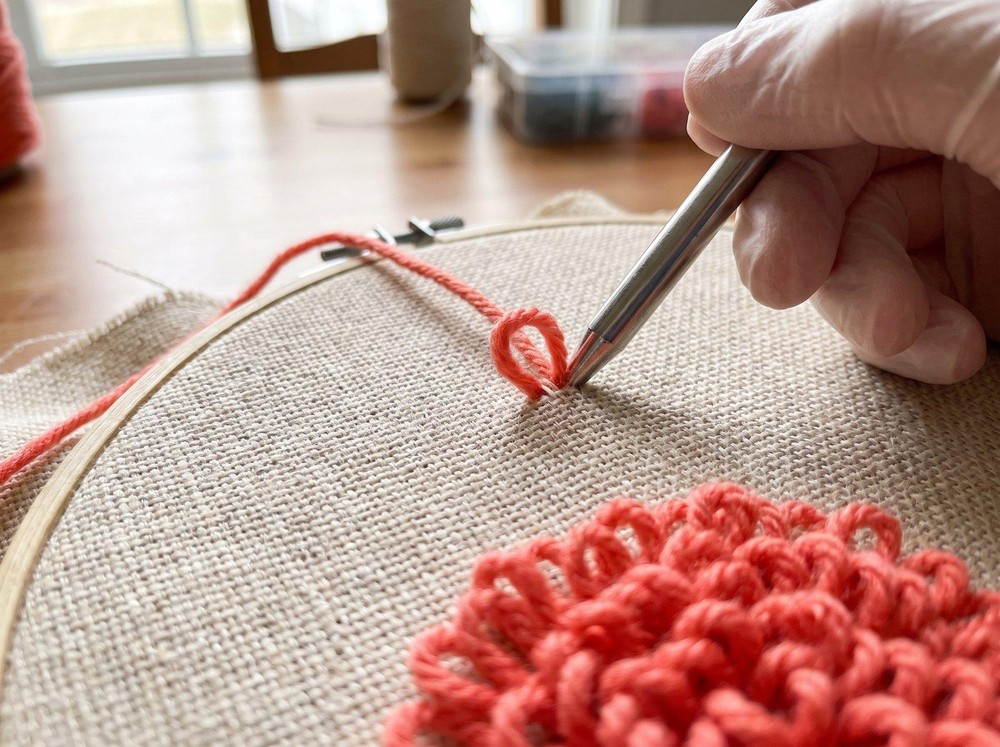
Close-up of punch needle tool creating pink yarn loops on monk’s cloth in an embroidery hoop.
A punch needle is a hollow tool with a sharp tip. You thread yarn through it, push it into tightly stretched fabric, and pull it back out just far enough to leave a loop behind. Repeat that a few hundred times and the loops build into a dense, rug-like surface. The side you work on shows flat stitches; the side facing you shows the loops.
The appeal for a busy household is practical. It’s quiet, it doesn’t make a mess, and the whole setup fits in a tote bag, so you can work on the couch or at a kid’s practice. Small pieces, such as a coaster or a four-inch hoop design, come together in an evening or two. And if you botch a section, you pull the yarn out and punch it again.
Most beginners save time and guesswork by starting with one of the ready-made punch art kits that bundle the needle, fabric, yarn, and a printed pattern. The reason is simple: needle size and yarn thickness have to match, and getting that pairing wrong is the most common reason a first attempt feels frustrating.
Kits also make it easier to get started right away, since everything you need is in one box. Many include step-by-step instructions and beginner-friendly designs, so you can focus on learning the technique instead of figuring out what to buy. They’re also a good way to try punch needle without investing in supplies you might not use again.
Why People Are Picking Up Hands-On Hobbies Right Now
You’re not alone in wanting this. According to h+h americas, 72% of US adults completed a crafting project within a 12-month period. This growing interest is partly driven by the desire to unwind, with many people turning to hands-on hobbies as a way to manage everyday stress and take a break from screens.
There’s a reasonable case that it works, with a caveat. Much of the wellness research covers needlecraft in general rather than punch needle specifically, and it’s self-reported. A survey of more than 3,500 knitters published in the British Journal of Occupational Therapy found most respondents felt calmer and happier after knitting. That doesn’t prove punch needle will do the same, but the repetitive, rhythmic motion is similar.
Finding a way to unwind often comes down to personal preference. Some people enjoy the physical relaxation of a soothing massage, while others prefer keeping their hands busy with a creative project. Punch needle offers a simple way to slow down at home, with no appointments to schedule or special space required.
What You Need to Start (and What You Can Skip)
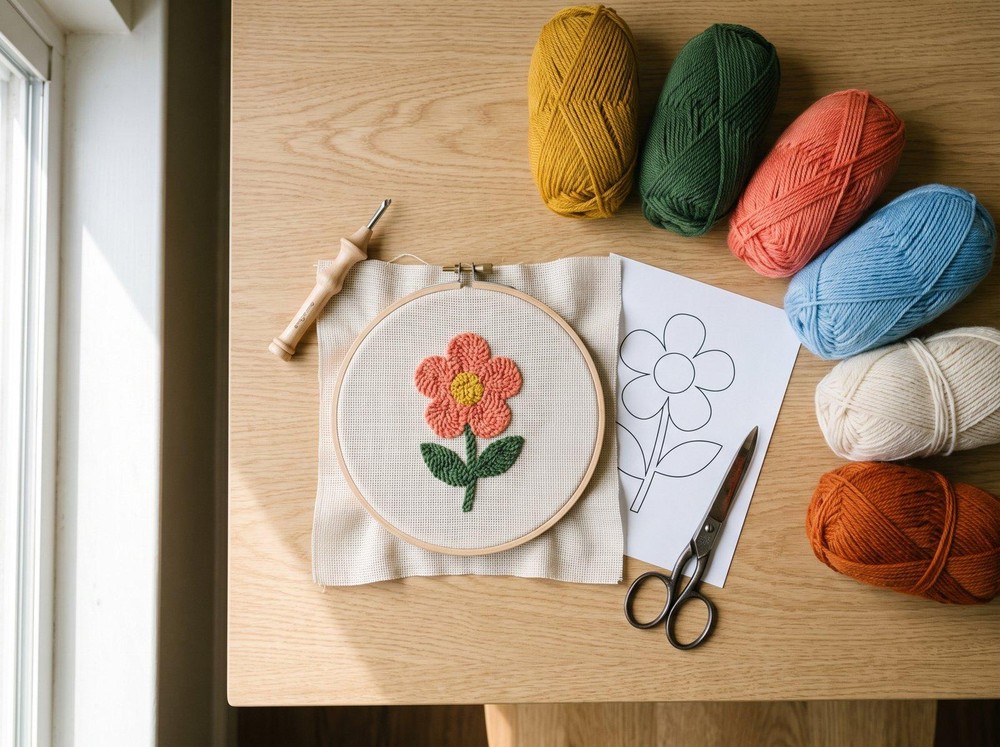
Beginner punch needle flower project in embroidery hoop with colorful yarn, needle, scissors, and pattern.
The essentials are short:
- A punch needle, either fixed or adjustable. Adjustable ones let you change loop height, but fixed needles are simpler for a first project.
- A hoop or frame that holds the fabric drum-tight.
- Monk’s cloth, a loosely woven fabric that the needle passes through easily.
- Yarn that fits your needle’s eye.
- A pattern with bold, simple shapes.
Buy these separately and you can easily spend an afternoon researching compatibility. A kit costs a little more per item in some cases, but it removes the matching problem. Once you know what you like, buying yarn and cloth individually makes sense.
Skip the expensive floor frame, the rug-size project, and any pattern with fine lettering or tiny details. Loops are chunky, so detail gets lost. This low-cost start matters because, according to the Craft Industry Alliance’s 2025 data cited by the U.S. Chamber of Commerce, consumers aged 25 to 44 are crafting more even with less discretionary income.
Your First Session, Step by Step
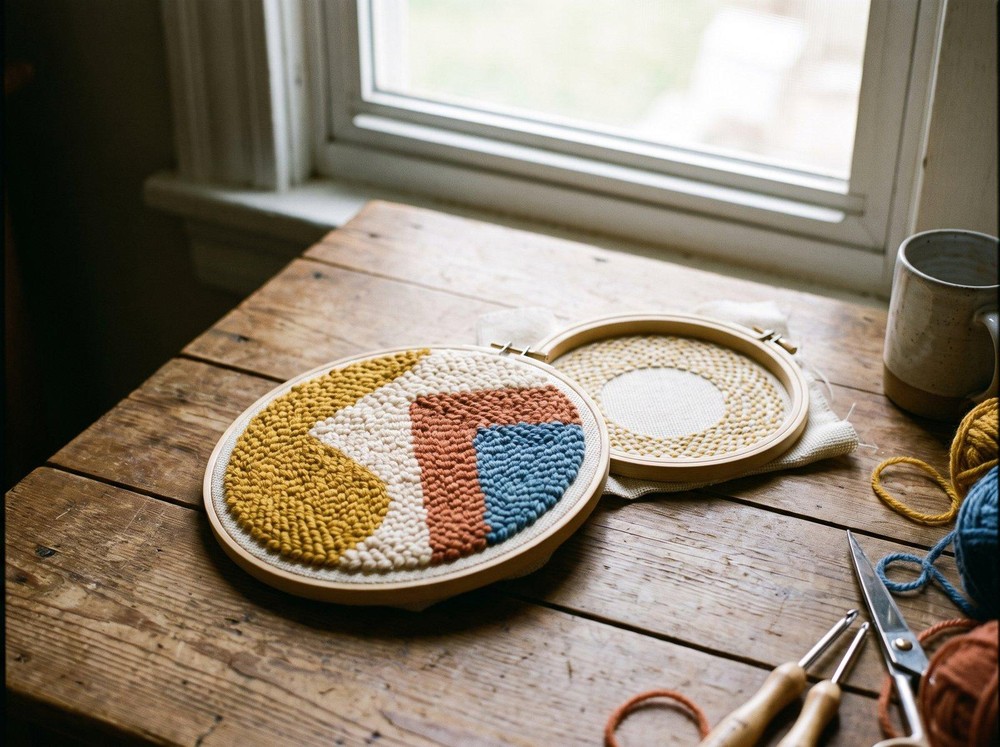
Finished geometric punch needle embroidery in a hoop with colorful yarn and crafting tools on wooden table.
Set aside about two hours and expect the first twenty minutes to feel clumsy. That’s normal.
- Stretch the monk’s cloth across the hoop until it sounds like a drum when you tap it. Loose fabric is the number one cause of lost loops.
- Trace or transfer a simple shape, such as a heart or flower, onto the cloth.
- Thread the yarn through the needle following the kit’s instructions, leaving a short tail.
- Hold the needle like a pen with the bevel facing the direction you’re moving.
- Push down until the handle touches the fabric, then lift only slightly and glide to the next spot.
- Outline first, then fill the shape, finishing each color before starting the next.
Practice on a scrap corner before touching your pattern. The real skill isn’t speed; it’s keeping loop height even, and that comes with a few dozen minutes of repetition. Crafting for Health, a University of Arkansas Cooperative Extension article, notes the wellness benefits of focused handwork, and the steady in-and-out rhythm here is a good example of it.
Common Beginner Mistakes and Easy Fixes
- Loose fabric: loops pull out and the design looks patchy. Re-stretch the cloth and tighten the hoop.
- Lifting the needle too high: this drags the previous loop out. Keep the tip just above the surface.
- Uneven spacing: stitches too far apart leave gaps. Punch slightly closer, about one stitch width apart.
- Overly detailed patterns: swap for something bolder until your loops are consistent.
- Mismatched yarn: if it snags or splits, check that its thickness suits the needle.
Nothing here is permanent. Pull the yarn, re-stretch the fabric, and punch the section again.
Turning Punch Needle Into a Regular Habit
A new hobby is easier to stick with when it fits naturally into your week. Instead of waiting for a completely free evening, try setting aside fifteen or twenty minutes after dinner or before bed. Keep your supplies in one basket so you can get started without spending time setting everything up.
The same principle applies to building a good personal care routine: finding activities that suit your needs and making room for them consistently. With punch needle, that might mean working on a few rows while listening to music or spending a quiet Sunday afternoon finishing a small design. There’s no deadline to meet, and you can work at whatever pace feels comfortable.
Conclusion
Punch needle is one of the easiest ways to build a screen-free habit. It’s relatively inexpensive to start, the learning curve is short, and most mistakes are easy to fix. Pick one bold design, set aside an evening this weekend, and see how much calmer a quiet hour with yarn feels compared with another round of scrolling. Once you’re done, you can leave your finished piece in its hoop as a wall decoration or add a felt backing to turn it into a handmade accent for your home.