Start With the Journey Not Just the Parking Spot
A parking garage can be the difference between a peaceful arrival and a dramatic entrance involving three laps around the block, a confusing ticket machine, and a horn chorus from impatient drivers. Before choosing a garage, consider how easily it fits into your entire trip.
A convenient location should sit near your destination without forcing you into a maze of one way streets. Look at the surrounding roads, traffic patterns, and walking distance to the building you plan to visit. A garage that appears close on a map may still require a long hike across busy intersections or a climb up a hill that seems personally offended by your footwear.
Also watch the entrances and exits. Some garages have restricted entrance points behind buildings, while others have major street access. When arriving at a large event, a garage with many entrances might save time. It also helps to know if you can exit in multiple directions instead of sharing a lane.
Inspect the Garage During the Hours You Need It
A garage can look calm and orderly at noon but feel like a concrete jungle after dark. Think about when you will use it. If you are attending an evening concert, visiting a hospital overnight, or working a late shift, inspect the facility’s nighttime conditions.
Good lighting should cover driving lanes, stairwells, elevators, payment areas, and walking paths. A single glowing bulb above the entrance does not count as a complete security plan. You should be able to see lane markings, nearby vehicles, and anyone approaching your car.
General atmosphere concerns. A garage with broken signs, abandoned shopping carts, and a weather-controlled puddle is less comforting than a clean, active one. Ensure clear directions, clean surfaces, and staff presence. These characteristics indicate that the operator monitors the property rather than hoping no one notices.
Look Beyond the Security Camera Sticker
Many garages advertise camera surveillance, but a camera mounted in a corner is only one part of a useful security system. Ask whether cameras monitor entrances, payment stations, elevators, staircases, and vehicle levels. Cameras should also be visible enough to discourage careless behavior.
Staff presence can make a major difference. Attendants, patrol officers, or customer service employees provide assistance when a gate malfunctions or a driver feels uncomfortable. Their presence may also discourage theft and vandalism. A garage does not need to feel like a fortress with laser beams and a drawbridge, but it should have clear procedures for dealing with problems.
Emergency gear is noteworthy. Check for help buttons, intercoms, emergency phones, and exit signs. If your car won’t start, your phone battery reaches 1%, or you discover you parked on Level Four but don’t know which way it is, these capabilities can be helpful.
Understand the Payment System Before Pulling In
Parking rules become much less charming when you are trapped behind a gate with a line of cars behind you. Learn how the garage charges drivers before entering. Some facilities calculate fees by the hour, while others offer daily rates, evening prices, weekend discounts, or event pricing.
Discover whether payment is made at an exit booth, payment kiosk, mobile app, or entry gate. The garage may take your preferred payment option if it uses a digital system. A machine that only accepts certain cards or denies cash can make leaving uncomfortable.
License plate recognition can make entry and exit quick, but your plate must be readable and correctly connected to your reservation or account. Ticket systems require you to keep the ticket safe. Do not place it in a coat pocket with loose receipts, a leaking water bottle, and three ancient cough drops. Losing it may result in extra charges or a lengthy conversation with customer service.
Reserve Ahead When Demand Is High
Prebooking a space can be useful when parking demand rises sharply. Sports events, festivals, conferences, holiday shopping periods, and busy business districts can fill nearby garages quickly. A reservation gives you a better chance of finding a space without conducting an urban treasure hunt.
Read the reservation terms carefully. Check the arrival window, cancelation policy, grace period, and booking code instructions. Sometimes drivers must scan a QR code, sometimes their license plate. Your phone needs enough battery to survive the trip if the system requires a code.
Reservations can also help you compare facilities. You may be able to review prices, operating hours, vehicle restrictions, and available services before leaving home. This is especially helpful when choosing between a basic self-park garage and a facility offering valet service.
Measure Your Vehicle Honestly
Drivers often know their vehicle’s make and model but not its exact height. That becomes important when the garage entrance has a low clearance sign. Roof racks, cargo boxes, lifted suspensions, oversized tires, and work equipment can add more height than expected.
Check the clearance before entering. A few extra inches can separate a smooth arrival from an expensive lesson in geometry. If you drive a large pickup, van, or SUV, look for garages with spacious ramps and wider stalls. Tight turns may be manageable in a compact car but can feel like attempting to steer a refrigerator through a hallway.
Consider the space around the parking stall too. A spot may technically fit your vehicle while leaving almost no room to open doors. Spaces near pillars can be awkward for large vehicles, and compact stalls may be unsuitable for trucks. Motorcycles may require designated areas rather than ordinary car spaces, so confirm the facility’s rules before arriving.
Check the Walking Experience
Parking does not end when the engine stops. The route from your vehicle to the street or building entrance should be easy to understand. Elevators and stairwells should have clear signs, and each level should be labeled in a way that does not require detective work.
Take note of pedestrian lanes. A garage where people walk directly through moving traffic can be stressful, especially during busy periods. Marked walkways, mirrors at blind corners, speed control signs, and visible crossings create a more organized environment.
If you are carrying luggage, groceries, equipment, or a tired child who has entered the emotional phase known as “I cannot walk another step,” elevator access becomes especially important. Confirm that elevators operate during your planned departure time. Some garages restrict certain entrances or elevators overnight.
Read the Rules About Damage and Assistance
Before parking, check the facility’s lost ticket, locked vehicle, dead battery, towing, and vehicle damage rules. Different garages offer different services. Some offer jump start services or security escorts, while others just display a phone number sign.
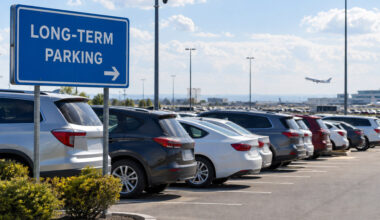
Valet parking or long-term parking? Photograph your car. Taking notes on scratches, dents, and car condition will help avoid confusion. Even in a busy garage, hide valuables. A jacket on the seat may seem harmless, but a passerby may see it as a prize.
Keep your parking location in your phone or take a picture of the level and section marker. Garages are excellent at making every floor look identical. Without a reminder, finding your vehicle can become a memory competition between you and a concrete building.
FAQ
How early should I arrive at a busy parking garage?
Arrive early enough to account for traffic, a possible entrance line, and time spent walking to your destination. Event venues often create sudden demand, so arriving shortly before the start time may leave you circling full levels while the clock judges you silently.
Is valet parking safer than self parking?
Valet parking can be more convenient, but safety depends on the operator’s procedures, staffing, and vehicle handling practices. Review the facility’s policies, keep the claim ticket secure, and remove valuables before handing over the keys.
What should I do if I forget where I parked?
Check your phone’s photographs, parking application, reservation email, or location history. If those fail, contact the garage office or security desk. Provide your license plate, vehicle description, and approximate arrival time to help staff locate the correct area.
Can a garage refuse oversized vehicles?
Yes. Garages may restrict vehicles based on height, length, width, weight, or equipment attached to the roof. Confirm the clearance and vehicle rules before entering, especially if you drive a van, truck, recreational vehicle, or SUV with accessories.
Are parking reservations always guaranteed?
Reservation policies differ between operators. Some hold a space for a specific period, while others guarantee access to the facility but not a particular stall. Review the terms for arrival windows, late entry, cancellations, and event pricing before relying on the booking.