Most flat roofs fail one small area at a time. A seam opens near a drain, ponding water softens a patch of membrane, and suddenly three bids land on your desk, all of them quoting a full tear off. That jump from a leak to a six figure invoice is the part I want you to question before you sign anything.
Here’s the honest version. A coating buys you time, and it does it at a fraction of replacement cost, but only when the roof deck and the existing membrane still have structure left. Get that call wrong and you’ve spent money painting over a problem that needed surgery. I’ve walked both paths on warehouse and retail buildings, so this guide is the checklist I’d hand a property manager who’s staring down that first quote.
If you own or manage a building in Kansas, it helps to work with Wichita roof coating contractors who will get on the roof and tell you straight whether a coating is viable, because the answer depends on the roof in front of you, not the brochure. What follows is how to judge that answer for yourself.
What a roof coating actually does, and what it can’t do
A coating is a liquid polymer you roll or spray over the existing surface. It cures into a membrane that keeps water out, blocks UV, and reflects sunlight. That reflective piece matters more than most owners realize: the U.S. Department of Energy notes that cool roofing surfaces absorb less solar heat, which cuts the load on the building’s cooling system. On a low slope roof over a conditioned space, that can show up in summer utility numbers.
What it can’t do is restore structure. If the insulation under the membrane is soaked, if the deck has soft spots, if water has been sitting against fasteners for years, a coating seals a sponge. It looks fine in month one and starts blistering by month eighteen. I’d rather lose a job than put a coating on a saturated roof, because the callback costs more than the work ever earned.
The sweet spot is a roof that’s aging but sound. You’ve got a few years of service left in the membrane, maybe a handful of small repairs a season, and a capital budget that’s tight this fiscal year. That’s the profile where coating earns its place.
The five questions I ask before recommending a coating
This is the part you can use tomorrow. Walk the roof with your contractor and get an answer to each one, in writing.
- How much ponding water sits there 48 hours after rain? Standing water shortens coating life and signals a drainage or slope problem that needs fixing first.
- Can I see or feel soft spots in the deck? If yes, coating is off the table until the deck is repaired.
- Is the existing membrane still bonded? Blisters and loose laps have to be cut out and patched before any coating goes down.
- How many layers of old coating or patch are already up there? A roof with five generations of repair won’t accept a new membrane evenly.
- What’s the realistic service window? A good contractor will give you a range in years, not a promise of forever.
Notice none of those questions is about price. Price matters, but it’s the last filter, not the first.
Coating versus replacement, side by side
| Factor | Roof coating | Full replacement |
|---|---|---|
| Typical upfront spend | Low, often a fraction of the alternative | High, plus tear off and disposal |
| Disruption to tenants | Minimal, work happens above the ceiling | Loud, dusty, sometimes multi day |
| Best fit | Structurally sound but aging roof | Saturated insulation or failing deck |
| Realistic outcome | Adds service years before replacement | Resets the roof’s full service life |
| Warranty shape | Material and workmanship terms vary a lot | Often longer, with manufacturer coverage |
Read that table twice, because the third row is where most bad decisions happen. Coating is a stay of execution, not a pardon. If your roof is genuinely finished, the right move is a replacement plan, phased if your budget demands it.
A real scenario, minus the sales gloss
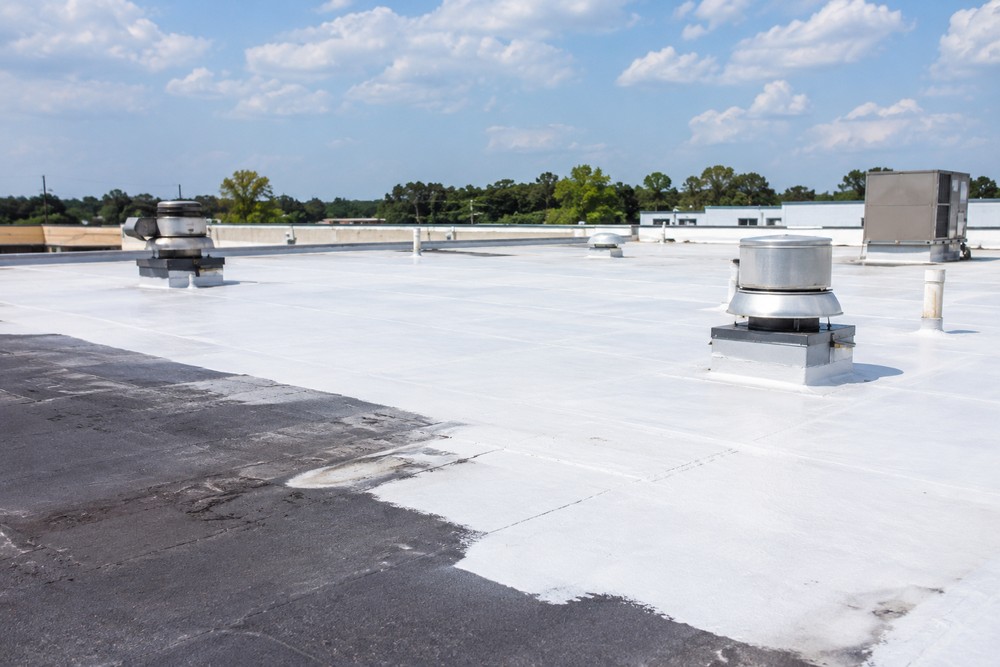
Picture a 1980s strip center with a white modified bitumen roof and a single low corner that holds water. The owner had two small leaks the previous spring and one in fall. The deck was solid, the laps were tight except near the drain, and most of the surface still had its granules. That’s the coating case, and I’d take it every time: fix the drain slope, patch the two open laps, coat the whole field, and put the replacement on a five year capital plan.
Now flip it. A metal warehouse where the purlins are rusting through and every fastener has a wet halo around it. Coating that roof would be lighting money on fire. The moisture is already inside the assembly. You’re replacing panels, and no amount of reflective paint changes that.
Here’s where I’ll take a side. For a commercial building with a sound deck, I pick coating first, almost every time, even when the owner could technically afford replacement. The cash you don’t spend on a tear off this year can go toward drainage fixes and maintenance that actually extend the whole roof’s life. Spend it on the cause of the damage, not the symptom.
Three things to demand in the contract
Coating work fails on the prep far more often than the product. Make sure your agreement spells out surface cleaning and repair before any membrane goes down, because coating over dirt or a loose lap is a warranty claim waiting to happen. Get the cure and weather windows in writing too, since application limits and fall protection obligations sit in the same scope. The Occupational Safety and Health Administration sets the fall protection rules that apply here, and a crew that shrugs at that question is a crew to walk away from.
Second, ask for references on buildings of similar size and roof type. A contractor who coats a thousand square feet of shed roof is not automatically qualified for your forty thousand square foot warehouse.
Third, insist on a written moisture assessment before work begins. It’s the cheapest hour of the entire project and it’s the one that protects you from the worst outcome: paying for a coating that bubbles off next summer.
Maintenance keeps the math in your favor
Coated roofs still need attention. Twice a year, clear the drains, look for ponding, and patch anything that lifts. That habit is also good facility practice. The U.S. General Services Administration maintains guidance on roof inspection and maintenance for federal buildings, and the principles in it apply to any commercial property owner who wants a roof to reach its expected service life.
Budget the inspection the same way you budget landscaping. It’s cheap, it’s scheduled, and it prevents the kind of surprise that shows up as water on a tenant’s ceiling on a Saturday morning.
So which one is right for your building?
Go back to the five questions. Sound deck, bonded membrane, manageable ponding, and a repair list under a few items, and a coating is likely the smart, budget friendly move. Saturated insulation, rusted fasteners, or a decade of patch on top of patch, and you need a replacement conversation, not a coating quote.
Either way, get someone on the roof before you get a number. Ask what they’d do on their own building. Then watch whether the answer matches what’s actually under their boots. If you’d like to compare a coating plan against a replacement timeline for your property, get a free estimate and ask the contractor to walk you through the moisture assessment line by line. That single conversation will tell you more than any three page proposal.