Replacing a driveway, trenching for new water or sewer service, or digging footings for an addition can seem straightforward until the first bucket hits buried utilities, soft ground, or a narrow side yard. In Gresham and the wider Portland area, long rainy seasons, clay-rich soils, and older neighborhoods add real-world constraints that can slow work or drive up costs. A few focused steps before equipment arrives can prevent utility strikes, inspection failures, rutting, and rework. This article covers the practical prep that keeps small residential excavation on track: scoping and permits, underground mapping, site access and spoils, and how to handle water and compaction so the finished surface holds up.
Pin Down the Excavation Scope and Permits
Define exactly what will be excavated, where spoils will go, and how you will restore the site. Depths for footings, utility trench routes, cut-and-fill areas, and any right-of-way work, such as curb cuts or sidewalk removal, affect permits and inspections. Grading and erosion-control approvals may be required even for small projects, and trench-safety rules apply at surprisingly shallow depths. Local permitting staff and Gresham excavating contractors can clarify which activities trigger applications, traffic control plans, or inspections so you don’t get stopped mid-dig.
Map What’s Underground Before a Bucket Moves
Call 811 for public utility locates, then go further by identifying private lines on your property, such as irrigation mains, low-voltage lighting, propane, and old septic components. Daylight critical crossings with a vacuum excavator or careful hand digging to confirm depth and alignment, which paint and flags alone cannot guarantee. For example, on one driveway replacement, an unmarked shallow gas service could be within the first few inches below the slab; on another, a PVC irrigation header may cross the planned trench. Verifying these early allows you to reroute, sleeve, or protect lines and avoid dangerous strikes and water damage.
Plan Access, Staging, and Spoils Management on Tight Lots
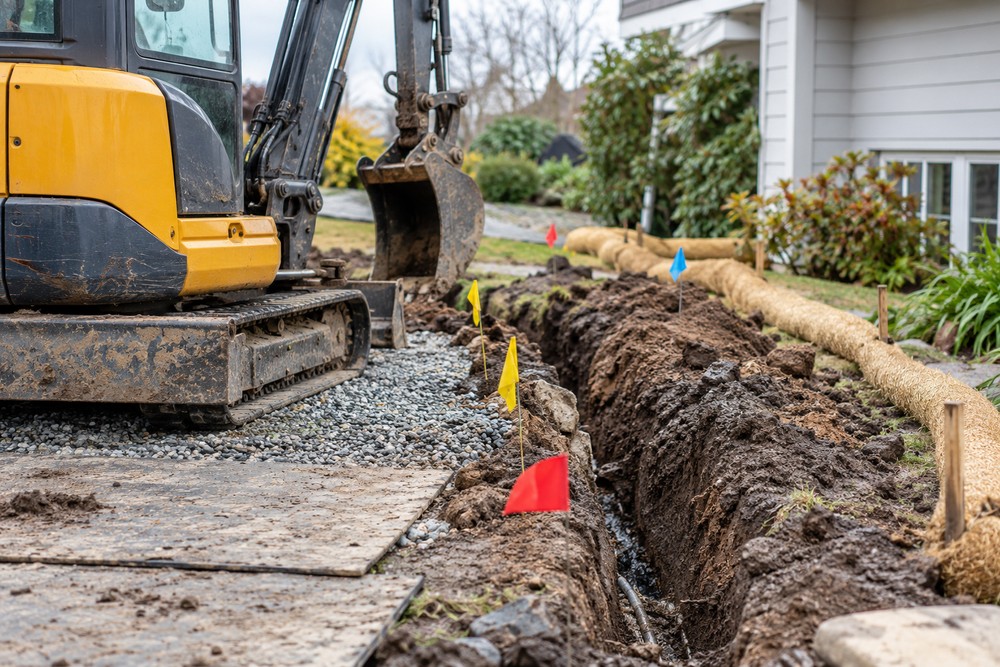
Equipment and trucking choices hinge on access. A mini excavator or compact track loader may be the only machines that fit through a side yard or gate without removing fencing. Soft lawns, tree roots, and decorative pavers call for ground protection such as timber mats or plywood. At the same time, steel plates can temporarily bridge sidewalk cuts or protect a driveway at the street. Decide where to stockpile spoils so piles don’t overload a slope, encroach on a neighbor’s property, or smother tree roots. Also plan a rock construction entrance to keep mud off public roads once hauling starts.
Trucking is a trade-off: a larger transfer truck means fewer trips, but it may exceed neighborhood weight limits or struggle with tight turning radii. Smaller dump trucks are more maneuverable but can require more cycles and staging room. If you cannot haul immediately, consider a contained on-site stockpile with wattles at the toe, then use a skid steer to shuttle material curbside when the truck arrives. For a backyard ADU footing behind a narrow side yard, you might prebuild a temporary access ramp with crushed rock and geotextile so the machine can travel without sinking, then remove it when the forms are set.
Work With Water: Rain, Groundwater, and Soil Stability
Western Oregon weather and perched groundwater can quickly turn an open excavation into a soupy mess. Plan basic dewatering and stormwater controls before digging. A simple sump with a trash pump may keep a footing trench workable; deeper or sandy conditions may require well points or staged diversion swales to steer clean runoff around the work area. For soft subgrades, geotextile fabric under a layer of crushed rock creates a working platform that resists rutting. Choosing between waiting for a dry window and stabilizing the ground in place depends on your schedule, soil behavior, and budget.
Erosion and sediment control is not just a formality. Install silt fence on the downhill side of disturbed soil, set wattles across slopes to slow runoff, and use inlet protection to keep sediment out of storm drains. Many jurisdictions require a rock construction entrance to knock mud off tires; it also saves you time cleaning streets. A common mistake is deploying these controls after the first storm hits. Inspect and maintain them throughout the job by removing accumulated sediment, repairing torn fence fabric, and keeping pumps and hoses screened and working.
Backfill and Compaction: Setting Up What Comes Next
Backfill choices determine how pavements, patios, and lawns perform for years. Structural fill or crushed rock placed in thin lifts and compacted with a plate compactor or jumping jack will support slabs and pavers; topsoil belongs only in the final few inches of landscaped areas. Utility trenches under driveways or walkways should be compacted as you go, not just at the top, to avoid long, narrow settlement lines. Some projects benefit from third-party compaction testing, while most require at least a visual inspection before you cover pipes, footing drains, or waterproofing.
Protect what you have just installed. Do not backfill until foundation coatings cure and drain tile with filter fabric and cleanouts is in place. Around water and sewer lines, follow bedding specifications so pipe bells are supported and slopes maintain grade. If a patio crosses a recent trench, expect to add extra base rock and compact it to bridge the transition, or you may see a dip a few months later. Keep temporary erosion controls in place until vegetation reestablishes, and monitor patched areas for minor settlement so you can top off before final paving or landscaping.
Good excavation prep doesn’t require a long checklist; it requires a few decisions made in the right order. Confirm scope and permits so inspections go smoothly. Locate and, when needed, daylight utilities so a bucket never surprises you. Stage access, mats, and spoils so machines can work without tearing up the site. Manage water with simple dewatering and erosion controls, and backfill with compactable material in measured lifts. With those pieces in place, the digging phase becomes predictable, and the surfaces you restore will stay where you put them.