Older diesel-powered machines still earn their place on farms, job sites, in yards, and in small fleets. A proven machine with familiar controls, a sound drivetrain, and available replacement parts may be more practical than a rushed replacement. For owners evaluating an overhaul or replacement, a dependable CAT 3306 engine can also be part of a broader plan to keep essential equipment running.
Age alone does not decide whether a machine is worth maintaining. Condition matters more. A well-kept loader, truck, generator, excavator, or agricultural machine can provide reliable service for years, while a newer unit with neglected maintenance can become unreliable. The goal is not to prevent every repair. It is to find developing problems early enough to plan the work safely and sensibly.
Why Older Diesel Equipment Still Matters
Legacy equipment’s simple mechanical systems, proven repair procedures, and familiar sounds and feel help skilled operators spot changes in cranking, idling, exhaust, or hydraulics before they cause a breakdown.
But replacement may be wiser when critical failures recur, parts are unavailable, damage or safety risks are serious, or repairs exceed the machine’s practical value. Decide based on workload, condition, and downtime costs.
Start With A Baseline Condition Check
Before ordering major parts or changing a maintenance plan, document the equipment’s current condition. A baseline makes later changes easier to identify and gives technicians useful information when troubleshooting.
- Record engine hours, mileage, or work cycles.
- Check for oil, fuel, coolant, hydraulic fluid, and exhaust leaks.
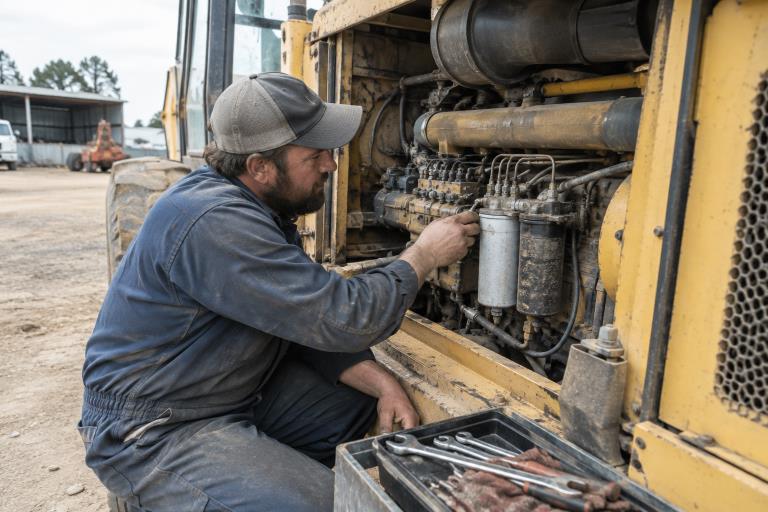
- Inspect belts, hoses, clamps, wiring, battery cables, and engine mounts.
- Note starting time, idle quality, oil pressure, coolant temperature, smoke, and unusual sounds.
- Review past repair records for repeated leaks, overheating, fuel restrictions, or electrical issues.
For example, an engine that starts normally but slowly loses coolant does not automatically have an internal engine problem. A careful inspection, a cooling-system pressure test, a hose check, and a radiator cap evaluation can help narrow down the cause before expensive work begins.
Build A Maintenance Schedule That Gets Used
A practical schedule should match the machine’s duty cycle, environment, and manufacturer service instructions. Equipment operating in dust, extreme heat, wet conditions, or long idle periods may need more frequent attention than equipment used occasionally in cleaner conditions.
Daily Or Pre-Shift Checks
- Check engine-oil and coolant levels with the machine safely shut down and cooled as required.
- Look for fresh drips, wet fittings, damaged hoses, and loose clamps.
- Drain the fuel-water separator when the equipment’s instructions call for it.
- Inspect the air-intake path, restriction indicator, and visible debris around cooling surfaces.
- Watch gauges and warning lights during startup and operation.
- Listen for new rattles, knocks, belt noise, or vibration.
Weekly Or Hour-Based Checks
- Inspect battery terminals, cable condition, and charging performance.
- Check belt wear, pulley alignment, hose condition, and grease points.
- Service air, oil, and fuel filters at the recommended interval, or sooner when operating conditions warrant.
- Confirm that steering, brakes, controls, guards, and lighting remain safe and functional.
Seasonal Checks
- Verify coolant protection and inspect the cooling system before hot-weather work.
- Test cold-weather starting aids, batteries, and block heaters before winter use.
- Prepare machines for storage by addressing leaks, protecting batteries, and preventing water from entering fuel systems.
Protect The Fuel System
Fuel problems can resemble more serious engine failures. Hard starting, uneven running, power loss, or excessive smoke may result from restricted filters, water contamination, air entering a fuel line, or poor fuel storage practices. Check the basics before replacing injectors, pumps, or other costly components.
Keep filler areas clean, inspect fuel lines for rubbing or cracking, and avoid letting equipment sit indefinitely with questionable fuel. Water is especially important to control because it can contribute to corrosion and operational problems in diesel storage systems. The EPA notes that corrosion in diesel fuel storage tanks can affect filters and other system components, underscoring the importance of clean, dry fuel handling.
Keep The Cooling System Working
Overheating is often preventable, but repeated high temperatures can damage components and shorten engine life. Inspect more than the coolant reservoir: check the radiator, screens, charge-air cooler (if equipped), fan, belts, hoses, and clamps. Dirt, chaff, mud, and oily debris restrict airflow. Use the specified coolant and service procedure. Check coolant safely, and investigate recurring loss instead of repeatedly topping it off; small leaks at hose connections or the water pump can worsen under load.
Use Oil And Records To Spot Trends
Used-oil analysis tracks contamination, viscosity, and wear metals, especially in hard-working equipment. Its value comes from consistent sampling and comparisons over time; one report alone is not a diagnosis. Consider oil pressure, temperature, service history, filter condition, and operating symptoms too.
Simple digital records can track hours, fuel, oil additions, filter changes, repairs, and photos of leaks or gauges. They help show whether a minor issue is stable or worsening.
Respond To Early Warning Signs
- Hard starting: Check battery condition, cranking speed, fuel delivery, air leaks, and starting aids.
- Blue smoke: Investigate possible oil consumption and operating conditions.
- White smoke: Consider cold operation, fuel delivery, timing, or compression concerns.
- Black smoke: Inspect air supply, intake restrictions, fueling, turbocharger operation where equipped, and load.
- Low oil pressure: Stop operation and diagnose the cause before further damage occurs.
- Rising coolant temperature: Check airflow, coolant level, circulation, fan operation, and load.
- New vibration or knocking: Inspect mounts, accessories, rotating components, and driveline parts promptly.
Plan Repairs By Risk
Stop the machine immediately for severe overheating, low oil pressure, major fuel leaks, sudden knocking, loss of control, or hazardous exhaust. Monitor minor seepage or stable noise only if safe, and record it for follow-up.
Before a major repair, weigh its cost against expected service life, annual use, technician and parts availability, safety needs, and overall machine condition. A documented repair may be worthwhile if the chassis, hydraulics, transmission, and attachment remain reliable.
Conclusion
Keeping legacy diesel equipment ready for work depends on disciplined basics: clean fluids, accurate inspections, reliable cooling, timely filter service, and records that reveal change. The most effective maintenance plan is not the most complicated one. It is the plan operators and technicians follow consistently, with the judgment to stop and investigate when the machine begins to tell them something is wrong.