Minneapolis winters test every part of a home, and the electrical system is no exception. Subzero temperatures, heavy snow, and months of nonstop heating push wiring, outlets, and panels harder than any other time of year.
Most problems start small, like a flickering light or a breaker that trips now and then. Knowing how cold weather affects your electrical system helps you catch those warning signs early and keep your home safe all winter.
Heating Season Puts Extra Strain on Your Wiring
Once temperatures drop, your home starts working overtime. Furnace blowers run for hours, lights stay on longer during short winter days, and families spend more time indoors using TVs, computers, and kitchen appliances. All that extra demand adds up, and circuits that handle summer loads just fine can start to struggle in January.
When breakers trip repeatedly or lights flicker every time the furnace kicks on, it’s time to call a professional. Lakeside Electric provides the kind of electrical repair Minneapolis homeowners can count on during the coldest months, tracking down overloaded circuits and failing connections before they turn into bigger, more dangerous problems.
Warning signs usually show up before a serious failure. Pay attention to lights that dim when an appliance starts, outlets or switch plates that feel warm, buzzing sounds from the panel, or a faint burning smell. Any of these can point to loose connections or overloaded circuits, and both get worse under heavy winter use.
Spreading out your power use helps ease the strain. Avoid running several high-wattage appliances on the same circuit at once, and learn which outlets connect to which breakers. If you keep tripping the same breaker, resist the urge to swap in a bigger one, since that removes the protection keeping your wiring from overheating.
Space Heaters and Extension Cords Raise the Risk
Space heaters help warm up drafty rooms, but they draw a lot of power. A typical model pulls around 1,500 watts, which takes up most of the capacity on a standard 15-amp household circuit. Add a hair dryer or a microwave on the same circuit, and you’ll likely trip the breaker or overheat the wiring.
Always plug space heaters directly into a wall outlet. Extension cords and power strips usually can’t handle that kind of continuous load, and they can overheat, melt, or start a fire. Keep heaters at least three feet away from curtains, bedding, furniture, and anything else that can burn, and never leave one running while you sleep.
Look for heaters with automatic tip-over shutoff and overheat protection, and choose models that carry a certification mark from a recognized testing lab like UL or ETL. Older heaters without these features belong in the recycling bin. A modern unit costs far less than the damage a single electrical fire can cause.
Extension cords create problems of their own during winter. People often run them under rugs, behind furniture, or through doorways to power holiday lights and heaters, which can damage the insulation and trap heat. If you rely on extension cords every day, your home probably needs more outlets, and an electrician can add them safely.
Outdoor Outlets, Meters, and Service Lines Take a Beating
Outdoor electrical components face the harshest conditions all winter. Snow, ice, and freezing rain can work their way into exterior outlets, light fixtures, and junction boxes, and moisture inside an electrical box can cause shorts and tripped GFCI outlets. Weatherproof in-use covers keep outlets protected even while something stays plugged in.
Your electric meter and service mast need attention, too. Heavy snow and ice can pile up on the meter, and falling ice from the roof can bend the mast or damage the connections where power enters your home. Gently clear snow away from the meter, but leave any visible damage to your utility or a licensed electrician.
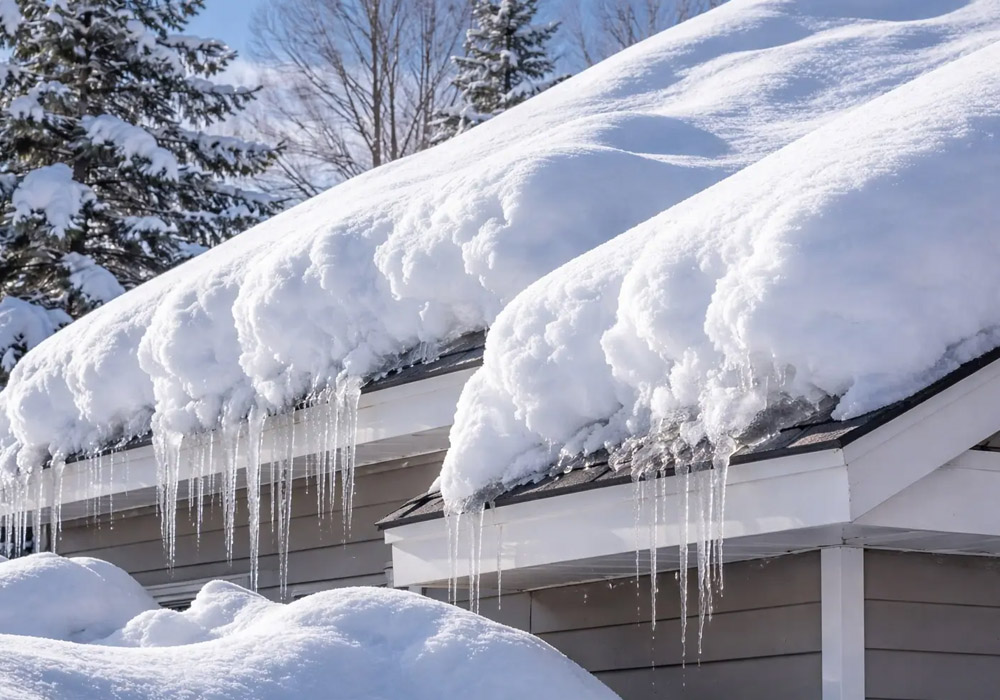
Ice dams cause more electrical trouble than many homeowners realize. When meltwater backs up under shingles, it can leak into attics and walls, soaking light fixtures, ceiling boxes, and wiring along the way. Water and electricity never mix well, so if you notice leaks near fixtures, shut off the circuit and call for help right away.
Heat tape and roof de-icing cables can help prevent ice dams, but they need proper installation. Plug them into GFCI-protected outdoor outlets, inspect the cables before each season, and replace any with cracked or brittle insulation. Damaged heat cables can short out or overheat, which turns a helpful tool into a fire hazard.
Older Minneapolis Homes Face Extra Challenges
Minneapolis has a large stock of older homes, from early 1900s bungalows in Longfellow to classic foursquares in Powderhorn and Kingfield. Many of these houses still run on wiring that nobody designed for modern power demands, and winter’s heavier loads expose those weaknesses quickly. A quick look at your panel can tell you a lot.
Knob-and-tube wiring and ungrounded two-prong outlets show up in plenty of older homes around the city. This type of wiring lacks a ground connection, and its aging insulation can crack and crumble, especially in cold attics and exterior walls. Fuse boxes and outdated panels raise similar concerns when heating season pushes demand higher.
Cold temperatures make old insulation even more fragile. Wiring that runs through unheated spaces like attics, garages, and crawl spaces can become stiff and brittle, and any movement or vibration can crack it further. Exposed conductors create shock and fire risks, so it’s smart to have an electrician inspect older wiring before winter arrives.
Temperature swings can also cause condensation inside panels and junction boxes, especially in basements and attached garages. Over time, that moisture leads to corrosion on breakers and connections. An electrician can check for rust, tighten loose terminals, and recommend upgrades if your panel no longer fits your home’s needs or can’t safely handle winter demand.
Get Ready for Winter Power Outages
Ice storms and heavy snow can bring down power lines across the metro, sometimes leaving homes without electricity for hours or even days. In a Minnesota winter, losing power means losing heat, so a little preparation makes a big difference. Keep flashlights, fresh batteries, blankets, and a charged power bank somewhere easy to reach.
A backup generator can keep your furnace, sump pump, and refrigerator running during an outage. Have an electrician install a transfer switch or interlock kit so the generator connects to your home safely. Never plug a portable generator into a wall outlet, since that practice, called backfeeding, can electrocute utility workers and damage your wiring.
Carbon monoxide becomes a serious threat whenever generators or alternative heat sources come out. Run portable generators outdoors only, well away from windows, doors, and vents, and never inside a garage, even with the door open. Minnesota requires working CO alarms near sleeping areas, so test yours before the cold season starts.
Power surges often hit when electricity comes back on after an outage. Those spikes can damage furnace control boards, appliances, and electronics in an instant. A whole-home surge protector installed at your panel guards everything connected to your system, and it pairs well with plug-in surge strips for computers and TVs.
Wrap Up
Cold weather puts real pressure on your home’s electrical system, from overloaded circuits and space heaters to snow-covered meters and aging wiring. Most of these problems give off warning signs long before they become dangerous.
Stay alert, use heaters and cords wisely, and schedule an inspection before the deep freeze sets in. A little attention now keeps your home warm, powered, and safe until spring.