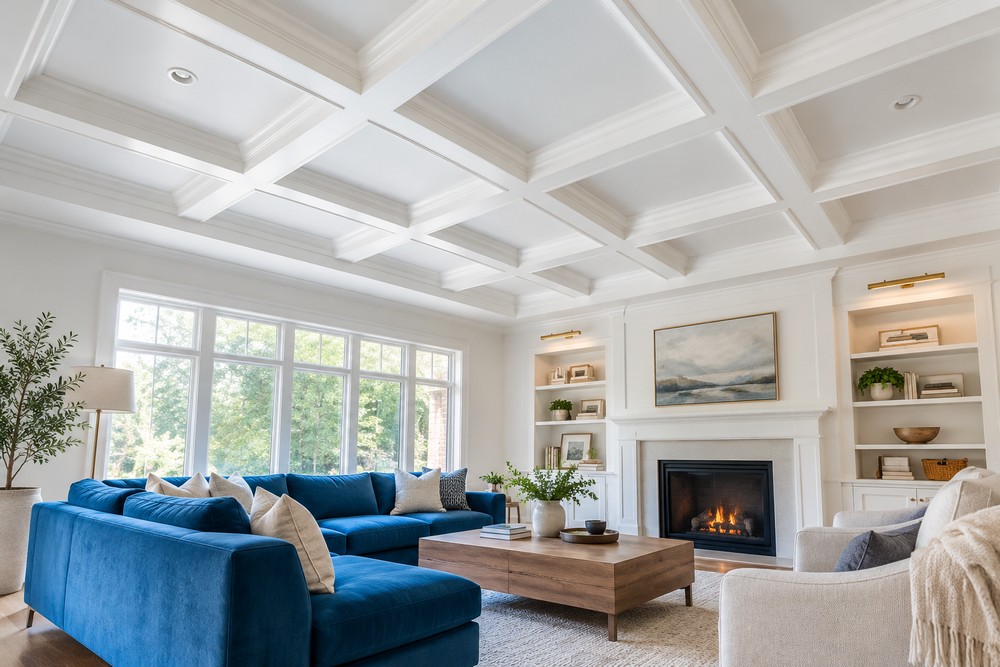
Look up in most modern homes, and you’ll find a flat white ceiling that nobody ever notices. It does its job, sure, but it adds nothing to the room. Coffered ceilings change that with a grid of recessed panels that adds depth, structure, and a touch of old-world class.
The good news is that this classic feature fits surprisingly well with clean, contemporary interiors. Below, we’ll look at why coffers work, how to light and finish them, and which rooms suit them best.
Why Coffered Ceilings Feel So Refined in Today’s Homes
Coffered ceilings have a long history. The Romans used sunken panels in the Pantheon’s dome to cut down weight, and Renaissance architects later turned them into a sign of wealth and good taste. That history still clings to the look today, so even a modest living room picks up that stately, museum-like feel once you add coffers.
The material you pick decides much of the mood. Painted plaster or MDF reads crisp and bright, while a wood coffered ceiling brings warmth, grain, and a lived-in richness that paint can’t quite copy. Wood works well in rooms where you want the ceiling to feel cozy rather than formal, like a den or reading nook.
Part of the charm comes from depth. Each recessed panel catches light differently, creating a soft pattern of shadows that shifts as the day goes on. The eye loves texture and contrast, and a coffered grid quietly delivers both without cluttering the room with extra décor or busy wallpaper.
Many new builds feel like blank boxes, with plain drywall everywhere and little architectural personality. A coffered ceiling fixes that in one move. It creates a clear focal point overhead, adds a sense of careful handiwork, and makes the whole space look more custom, even when the rest of the furniture is fairly simple.
The Visual Tricks That Make a Room Feel Bigger and Grander
A coffered grid works like lines on a page that your eyes naturally follow. Walk into a room with one, and you’ll almost always glance up within a few seconds. That simple upward pull makes people notice the room’s full volume, not just the floor space and the furniture on it.
It sounds odd, since coffers hang beams down from the ceiling, but the recessed sections can actually make a room feel taller. Your brain reads the deeper panels as extra height, especially when you paint them a shade lighter than the beams. Interior designers use this trick all the time in rooms with around nine-foot ceilings.
Symmetry plays a big part, too. A neat grid of equal squares or rectangles brings a sense of calm and order to the space, which feels great in busy family homes. Also, it gives you a natural guide for placing furniture, rugs, and lighting, since you can line everything up with the beams above.
Then there’s the way light moves across the ridges and recesses. Sunlight from a window hits the beams first and leaves the panels slightly darker, creating gentle contrast. At night, lamps and ceiling fixtures bounce off the different surfaces and give the room a warm, layered glow that a flat ceiling simply can’t match.
Pairing Coffers With Minimalist and Contemporary Styles
If you love a modern look, skip the heavy crown moldings and carved rosettes you’d see in a traditional manor. Choose flat, square beams with crisp edges and simple, shallow panels. This pared-down version keeps the structure and depth of a coffered ceiling while matching the clean lines of contemporary furniture and fixtures.
Monochrome palettes work beautifully here. Paint the beams and panels the same white, soft gray, or even deep charcoal, and let the shadows do the talking. The effect feels subtle at first glance, but the texture becomes more obvious as the light changes, which gives you drama without loud colors or busy patterns.
For a little more warmth, you can mix natural wood beams with white or cream panels. This combo pulls in the Scandinavian and Japandi trends that so many people love right now. The wood adds an organic feel, while the pale panels keep the ceiling light and prevent it from feeling too heavy overhead.
Balance matters once the ceiling goes up. A detailed grid overhead already gives the room plenty of visual interest, so keep the furniture below fairly sleek. Think low-profile sofas, slim metal legs, and simple coffee tables. That way, the ceiling and the furniture complement each other instead of fighting for your attention.
Lighting Ideas That Bring Coffered Panels to Life
Recessed spotlights are the classic choice. Placing one small downlight in the center of each coffer keeps the layout tidy and spreads light evenly across the room. It also respects the grid, since the lights follow the same rhythm as the beams. Choose fixtures with slim trims so they don’t distract from the panels.
Hidden LED strips are a favorite for modern homes. Tuck them along the inner edges of each coffer, and they’ll wash the recessed panels with a soft glow. The beams seem to float, and the whole ceiling gets a gentle, hotel lobby look. Plus, LEDs use little power and last for years.
Want a real centerpiece? Hang a statement pendant or chandelier from the middle coffer, especially above a dining table or in a living room with a clear center. The surrounding grid frames the fixture like a picture frame frames a painting. A sculptural light in brass, glass, or matte black works great against both painted and wooden panels.
Dimmers might be the most underrated addition. Bright, full light helps when you’re cleaning or hosting a big dinner, but evenings call for something softer. Turn the lights down, and the coffers start to cast deeper shadows that make the room feel cozy and intimate. A smart dimmer also lets you set scenes from your phone.
Choosing the Right Rooms for a Coffered Design
Living rooms are the obvious starting point, since that’s where you spend most of your time and host guests. In open-plan spaces, coffers can quietly mark out different zones without walls. You might add a coffered section above the lounge area and leave the kitchen ceiling flat, letting visitors know where one space ends and the next begins.
Dining rooms suit coffers perfectly. The table already draws attention, and a coffered ceiling above it adds a formal, special-occasion feel to every meal. Center a chandelier in the grid over the table for a polished, symmetrical look that makes even a weeknight pasta dinner feel like an event.
Home offices and libraries are another great match. Paired with built-in bookshelves and wood paneling, a coffered ceiling gives the room that classic study vibe you’d expect in an old university building. It also helps with focus, since the room feels more like a dedicated workspace and less like a spare bedroom with a desk shoved in.
Ceiling height deserves a careful look before you commit. Coffers eat up a few inches of vertical space, so rooms under eight feet can feel cramped. Nine feet or more gives you room to play with deeper beams. If your ceiling sits on the low side, shallow coffers with slim beams keep the effect without crowding the room.
Wrap Up
Coffered ceilings prove that a classic feature can sit comfortably in a modern home. With the right grid, finish, and lighting, they add depth, structure, and warmth that a flat ceiling never could.
Start by deciding which room would benefit most, then choose a style that fits your furniture and ceiling height. Get those choices right, and you’ll have a ceiling people actually look up to admire.