Most tank water heaters quit on a schedule you can’t see: they start failing quietly, then announce themselves on the coldest morning of the year. If you own a home in Lindale or anywhere along the Highway 69 corridor, you’re working with a specific set of conditions, from hard water to homes that sit on pier and beam and hide a heater in a tight closet. So let’s skip the suspense and talk about how to get ahead of it.
The short version: watch for the four signals below, decide whether to repair or replace based on age and water quality, and get your heater inspected before it becomes an emergency. If you’re already past the warning stage, water heater services in Lindale can handle the repair or swap before a small leak turns into a flooded utility room. Homeowners around here often underestimate how much of a water heater’s lifespan is decided by water chemistry and how the unit was sized in the first place.
Know what your water is doing to the tank
Mineral content in the water supply matters more than most people realize. Sediment settles at the bottom of a tank, insulates the burner from the water, and forces the unit to run longer to heat the same amount. Over time that cooks the tank from the inside out.
If you have a natural gas storage tank, the tell is often sound: a low rumble as the burner struggles to transfer heat through a layer of scale. Electric units give the same hint through longer recovery times. According to the Department of Energy, water heating can account for a substantial share of a household’s annual energy costs, which means scale buildup hits you twice, once on the tank and again on the bill.
Flushing the tank annually is the single most straightforward maintenance task a homeowner can do. It takes about half an hour and a garden hose. I’d argue it’s more valuable than anything else you can do for a water heater short of replacing it, and most people skip it.
Four signals that mean you should start planning
You don’t need to memorize a manual. Watch for these and you’ll have plenty of warning:
- Rust-colored hot water: if the hot tap looks rusty and the cold side runs clear, the tank lining is breaking down.
- Damp ground or a damp ring at the base: pinhole leaks in the shell usually start near the bottom seam.
- Shortened hot water supply: you used to get a full shower plus a sink; now you get one.
- Age past ten years: manufacturer data generally places tank life in that range depending on maintenance.
Any one of those is a signal, not a verdict. Two together usually means you’re on borrowed time, so I’d start pricing a replacement before the water kills a ceiling.
Repair or replace? Run the age test
Here’s the test I use and the one I’d hand to a neighbor: find the data plate on the tank, read the manufacture date, and compare that to the repair cost.
| Tank age | Sensible move | Why |
|---|---|---|
| Under 6 years | Repair the failing part | Lifetime is still ahead of you; a thermostat or element swap is cheap |
| 6 to 10 years | Weigh the fix against a swap | A pilot assembly or valve is worth repairing on a sound tank |
| Over 10 years | Replace | Shell failure risk climbs and a repair rarely buys real time |
The exception: leaks from the tank body itself. You can’t patch a shell. Replace it and move on.
Why East Texas homes frame the decision differently
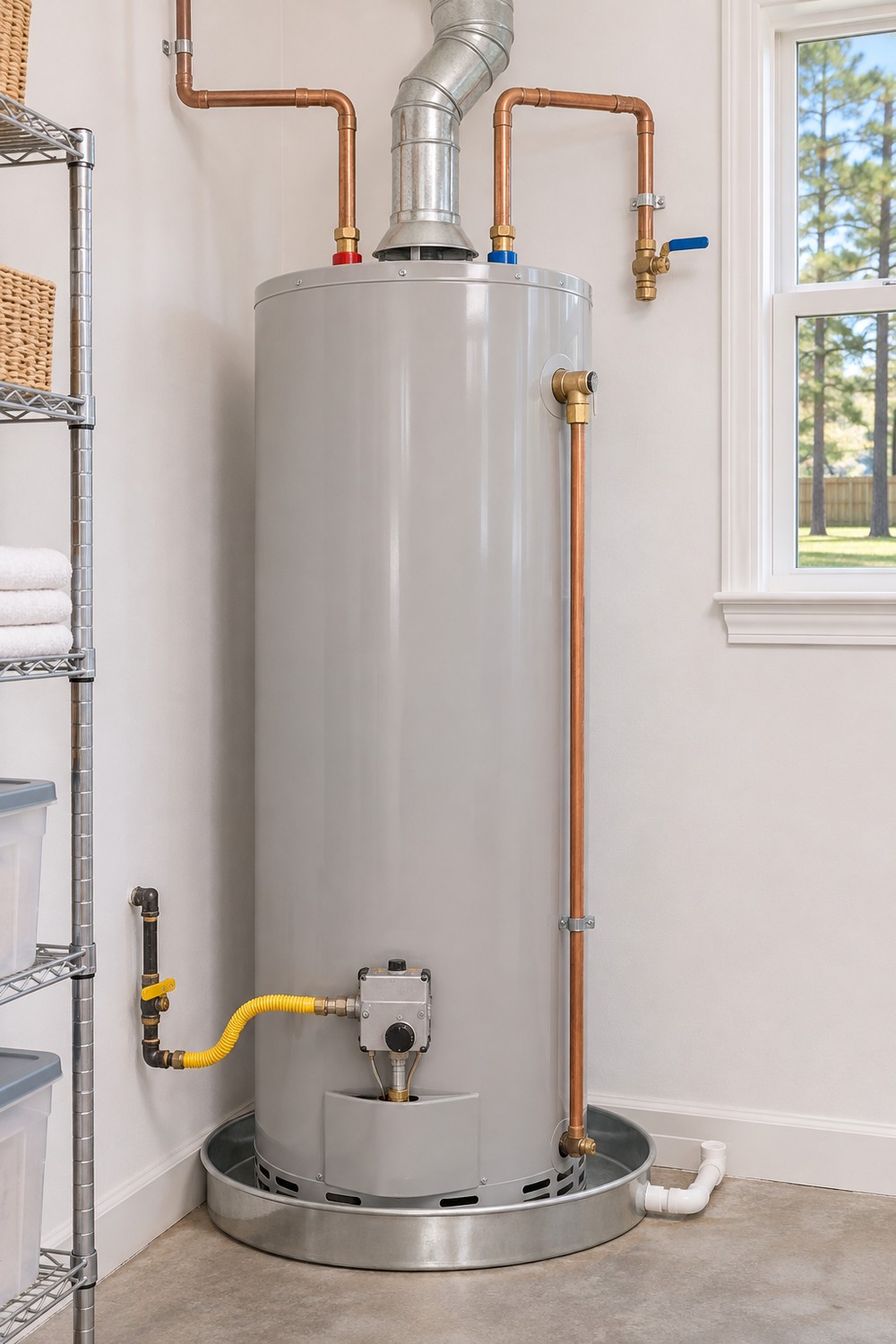
Two local factors push replacement timelines around here. The first is hard water, which shortens tank life in a way that doesn’t show up on a spec sheet. The second is attic and closet placement. A lot of Lindale homes tuck the heater into a cramped space, sometimes on a platform above living space, which makes the drip pan and drain line non-negotiable. Skip those and a slow leak finds the sheetrock.
If your unit sits in an attic, I’d add a water alarm on the pan. They cost less than a nice dinner and they text you before your ceiling does. The Environmental Protection Agency notes that efficient home water use reduces pressure on utilities, which is another reason a correctly sized, well-maintained unit is worth doing right.
Tank or tankless in a small East Texas town?
Tankless units save space and heat water on demand, but they come with a caveat: they demand a dedicated gas supply, proper venting, and maintenance the average homeowner can’t do alone. In a tight closet where a tank barely fits, tankless is a real win. In a home with a large soaking tub and multiple showers running at once, sizing gets harder and you may spend more than you planned.
My take after watching this play out: if your closet is cramped and your hot water use is small, a well-sized tankless is worth the conversation. If you have a family of five and a weekend long-shower habit, a correctly sized tank is the less fussy answer. The Bureau of Labor Statistics tracks plumbing and HVAC work as a trade where equipment familiarity varies a lot, which is a long way of saying ask a plumber who works on both before you sign anything.
How a replacement actually runs
Most standard tank swaps take a few hours. Here’s what a homeowner should expect from a plumber doing the job right:
- Confirming gas or electric source, venting, and available clearances.
- Using a pan and drain line if the unit sits in an attic or on a platform.
- Pulling the correct permit and coordinating a gas inspection where required.
- Hauling the old unit off and testing for leaks before they leave.
- Walking you through the temperature setting and the annual flush.
Ask about the warranty before the truck shows up. Parts warranties on tanks are often longer than labor coverage, and that gap matters more than the sticker price on the box.
What to do this week
Check the manufacture date on your tank. Note the square footage of your home and how many showers run in the morning. Then decide whether the current unit has a season or a year left in it. A little planning now beats a call at 11 p.m. when the hallway is wet. Call a local plumber who knows Lindale attics, water, and building stock before the water finds the drywall, and ask the honest question: can this tank survive another summer?