Sustainability Has Moved Into The Blueprint
Sustainable construction is no longer a niche interest reserved for people who own three reusable water bottles and know the entire life story of their compost bin. It has become a practical part of modern building design.
Today, developers, architects, contractors, and homeowners are paying closer attention to the materials used in residential and commercial projects. They are asking important questions. Can this material be reused? How much energy did it take to produce? Will it last for decades? What happens to it when the building is eventually renovated or demolished?
Construction has a big environmental impact, thus these considerations matter. Construction requires materials, transportation, energy, water, and labor. Better materials may cut waste, decrease emissions, and improve indoor air quality without turning every building into a log cabin in the forest.
The most successful sustainable projects combine environmental responsibility with comfort, durability, attractive design, and sensible costs. In other words, a green building should not look like it was assembled by squirrels from leftover garden furniture.
Designing With Materials That Work Harder
A sustainable material does more than simply look natural. Its environmental performance depends on several factors, including where it comes from, how it is manufactured, how long it lasts, and whether it can be reused or recycled.
Durability is especially important. A material that lasts for generations can be more sustainable than a product that appears eco-friendly but needs to be replaced every few years. Constant repairs create more manufacturing, more transportation, and more waste. The planet does not need a building that requires a dramatic rescue mission every time the weather changes.
Local availability can also improve sustainability. When materials travel shorter distances, transportation-related emissions may be reduced. Local products may also reflect regional building traditions and climate needs, giving a property a stronger connection to its surroundings.
Designers increasingly examine a material’s life cycle. This entails looking beyond its arrival at the construction site to its future. What can be disassembled, repaired, reused, or recycled is more likely to stay useful than end up in a landfill.
Timber Brings Warmth And Structure
Wood remains one of the most popular materials in sustainable construction because it combines structural usefulness with visual appeal. It can be used for framing, flooring, wall finishes, ceilings, doors, furniture, and decorative features.
Responsible forestry practices are essential. When forests are managed carefully, new trees can be planted as older ones are harvested. Wood also stores carbon during its useful life, which gives it an environmental advantage over some highly energy intensive materials.
Modern engineered wood products have expanded the possibilities even further. Laminated beams, cross laminated panels, and other manufactured wood systems can create strong structural components while making efficient use of smaller pieces of timber. These products allow architects to design large spaces with a softer and more natural appearance.
Wood also affects the atmosphere of an interior. Its texture and color can make a room feel warmer, calmer, and less sterile. A concrete room may whisper modern sophistication, but a timber wall tends to say, “Please sit down and stay awhile.”
Reclaimed Materials Give Old Buildings A Second Act
Reclaimed wood and other recovered materials can add personality to a new project while reducing the demand for freshly manufactured products. Old flooring, beams, bricks, doors, and architectural details can often be cleaned, repaired, and adapted for modern use.
This approach is particularly valuable in renovation projects. A building may contain materials with plenty of life left in them, even if their original purpose has disappeared. An old factory beam can become a countertop. Recovered bricks can become an interior feature wall. Former warehouse timber can be transformed into shelving or furniture.
Reclaimed materials are not perfectly uniform, and that is part of their appeal. They may contain knots, marks, faded colors, or small variations created by years of use. These details give a project a sense of history that brand new materials often struggle to imitate.
However, careful inspection is necessary. Recovered products need to be checked for pests, mold, chemical treatments, structural damage, and other concerns. Character is wonderful. A surprise colony of termites is less charming.
Bamboo Grows Quickly And Works Creatively
Bamboo has become a popular choice for flooring, cabinetry, wall panels, furniture, screens, and decorative elements. Some varieties grow rapidly, making bamboo a renewable resource when cultivated and harvested responsibly.
Its natural strength and flexibility allow it to serve both practical and visual purposes. Bamboo can create a clean contemporary appearance, a relaxed tropical mood, or a textured feature that adds movement to an otherwise plain room.
The manufacturing process still matters. Bamboo products may involve adhesives, finishes, and energy intensive processing, so the final product should be evaluated rather than automatically labeled perfect. Sustainability is not a magic sticker that makes every product behave like a forest fairy.
When properly selected, bamboo can reduce reliance on slower growing resources while offering a durable option for many interior applications.
Recycled Metal Adds Strength Without Fresh Extraction
Metals such as steel and aluminum are common in modern construction because they are strong, adaptable, and long lasting. Their environmental cost can be significant when they are produced from newly extracted ore, but recycling changes the equation.
Recycled steel can be used in framing, reinforcement, roofing, stairs, doors, and countless other applications. Since steel can be recycled repeatedly without losing its fundamental strength, it has a useful place in circular construction systems.
Aluminum also benefits from recycling. Recycled aluminum generally requires far less energy than producing new aluminum from raw materials. It can be used for window frames, roofing, cladding, railings, and interior details.
Metal components are often easy to remove and reuse during renovations. A building designed with accessible connections instead of permanent layers of adhesive and confusion can make future recovery much easier. The goal is to ensure that tomorrow’s demolition crew is not forced to excavate the structure with the emotional intensity of archaeologists searching for a lost empire.
Concrete Is Learning New Tricks
Concrete has been a construction favorite for centuries because it is strong, versatile, fire resistant, and suitable for everything from foundations to decorative surfaces. Its production does, however, involve substantial emissions.
Researchers and manufacturers are developing lower impact concrete mixes that use industrial byproducts, recycled aggregates, alternative binders, and other ingredients. Some approaches reduce the quantity of traditional cement required, while others explore methods of capturing or storing carbon.
Recycled concrete from demolished structures can sometimes be crushed and reused as aggregate. This helps reduce the volume of construction waste and limits the need for newly quarried stone.
Concrete can also become more sustainable through thoughtful design. Longer building life, efficient structural planning, repairable surfaces, and careful quantity control all help reduce its total environmental burden. Sometimes the greenest material is simply the material that is not used unnecessarily.
Insulation Deserves More Attention
Insulation may not receive the glamorous attention given to timber walls or dramatic recycled steel staircases, but it plays a vital role in sustainable buildings. Effective insulation helps keep interiors warm during cold weather and cooler during hot weather, reducing the workload placed on heating and cooling systems.
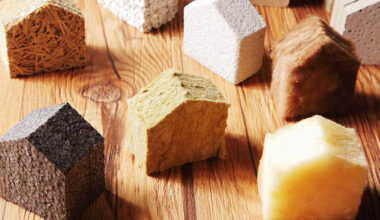
Options include cellulose made from recycled paper, sheep wool, cork, recycled denim, wood fiber, and advanced foam products. Each material has different qualities relating to moisture, fire resistance, installation, durability, and thermal performance.
Good insulation can improve comfort in every season. It may also reduce energy bills and create quieter rooms by limiting the movement of outdoor noise. A well insulated bedroom is one of the few places where traffic, weather, and the neighbor’s enthusiastic lawn equipment can all be politely ignored.
Finishes Can Make A Building Healthier
Sustainable construction also includes paints, adhesives, sealants, flooring, and surface treatments. Low emission products can help improve indoor air quality by releasing fewer volatile chemicals into the home.
For some applications, lime plaster, clay coatings, plant-based oils, and water-based paints are attractive. Sustainable interiors can include recycled glass counters, cork flooring, and linoleum manufactured from renewable resources.
The best choices depend on the location and purpose of the material. A bathroom floor needs different performance characteristics from a bedroom wall. Sustainability should work alongside safety, moisture resistance, maintenance needs, and expected lifespan.
FAQ
What makes a building material sustainable?
A sustainable material generally has a lower environmental impact across its life cycle. Important factors include responsible sourcing, low manufacturing energy, durability, low toxicity, recyclability, and the possibility of reuse.
Is wood always an environmentally friendly choice?
Wood can be a sustainable choice when it comes from responsibly managed forests and is used efficiently. The product’s treatment, transportation, durability, and end of life options also affect its overall environmental performance.
Are reclaimed materials suitable for modern homes?
Yes, reclaimed materials can work beautifully in modern homes. They should be professionally inspected, cleaned, and prepared to ensure they are safe and suitable for their intended use.
Can recycled steel perform as well as new steel?
Recycled steel can provide comparable strength and durability to newly produced steel. Its performance depends on the grade, manufacturing process, and specific construction application.
Why is insulation important in sustainable design?
Insulation reduces unwanted heat transfer between the interior and exterior of a building. This can lower energy use, improve indoor comfort, and reduce the demand placed on heating and cooling equipment.
Does sustainable construction always cost more?
Not necessarily. Some sustainable materials may have higher upfront prices, while others are affordable or even cost less. Reduced energy bills, fewer repairs, longer service life, and lower waste can improve the financial picture over time.
Can concrete be used in an environmentally responsible project?
Concrete can be part of a sustainable project when lower impact mixes, recycled aggregates, efficient structural designs, and long service life are considered. Its environmental performance depends heavily on how it is produced and used.
What should homeowners consider when choosing sustainable materials?
Homeowners should examine durability, maintenance, safety, energy performance, local availability, recycled content, and end of life options. A material should be practical for the building, not merely impressive on a product label.