Great-looking piercings start with choices that respect how bodies actually heal. Cartilage has less blood supply than earlobes, pressure changes how tissue responds, and jewelry style and metal can either calm a new channel or keep it irritated for months. If you are planning a nostril, helix, conch, or navel piercing, thinking through anatomy, daily pressure, and initial jewelry will set you up for fewer bumps, less migration, and a smoother downsizing visit later. This article focuses on the relationships that matter most, so your piercing sits where it can settle comfortably and look aligned over time.
1. Anatomy Checks That Influence Placement
Before a needle comes out, anatomy dictates what will actually heal. Ear cartilage varies. A pronounced rim may suit a helix or flat, while a tight fold may suit a rook better than a snug. In the nose, a properly placed nostril piercing sits where the alar cartilage is thicker and stable, while a true septum piercing uses the “sweet spot” of soft tissue just beneath the cartilage rather than passing through the cartilage itself. Navel viability depends on a defined overhang and adequate tissue depth for a curved barbell. For a deeper overview of professional evaluation and technique, see https://platinumink.net/expert-body-piercings/.
One common mistake is forcing symmetry when anatomy differs. If your left helix is thinner than your right, matching jewelry heights exactly can leave one side too close to the rim, increasing the chance of migration or causing the jewelry to sit at an awkward angle. A careful piercer will mark placements with your head in a natural position, account for cartilage thickness, and choose an appropriate gauge so the channel is strong without unnecessary tissue trauma. Slightly adjusting the mark is often better than chasing a look that your ear shape will constantly resist.
2. Pressure and Movement: Sleep, Helmets, and Headphones
Constant pressure and friction can interfere with calm healing. Sleeping on a new helix or flat can compress the channel, causing irritation bumps at the entry or exit and sometimes changing the angle. Headphones that sit over the ear can press against a fresh conch or daith, while motorcycle or bicycle helmet straps can repeatedly rub a rook or tragus. If your routine includes any of these pressures, choose a placement outside the contact area, use a travel pillow with an opening to keep pressure off the ear, or consider a lobe or nostril piercing that avoids your regular gear until your schedule becomes easier to manage.
Nostril and septum piercings bring their own movement challenges. Seasonal allergies can increase wiping and nose blowing, which may rotate rings and move labret posts. A small, properly fitted nostril labret generally moves less than a hoop during y healing. For some people, appropriate jewelry may be positioned to reduce snagging, but follow your piercer’s guidance for any movement or adjustment. Planning around how you sleep, breathe, sneeze, and use protective equipment is just as important as choosing a jewelry style you like.
3. Studs, Rings, and Barbells: Jewelry Choices for Initial Piercings
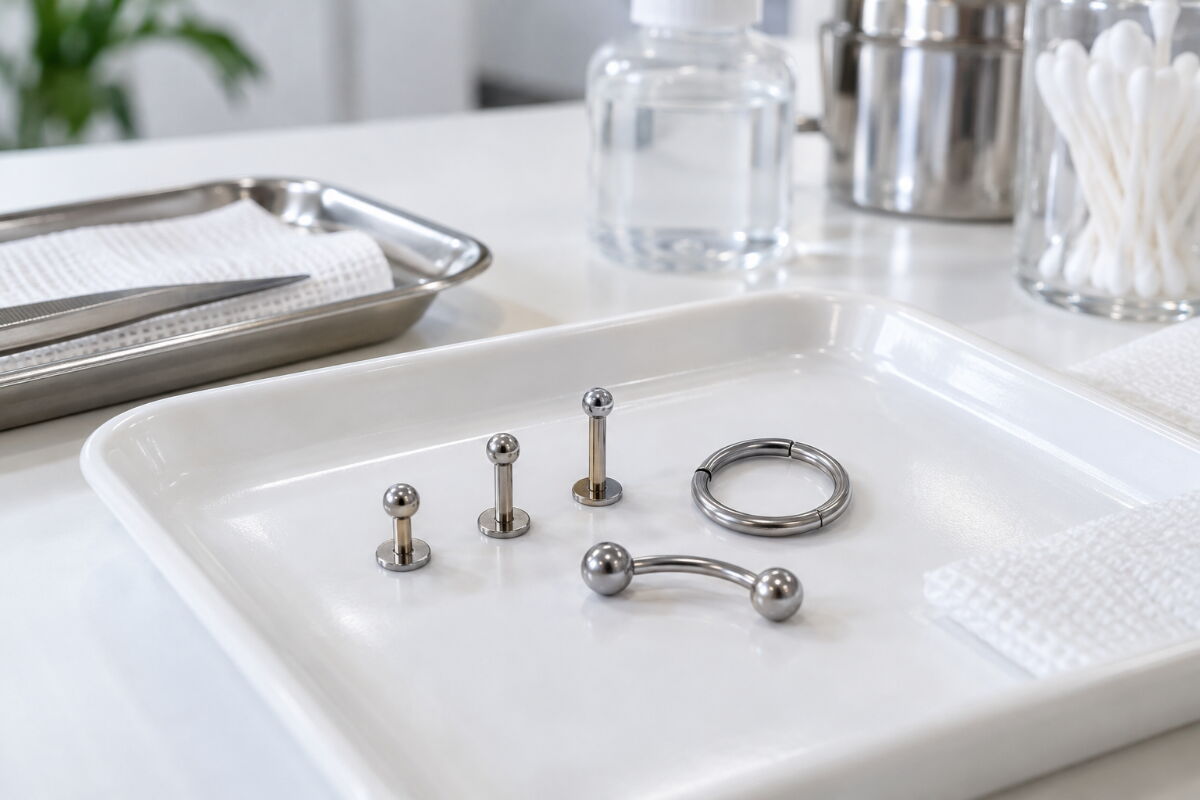
Jewelry style affects how much movement occurs inside the channel. Labret posts are often a calm starting choice for nostril and cartilage piercings because a flat back and straight post can reduce unnecessary rotation and rubbing. Rings may create more movement because they swing and rotate, which can irritate a newly formed channel. Curved barbells are commonly used for navels and eyebrows because their shape follows the tissue, while straight barbells are used for piercings where alignment and anatomy make them a good fit. The practical tradeoff is that hoops may provide the appearance you want immediately, while studs or other stable jewelry may reduce unnecessary movement during healing.
Material and construction matter as much as style. Implant-grade titanium, often labeled ASTM F 136, and high-quality niobium are commonly chosen for fresh piercings because they are lightweight and suitable for many people with metal sensitivities. Solid 14k or 18k gold from reputable manufacturers may also be appropriate when the alloy and construction suit body jewelry. Plated pieces and sterling silver are generally less suitable for fresh piercings because coatings can wear and silver may tarnish. Internally threaded or threadless jewelry also avoids pulling exposed screw threads through healing tissue during jewelry changes.
4. Sizing for Swelling and the Critical Downsizing Visit
Fresh piercings need enough room to accommodate expected swelling. A longer labret post on a helix or nostril can prevent the back of the jewelry from pressing into swollen tissue during early healing. Jewelry that is too short may place excessive pressure on the skin, while jewelry that remains too long after swelling subsides can catch on hair, towels, clothing, or other objects. Piercers select jewelry dimensions based on anatomy, placement, and anticipated swelling rather than relying on one standard size for everyone.
The next important step is downsizing when appropriate. Once initial swelling has decreased, a shorter post can reduce movement and leverage on the piercing. Skipping this appointment is a frequent source of irritation. Imagine a nostril piercing fitted with additional length to accommodate early swelling. Several weeks later, the extra length may allow the post to move with every face wash or catch on a towel, repeatedly disturbing the channel. A professional downsizing visit can determine whether shorter jewelry is appropriate without placing unnecessary pressure on tissue that is still healing.
Cartilage may take longer to heal than softer tissue, so jewelry may need to stay in place longer. Rather than downsizing on a fixed schedule, schedule a check-in with your piercer so they can assess swelling, angle, irritation, and overall healing before changing the jewelry.
5. Aftercare That Matches the Tissue
Aftercare should support healing without repeatedly disturbing or drying the tissue. You can use sterile saline wound wash, as directed by your professional, to gently rinse away debris. Avoid rotating jewelry or routinely applying alcohol, hydrogen peroxide, harsh antiseptics, ointments, or tea tree oil unless a qualified healthcare professional has specifically advised otherwise. These products can irritate healing tissue. Keep shampoo, makeup, skincare products, and sunscreen from collecting around the piercing, and rinse the area gently when needed.
Protect fresh piercings from unnecessary contamination and pressure. Follow your piercer’s guidance about swimming, hot tubs, lakes, and other water exposure during healing. If headphones press against a new conch, consider earbuds that don’t touch the piercing, when appropriate. For a healing navel piercing, high-waisted clothing may rub the jewelry repeatedly, so looser clothing can reduce irritation.
If a tender or raised bump develops, avoid responding by adding several new products or repeatedly manipulating the jewelry. Reduce pressure and friction, continue appropriate basic care, and have an experienced piercer assess the jewelry fit and placement. Increasing redness, severe swelling, spreading warmth, pus, fever, or worsening pain deserves medical evaluation, especially if infection is a concern.
Give the Piercing Conditions That Support Healing
A beautiful piercing depends on a good match between your anatomy, everyday pressure points, and the jewelry you choose at the start. Evaluating cartilage shape, avoiding repeated compression from sleep or equipment, choosing suitable materials such as implant-grade titanium or quality solid gold, and returning for professional downsizing can all support a smoother healing process.
Small decisions during the early weeks, such as starting with stable jewelry rather than a highly mobile ring or keeping pressure off a healing ear while sleeping, can make a noticeable difference later. Healing time varies by piercing type and individual biology, so don’t rush jewelry changes just because the area looks calm on the surface.
Plan the piercing around your anatomy and daily routine, follow appropriate aftercare, and use professional checkups when jewelry fit or healing is uncertain. Those choices give the piercing a better opportunity to settle comfortably and maintain the placement you originally wanted.