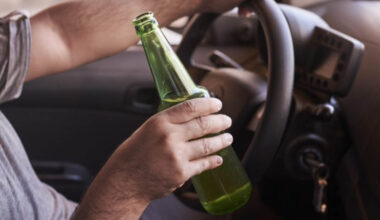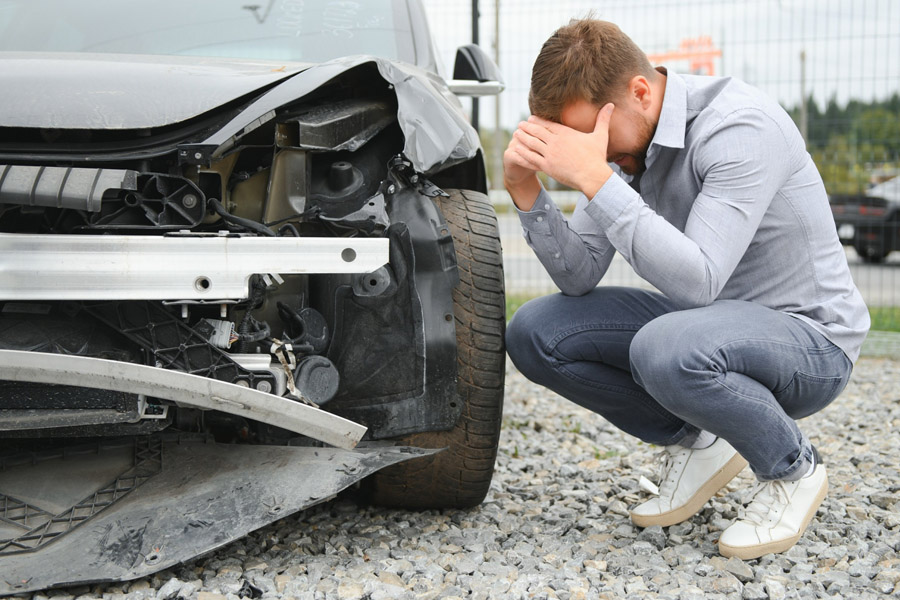
Every year, when the clocks fall back and the holidays crowd the roads, crashes climb. Early darkness, rushed and distracted drivers, packed parking lots, and winter weather all add up to more collisions across Maryland. Many are small: a tap in a lot, a clipped mirror, a bumper scrape at a stop sign.
The instinct, especially late at night or when someone is already running late, is to just keep going. That one decision is what this article is about, because in Maryland, leaving the scene is usually what turns a minor accident into a serious legal problem, for the driver who leaves and for the person left behind.
What Maryland Requires You to Do at the Scene, and How Leaving Becomes a Crime
Maryland law doesn’t let a driver decide for themselves that a crash was too small to matter. If you are involved in an accident, you are required to stop at the scene or as close to it as you safely can, share your name, address, and vehicle registration, show your license when asked, and give reasonable help to anyone who is hurt. Those duties come from Maryland’s Transportation Article, and failing to meet them is its own offense, separate from whatever caused the crash in the first place.
Here is the part that catches people off guard. An ordinary fender bender with only property damage is usually just an insurance matter. Drive away from that same minor collision, and it becomes a criminal charge. Maryland builds a ladder of penalties based on what the crash caused:
- Property damage only: a misdemeanor punishable by up to 60 days in jail, a $500 fine, and points on your license.
- Bodily injury to another person: a misdemeanor carrying up to 1 year in jail and a $3,000 fine.
- Serious bodily injury, where the driver knew or should have known it might happen: a felony with up to 5 years in prison.
- Death, under that same knowledge standard: a felony with up to 10 years in prison and a $10,000 fine.
Every one of these is a must-appear criminal charge, not a ticket you can pay by mail. A scrape that would have cost a few hundred dollars to settle through insurance can end in a criminal record simply because the driver left. If you are facing one of these charges, a hit and run defense lawyer in Maryland can look at what the state actually has to prove, including whether you even knew an accident happened, which is often the weakest link in a property-damage case.
When You Are the One Left Behind
The other side of a hit-and-run is the driver who did everything right and still got hurt by someone who sped off. When the other car is never identified, it can feel like no one is responsible and you have nowhere to turn. In Maryland, that is not true.
Maryland requires uninsured motorist coverage on every auto policy, and the law treats an unknown hit-and-run driver as uninsured. That means you can recover through your own uninsured motorist coverage, as if the fleeing driver had been found and carried no insurance. Just as important, Maryland does not require physical contact for these “phantom vehicle” claims. A driver who runs you off the road or forces you into a guardrail without ever touching your car can still be the at-fault uninsured driver under your policy, and any fine print demanding contact is unenforceable here.
A few steps protect that claim. Call the police and report the crash right away, write down everything you can remember about the other vehicle, collect names and numbers from any witnesses, and notify your own insurer promptly, since policies set short reporting windows and Maryland generally allows three years to pursue the claim. Because these cases turn into a dispute with your own insurance company, having someone in your corner matters. Spanish-speaking drivers in the area can turn to abogados de accidentes de auto en Montgomery County to handle the claim and push back when an insurer tries to undervalue it.
Do Not Let a Small Crash Become a Big One
The lesson runs in both directions. A minor crash only stays minor if everyone stops and does what the law requires. For the driver, staying at the scene, exchanging information, and helping anyone who is hurt keeps a bad moment from becoming a criminal case. For the victim, knowing your coverage stands behind you means a driver who flees doesn’t get the last word on whether you recover. If you find yourself on either side of a hit-and-run this season, the worst move is to handle it alone and hope it goes away quietly.