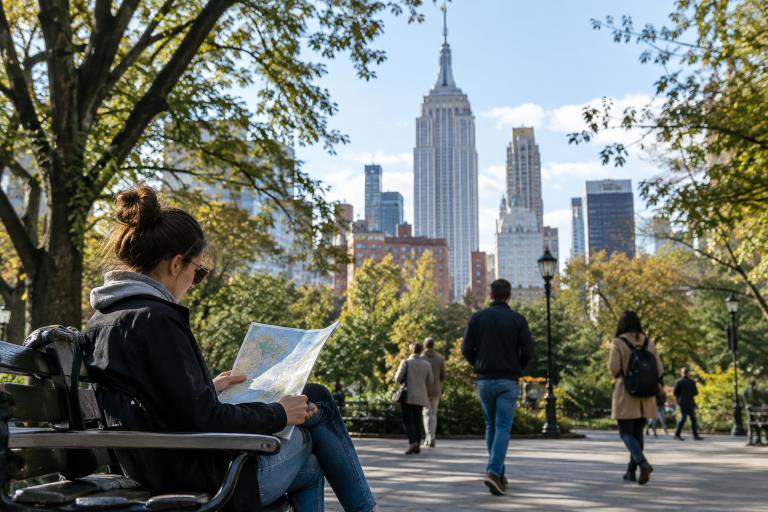
New York rewards travelers who slow down enough to notice how its neighborhoods connect. A skyline-focused break can begin with a clear anchor, such as events at the Empire State Building, then expand into an easy day around Midtown, Koreatown, the Flatiron District, or nearby green space.
The goal is not to collect every observation deck or photograph every famous corner. It is to create a balanced New York, New York itinerary that leaves room for changing weather, subway delays, a long lunch, and the unexpected streets that make the city feel personal.
1. Why Skyline Trips Work
A high view gives a useful sense of New York’s scale. Rivers, parks, bridges, avenues, and clusters of towers become easier to place in relation to one another. More importantly, one scheduled viewpoint creates a natural center for the day. Instead of rushing across boroughs, choose a view, explore the blocks around it, and end with a meal nearby.
2. Choose the Right New York Base
For a short skyline break, stay where your preferred pace is practical. Midtown works well for central landmarks and rail connections. Lower Manhattan suits waterfront walks and historic streets. Brooklyn can offer a neighborhood-focused stay with Manhattan views across the East River. Before booking, consider walking comfort, late-night transit, airport access, and the distance between your hotel and the experiences you value most.
3. Pick One Main Viewpoint
Choose a primary viewpoint based on the kind of memory you want. Daytime can make the city’s layout clearer. Golden hour adds warmer light and longer shadows. Blue hour brings the transition from daylight to illuminated windows, while nighttime feels more dramatic but reveals fewer distant details. Confirm timed-entry rules, accessibility information, and weather policies before committing to a specific slot.
4. Plan Each Day by Area
Map your main view, then add only two or three nearby stops. A strong route might include an exhibit, a park bench, a café, and a dinner reservation within the same general area. Leave an unscheduled hour between major plans. That buffer protects the day from lines, rain, or the simple temptation to linger somewhere interesting.
5. Time the Visit for Better Light
- Early morning: Better for a quieter walk and gentler light.
- Midday: Useful when visibility is the priority.
- Golden hour: A good choice for warmth, shadow, and photographs.
- Blue hour and night: Ideal when you want city lights to be part of the view.
Check sunset time, cloud cover, wind, and visibility shortly before you leave. In a city of tall buildings, conditions at street level can feel different from conditions on an exposed deck.
6. Mix High Views and Street Life
A skyline is more meaningful after time on the ground. Pair an elevated stop with a waterfront path, museum, neighborhood bakery, public park, market, or historic block. The contrast between broad city views and small local details gives a trip rhythm. It also prevents a day from feeling like a sequence of queues, elevators, and photographs.
7. Prepare for Weather and Crowds
Pack shoes that can handle long blocks, a light layer for wind, and water for warm days. Keep an indoor option near every outdoor plan, particularly if your route includes a long river walk or park visit. Before setting out, review the New York weather forecasts and hazards issued for the area, and be ready to move an outdoor activity to another part of the day if conditions shift.
8. Use Transit and Walking Wisely
Use the subway or rail service for long hops, then walk within a compact neighborhood. Before leaving your hotel, check the service changes and elevator status posted for the transit system, especially on weekends or during large public events. Save your return route offline, but do not turn every gap into a multi-mile walk. A manageable route keeps your attention on the city instead of your feet.
9. Build a Simple Three-Day Plan
Day One: Orientation and a First Big View
Keep arrival day light. Walk one central neighborhood, settle into a relaxed meal, and visit your main viewpoint near sunset or after dark.
Day Two: Culture, Green Space, and Water
Start with a museum, gallery, or historic site. Take a real break in a park, then continue toward the Hudson River, East River, harbor, or a bridge promenade.
Day Three: A Neighborhood Finale
Choose one district for cafés, shops, public art, or markets. Keep the morning flexible for weather changes, and only add a second view if it offers a distinctly different perspective.
10. Avoid Common Mistakes
- Booking multiple viewpoints on the same day.
- Ignoring travel time between neighborhoods.
- Planning outdoor hours without an indoor backup.
- Skipping meals and rest because the schedule looks efficient on a map.
- Choosing every stop because it is popular online rather than personally appealing.
11. Final Planning Checklist
- Confirm hours and timed-entry requirements for booked experiences.
- Check weather, transit updates, and major event calendars a few days before departure.
- Save tickets, maps, hotel details, and return routes on your phone.
- Keep one flexible block open each day.
- Choose comfort and location over an overfilled itinerary.
Conclusion
The best New York skyline break is not defined by how many towers you visit. One well-timed view, a few nearby streets, and time to pause can reveal more of the city than a packed checklist. Plan around neighborhoods, stay flexible, and let the skyline become part of the experience rather than the entire trip.