Minnesota’s long freezes and dramatic spring thaws make backyard pool planning very different from warm-climate projects. Good results depend less on flashy features and more on quiet decisions you make early: how deep to place structural components relative to the frost line, how to move water away from the shell, which finishes tolerate freeze-thaw, where the equipment sits, and how you will winterize. This article focuses on those cold-climate factors that most strongly influence lifespan and maintenance, so you can shape a pool that looks great in July and survives March without cracked coping, heaved decking, or burst plumbing.
1. Frost Depth, Base Preparation, and Movement Joints
Start by designing for movement you cannot see. In a Minnesota winter, soil expands as it freezes, then settles during thaw. Footings and structural elements that sit above the locally required frost depth are at risk of heaving, transferring stress to the pool shell, tile band, and deck. A compacted, well-drained base of angular crushed stone helps reduce frost grip on the structure, and isolating the pool deck from the beam or coping with a compressible joint allows concrete slabs to expand and contract without prying at the waterline.
Skipping these details is a common failure point: hairline cracks at the waterline tile, popped coping stones, and lifted deck corners show up a season or two after the first deep freeze. Talk with builders who routinely install compressible backer rod and polyurethane deck mastic at the pool-to-deck joint, cut control joints at the right spacing, and set footings below code frost depth. Regional code and site conditions vary, so curated resources that gather local pool companies in MN can help you compare approaches and ask precise questions about frost protection strategies.
2. Drainage, Hydrostatic Pressure, and Groundwater
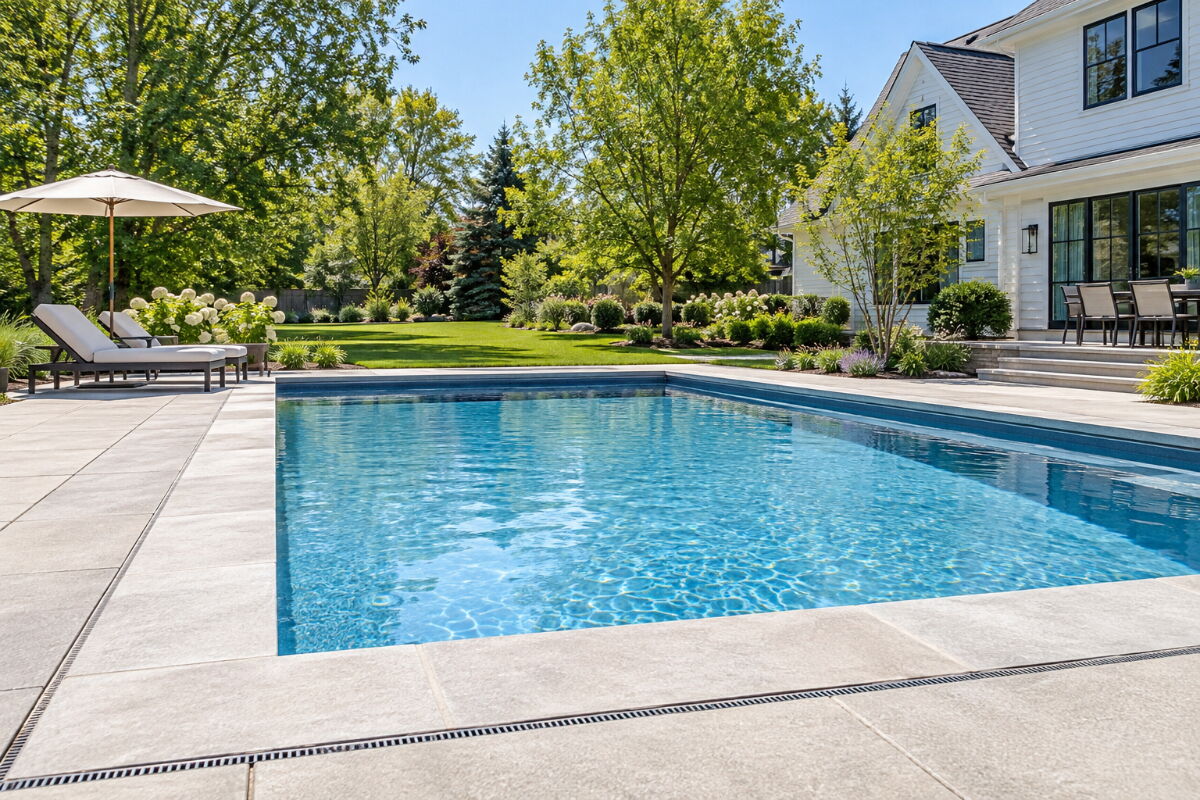
Water around the pool matters as much as water in it. Perimeter drains (French drains) placed alongside the pool walls and surrounded by clean stone and filter fabric route groundwater away to daylight or a sump. Sloping the deck away from the beam and adding channel drains near low spots prevent stormwater from soaking the backfill. Keep downspouts, irrigation, and landscape beds from directing runoff toward the shell; what seems like a harmless puddle in September can turn into an ice lens that lifts concrete in January.
Hydrostatic pressure is the silent force that bulges liners and can float fiberglass shells. A hydrostatic relief valve in the main drain sump allows groundwater to push its way into an emptying pool rather than pushing the pool up. Two realistic scenarios highlight the risk: a homeowner fully drains a fiberglass pool before a fall storm and returns to find sections of the shell lifted; or a vinyl-liner pool with no relief path shows wrinkles near the deep end after spring rains. Valves, gravel backfill, and an accessible sump well are inexpensive insurance against both.
3. Freeze‑Thaw‑Resistant Materials and Plumbing Choices
Some finishes tolerate Minnesota’s cycles better than others. Frost-proof porcelain tile rated for exterior submersion, properly back-buttered and set over a waterproofed substrate, resists spalling better than interior-grade ceramic. Natural stone coping needs adequate thickness, a full bed of polymer-modified mortar, and sealed edges to shed water before it freezes. For decks, air-entrained concrete with a low water-cement ratio and well-placed control joints handles deicing salts and ice better than ordinary mixes, and a flexible mastic at the expansion joint prevents meltwater from seeping in and prying the slab in winter.
Plumbing layout also reflects cold reality. Rigid PVC with long-radius fittings and gentle sweeps is easier to blow out completely than runs dominated by tight 90s or long spans of flexible PVC. Lines should be pitched to low points fitted with drain valves, and valve manifolds on the equipment pad need unions, dedicated blow-out ports, and clearly labeled isolation points for features such as deck jets and bubblers. Those details reduce the time and risk involved in draining the pool and adding pool-safe antifreeze before a hard freeze.
4. Equipment Pad Elevation, Access, and Freeze Protection
Place the equipment where winter cannot bury it. A level, reinforced pad set slightly above surrounding grade keeps pumps, filters, and heaters out of standing water and drifting snow. Leave real working space around unions and drain plugs so you can remove baskets, open filter drains, and disconnect heater manifolds without contortions when temperatures drop. A simple drain-down goes faster when air can move freely, and fittings are reachable with gloved hands.
Automation helps during shoulder seasons. Freeze protection sensors that automatically spin the pump when air temperatures flirt with freezing buy you time during an early cold snap, while isolation valves let you take water features offline and blow out those lines even if you keep the main circulation running a bit longer. Picture a late-October forecast that drops unexpectedly: with unions, blow-out ports, and bypasses in place, you can winterize the waterfall loop in an hour and avoid ice damage, then fully close the pool the following weekend.
5. Covers, Heating, and Year‑Round Use Decisions
Cover choice is a trade-off. Mesh safety covers anchor securely and let snowmelt drain through, reducing standing water, weight, and maintenance during a deep freeze. The downside is light transmission that can spur early-spring algae and fine silt that settles on the floor. Solid safety covers block light and windblown organics, but they need a cover pump and careful snow-load management. Whichever you choose, lower the waterline per the manufacturer’s spec, add a skimmer gizmo to absorb expansion, and plug returns with threaded winter plugs before the first hard freeze.
Heating strategy shapes how much you actually swim. In Minnesota, gas heaters raise water temperature quickly for weekend use and shoulder seasons, while air-source heat pumps become less efficient in colder air and may not reach target temperatures during fall cold snaps. A solar blanket or automatic cover dramatically reduces heat loss to evaporation, stretching each warmed day. Many owners pair a spillover spa with an insulated cover so they can enjoy hot-water soaking in winter, even when the pool is closed, provided the spa has its own protected plumbing loop and can be safely drained or kept operational.
Cold-climate pools reward careful planning more than impulse upgrades. Design below the frost line, separate the deck with a compressible joint, add drains where water collects, specify finishes meant for submersion and freeze-thaw, elevate and simplify the equipment pad, and choose a cover and heating approach that match how you will actually use the space. Those decisions cost little compared with tearing out lifted coping or replacing burst lines, and they turn Minnesota’s harshest months into a season your pool simply endures rather than fears.