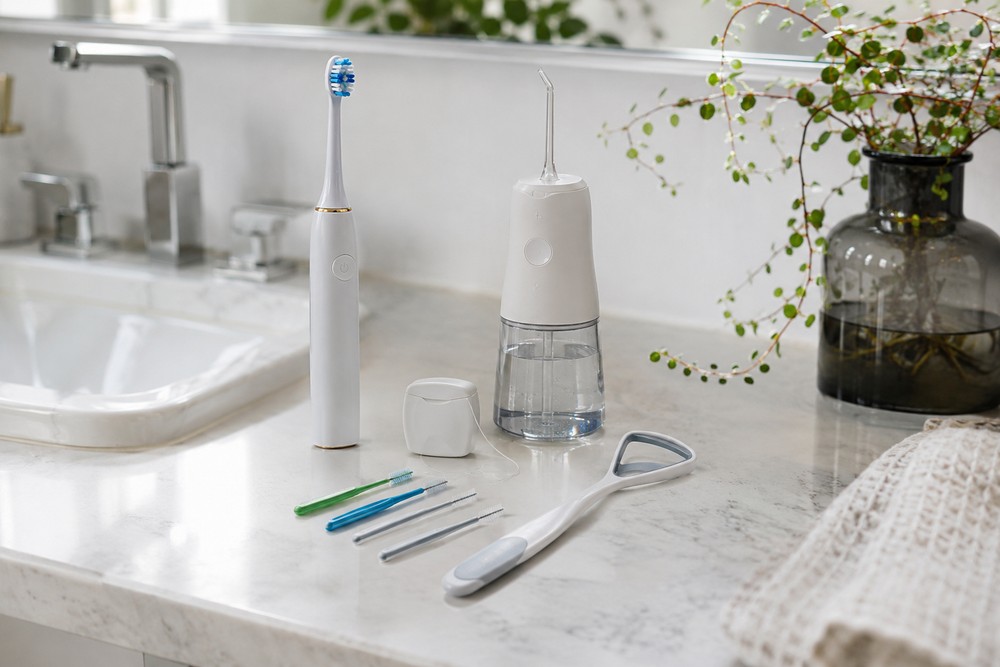
Your twice-a-year dental checkup is non-negotiable, but the real work happens every single day in your bathroom. The tools you use at home determine whether your next cleaning is a breezy 30-minute visit or a lengthy session with bad news. Choosing the right gear can be the difference between catching a small issue early and dealing with a costly procedure down the road.
If you want expert guidance on what your specific smile needs, pairing your home routine with professional care makes all the difference. A rolla mo dentist can flag weaknesses in your current routine and point you toward the tools that match your unique oral health history. That said, you can make smarter choices right now just by knowing what’s actually worth buying and what’s mostly marketing.
Below, you’ll find seven of the most useful at-home oral care tools available today, ranked by the real-world impact they have on your gum health, plaque control, and long-term dental outcomes.
1. Oral-B iO Series 2 Electric Toothbrush
Electric toothbrushes have become a genuinely smart investment in oral health, not just a premium novelty. The Oral-B iO Series 2 sits at the intersection of smart features and real affordability, making it the most practical starting point for most people upgrading from a manual brush.
What sets the iO Series 2 apart from budget electric options is its built-in pressure sensor and two-minute timer. According to Forbes Vetted’s testing, these two features are the ones dentists most consistently recommend, and the iO Series 2 delivers both at a fair price point. The round brush head oscillates to remove plaque in a way your hand simply cannot replicate with a flat-headed manual brush.
Best for: First-time electric toothbrush buyers, people who brush too hard, and anyone whose dentist keeps flagging plaque buildup at cleanings.
| Feature | Detail |
|---|---|
| Brush Technology | Oscillating round head |
| Built-in Timer | Yes, 2-minute |
| Pressure Sensor | Yes |
| Approximate Price | $50 to $70 |
Pros: Easy to use, proven performance, dentist-recommended features at an accessible price.
Cons: Battery life averages around two weeks, shorter than some competitors.
2. Philips Sonicare 9900 Prestige Electric Toothbrush
If you want the top of the sonic toothbrush category, the Philips Sonicare 9900 Prestige is where you land. TechRadar’s hands-on reviews place the Philips Sonicare line among the top performers in real-world brushing tests, praising its quiet motor and real-time feedback through the companion app.
Sonic toothbrushes vibrate the brush head side-to-side at high frequency, which creates a fluid dynamic that can dislodge particles beyond just where the bristles make direct contact. That gives you a slightly different cleaning mechanism compared to Oral-B’s oscillating heads. Some users with sensitive gums strongly prefer the feel of sonic vibration.
The 9900 Prestige uses Philips’ SenseIQ technology, which adapts brushing intensity based on the pressure you apply and the areas of your mouth you’re working on. It’s a good pick if you like your gear to adapt to you rather than the other way around.
Best for: People with sensitive gums, tech-forward users who want adaptive brushing, and those who travel often since the model charges quickly and holds a long battery life.
Pros: Adaptive intensity, quiet operation, premium build quality.
Cons: Expensive at full retail price. Replacement brush heads cost more than budget alternatives.
3. Waterpik Aquarius Water Flosser (WP-660)
String floss is still valuable, but most people skip it because it’s fiddly and uncomfortable, especially around dental work. A water flosser solves that problem by shooting a concentrated stream of water along your gumline to flush out plaque and bacteria in spaces your toothbrush can’t reach.
The Waterpik Aquarius WP-660 is the gold standard in this category. The Great Reviewer’s 2026 roundup confirms that Waterpik is the only water flosser brand to hold the American Dental Association Seal of Acceptance, backed by clinical evidence of safety and effectiveness. The WP-660 includes ten adjustable pressure settings and seven different tip types, making it flexible enough for standard teeth, braces, implants, and bridges.
Best for: Anyone with braces, dental implants, crowns, or bridges. Also excellent for people who genuinely struggle to keep a consistent string flossing habit.
| Feature | Detail |
|---|---|
| ADA Seal | Yes |
| Pressure Settings | 10 |
| Included Tips | 7 |
| Approximate Price | Around $70 |
Pros: ADA-backed, wide range of tip types, powerful and consistent water pressure.
Cons: Countertop unit takes up bathroom space. Reservoir needs regular cleaning to prevent bacterial buildup.
4. Philips Sonicare Power Flosser 3000 (Cordless)
Not everyone wants a countertop water flosser taking up half their sink area. If you prefer something you can grab and go, the Philips Sonicare Power Flosser 3000 Cordless is the strongest cordless option currently on the market.
CNN Underscored’s testing found that the Power Flosser 3000 delivered the strongest yet gentlest pressure among the cordless models they evaluated. That matters a lot if your gums are on the sensitive side. The gentle cleaning means you get effective debris removal without the harsh feeling that discourages people from using their flosser consistently. The Quad Stream tip distributes water across four streams at once, which covers more gumline surface per pass compared to a single-stream design.
Best for: Travelers, apartment dwellers with limited counter space, and users with sensitive gums who still want powerful cleaning.
Pros: Cordless and portable, gentle yet effective, Quad Stream tip design, easy to refill.
Cons: Smaller reservoir means more frequent refills compared to countertop models. Fewer pressure settings than the Waterpik Aquarius.
5. Bitvae R2 Rotating Electric Toothbrush
Budget picks often disappoint, but the Bitvae R2 is a genuine outlier. For people who want to make the jump from manual brushing without spending $100-plus on a premium electric brush, this model punches well above its price.
The Bitvae R2 comes loaded with eight brush heads and runs for 30 days on a single charge. Its rotating head design delivers cleaning performance that significantly outperforms manual brushing. At roughly $25 to $40, it removes the financial barrier that keeps a lot of people stuck with an outdated routine.
The tradeoff is that it lacks the smart features of Oral-B’s iO line or Philips’ SenseIQ technology. You won’t get real-time feedback or an app connection. But if your main goal is simply cleaner teeth without the guesswork, the R2 does that job well.
Best for: Budget-conscious shoppers, college students, or anyone who wants a reliable daily brusher without spending much.
Pros: Excellent value, includes multiple brush heads, solid 30-day battery, effective plaque removal.
Cons: No smart features, no pressure sensor, no app connectivity.
6. GUM Soft-Picks Advanced Dental Picks
Not every oral care tool needs a charging cable or a price tag over $50. GUM Soft-Picks are a flexible, rubber-tipped alternative to traditional wooden toothpicks and string floss. They slide easily between teeth to remove food debris and lightly massage the gumline, which encourages healthy circulation in gum tissue.
These are especially useful as a midday option when you’re at work or out at a restaurant. Carrying them in your bag or keeping them at your desk means you can clear debris after lunch without needing a full brushing session. They’re gentle enough to use daily and non-abrasive, so you won’t scratch enamel or irritate gum tissue with regular use.
They’re not a replacement for brushing or water flossing, but they fill a real gap in your routine during the hours you spend away from home.
Best for: On-the-go cleaning between meals, people with wider interdental spaces, and anyone who finds traditional floss difficult to manage.
Pros: Portable, affordable, easy to use anywhere, gentle on gums.
Cons: Not as thorough as string floss or a water flosser for deep cleaning between teeth.
7. TheraBreath Fresh Breath Oral Rinse
Mouthwash is the most underrated piece of the oral care puzzle. Most people either skip it entirely or grab the cheapest bottle on the shelf without thinking about what it actually does. Alcohol-based rinses can leave your mouth feeling dry, which counterintuitively creates an environment where odor-causing bacteria thrive.
TheraBreath Fresh Breath Oral Rinse is alcohol-free and specifically targets sulfur-producing bacteria, which are the primary culprits behind persistent bad breath. It uses a dual-action formula of OXYD-8 and sodium bicarbonate to neutralize volatile sulfur compounds rather than just masking them with mint flavor.
For anyone managing dry mouth, recovering from dental work, or simply wanting fresher breath that lasts more than 20 minutes past brushing, this rinse is a meaningful upgrade from the standard supermarket shelf options.
Best for: People with chronic bad breath, dry mouth, post-procedure oral care, and anyone who wants a rinse that works without the burning sensation of alcohol-based formulas.
Pros: Alcohol-free, clinically tested, neutralizes sulfur compounds, gentle on healing tissue.
Cons: Costs more than drugstore mouthwash. Taste is milder, which some users find less satisfying than a strong mint burn.
How to Build a Home Routine That Actually Works
Owning good tools only gets you halfway there. The other half is consistency and technique. Here’s what a solid daily routine looks like when you put these tools together:
- Morning: Brush for two full minutes with your electric toothbrush. Use the built-in timer if your model has one. Focus on the gumline, not just the enamel surfaces.
- After lunch: Use GUM Soft-Picks or a travel water flosser to clear food from between teeth before bacteria get a foothold.
- Evening: Water flosser first, then brush again for two minutes, then rinse with TheraBreath or your preferred alcohol-free mouthwash. Flossing before brushing means the brush can sweep away anything the flosser dislodged.
The order matters more than most people realize. A 2019 study from the British Dental Journal found that flossing before brushing left more fluoride in the interdental spaces afterward, giving your enamel better overnight protection.
What to Look for When Choosing Your Tools
Every person’s mouth is different. Someone with Invisalign has different cleaning needs than someone with three dental implants or a full set of healthy natural teeth. Before spending money, think through these criteria:
- Your existing dental work: Implants, crowns, veneers, and bridges all benefit from water flossing. Standard string floss can be difficult or even unsafe to use around certain restorations.
- Sensitivity level: If your gums bleed easily or feel tender, start with the lowest pressure settings and the softest brush head available. Work up gradually.
- Travel frequency: A countertop water flosser is great at home but impractical on the road. A cordless option like the Sonicare Power Flosser 3000 solves that without sacrificing too much performance.
- Your actual brushing habits: If you’re already brushing consistently, a smart brush with feedback features can help you refine technique. If you’re starting from scratch, a straightforward model removes friction from the habit-building process.
The Bottom Line
The right at-home oral care tools turn your daily two minutes into something genuinely effective. You don’t need every item on this list at once. Start with a quality electric toothbrush and either a water flosser or reliable flossing picks, then build from there.
Your home routine and your professional dental care work together. No tool replaces a real cleaning and examination, but the gear you use every day determines what your dentist finds when you sit in that chair. Invest in the right tools now, and your future checkups get a whole lot easier.