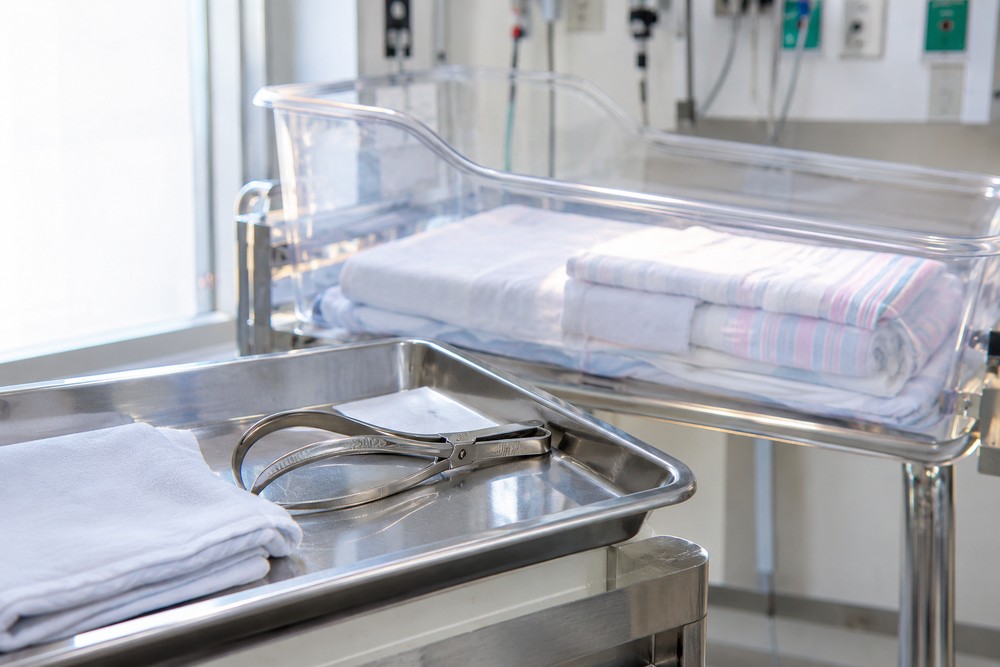
Forceps-assisted delivery uses special tools to help guide a baby through the birth canal when extra help is needed. While it can aid in difficult births, there are risks of injury to the baby’s head and tissues. Some may experience bruising, while others could face more serious issues like bleeding or skull fractures.
Healthcare professionals should watch for warning signs after the delivery to check for injuries and provide prompt treatment. Some problems may show up immediately, while others develop later. Knowing the difference between normal changes and concerning symptoms helps families ask the right questions about their baby’s health. Here are six warning signs that need medical attention.
1. Increasing Swelling Around the Scalp
Mild scalp swelling can occur after childbirth, particularly when instruments assist delivery. However, swelling that continues expanding or spreads across the newborn’s head may indicate a more serious injury.
One concern is subgaleal hemorrhage, which occurs when blood accumulates between the scalp’s connective tissues and the skull. This condition can cause substantial blood loss and requires immediate medical evaluation.
Parents concerned about preventable injuries may seek guidance from a forceps birth injury attorney in Chicago to examine whether appropriate delivery techniques and newborn monitoring procedures were followed. Medical records documenting the extraction process, head measurements, and subsequent examinations can help clarify the circumstances surrounding an injury.
According to neonatal clinical guidance from the Western Australian Child and Adolescent Health Service, concerning findings include diffuse, fluctuant scalp swelling that shifts with movement.
Increasing head circumference or swelling extending beyond the original affected area requires urgent assessment.
2. Unusual Bruising or Changes in Head Shape
Forceps can leave temporary marks or bruises where the instruments contact the baby’s head. These findings do not necessarily indicate a serious injury, but pronounced swelling, unusual deformities, or worsening discoloration require further examination.
Healthcare professionals must distinguish superficial bruising from deeper injuries, including cephalohematomas and skull fractures.
A cephalohematoma involves bleeding beneath the membrane covering a skull bone. Unlike subgaleal hemorrhage, this collection remains confined within the boundaries of one cranial bone.
The Merck Manual identifies skull fractures and intracranial bleeding as possible complications of birth-related trauma.
Physicians may use physical examinations and appropriate imaging to investigate suspicious findings. The location, progression, and associated symptoms help determine whether an abnormality requires additional treatment.
3. Pale Skin and Signs of Circulatory Distress
A newborn who develops unusually pale skin, rapid breathing, or a fast heart rate after an assisted delivery may be experiencing significant blood loss.
Subgaleal hemorrhage is especially concerning because blood can accumulate beneath the scalp without obvious external bleeding.
The Western Australian neonatal guideline identifies pallor, poor circulation, increasing heart rate, and low blood pressure as potential signs of hemorrhagic shock.
Warning signs requiring immediate medical attention include:
- Unusual paleness or cool extremities
- Rapid breathing or increased breathing effort
- A persistently elevated heart rate
- Reduced activity or responsiveness
- Poor circulation or delayed capillary refill
- Increasing scalp swelling accompanied by weakness
These findings can have causes unrelated to head trauma, including infection and other newborn conditions.
Nevertheless, possible circulatory instability after a difficult delivery requires emergency medical evaluation rather than observation at home.
4. Poor Feeding and Unusual Drowsiness
Newborns naturally sleep frequently and may need assistance establishing feeding routines. However, marked lethargy, weak feeding, or difficulty waking for feeds can signal an underlying medical problem.
After forceps-assisted delivery, these changes warrant particular attention when accompanied by abnormal scalp findings or other neurological symptoms.
The Merck Manual identifies lethargy and abnormal neurological examinations as concerning findings in newborns with possible intracranial hemorrhage.
Healthcare professionals may assess alertness, muscle tone, reflexes, blood glucose, and other clinical indicators to determine the cause.
Feeding difficulties alone do not establish a traumatic brain injury. They can also occur with infection, metabolic disturbances, or other neonatal conditions.
A baby who becomes difficult to awaken, unusually unresponsive, or unable to feed requires prompt medical assessment.
5. Seizures or Abnormal Body Movements
Seizures are among the most concerning neurological symptoms in newborns. They can indicate disturbances involving brain function, including complications associated with intracranial bleeding.
Neonatal seizures do not always resemble the dramatic convulsions seen in older children. Some involve repetitive movements, abnormal eye activity, or changes in breathing.
Medical professionals distinguish seizures from ordinary newborn reflexes and movements through clinical assessment and, when indicated, electroencephalographic monitoring.
The Merck Manual identifies seizures as a possible presentation of intracranial hemorrhage associated with birth injuries.
Because seizures can also result from infection, metabolic abnormalities, or oxygen-related complications, establishing the underlying cause requires appropriate investigation.
Any suspected seizure in a newborn requires emergency medical attention. Prompt evaluation helps clinicians identify potentially serious neurological problems and determine necessary treatment.
6. Abnormal Breathing or Reduced Responsiveness
Breathing difficulties following forceps-assisted delivery require careful evaluation, particularly when accompanied by unusual muscle tone, poor responsiveness, or abnormal neurological findings.
Intracranial hemorrhage can sometimes cause apnea, meaning temporary pauses in breathing. The Merck Manual identifies apnea as a possible symptom of serious bleeding within a newborn’s skull.
These symptoms are not specific to traumatic injuries. Respiratory disorders, infections, and other medical complications can produce similar findings.
Healthcare professionals may examine oxygen levels, breathing patterns, neurological responses, and relevant laboratory results.
Depending on the findings, additional assessment may include cranial ultrasound, computed tomography, or magnetic resonance imaging.
A newborn experiencing breathing pauses, severe breathing difficulty, or unresponsiveness needs immediate emergency care.
Why Monitoring After Forceps Delivery Matters
Some birth-related head injuries become more apparent after the initial newborn examination. Clinical monitoring helps healthcare professionals recognize changes that were not visible immediately after delivery.
Neonatal guidance concerning subgaleal hemorrhage emphasizes repeated assessment of scalp swelling, head circumference, vital signs, and the baby’s overall condition when risk factors or concerning findings are present.
Records that may help explain a suspected injury include delivery notes, documentation of forceps use, newborn examinations, imaging reports, and neurological assessments.
Families can request explanations of abnormal findings and retain copies of relevant records.
Protecting Newborns Through Prompt Recognition and Evaluation
Head trauma from forceps-assisted birth can range from minor injuries to serious issues like heavy bleeding or neurological problems. Important signs that need immediate attention include swelling, unusual bruising, pale skin, feeding difficulties, seizures, and breathing problems.
Not all injuries from forceps delivery indicate medical negligence. To evaluate this, we must look at the delivery details, healthcare choices, and available evidence.
In Illinois, medical malpractice claims require specific steps, including an affidavit and a healthcare professional review.
For families suspecting a birth injury, getting prompt medical treatment is crucial. Keeping careful records and seeking a professional assessment can clarify the injury and its causes.