Basic Information
| Category | Details |
|---|---|
| Full Name | Donald Campbell |
| Known As | Bishop Magic Don Juan, Don Magic Juan, Archbishop Don Da Magic Juan, The Chairman of the Board, Bishop |
| Date of Birth | November 30, 1950 |
| Birthplace | Chicago, Illinois |
| Childhood Home | Chicago West Side, especially the Austin neighborhood |
| Father | Levy Bryant |
| Mother | Maggie Campbell |
| Siblings | One of eight children, including older sister Ann Bromfield |
| Early Marriage | Married in the late 1960s to a woman identified as Mary Lou |
| Children | Has publicly described having around 24 children |
| Ministry | Magic World Christian Kingdom Church of the Royal Family |
| Major Event | Players Ball |
| Religious Conversion | 1985 |
| Autobiography | From Pimp Stick to Pulpit |
| Known Associate | Snoop Dogg |
| Career | Preacher, entertainer, actor, fashion personality, designer, former pimp |
Who Is Bishop Magic Don Juan
When I look at the story of Bishop Magic Don Juan, I see a life that seems almost too colorful for one biography. Donald Campbell was born in Chicago on November 30, 1950, and grew up on the city’s West Side, where family, church, street culture, ambition, and survival all existed within the same neighborhood landscape.
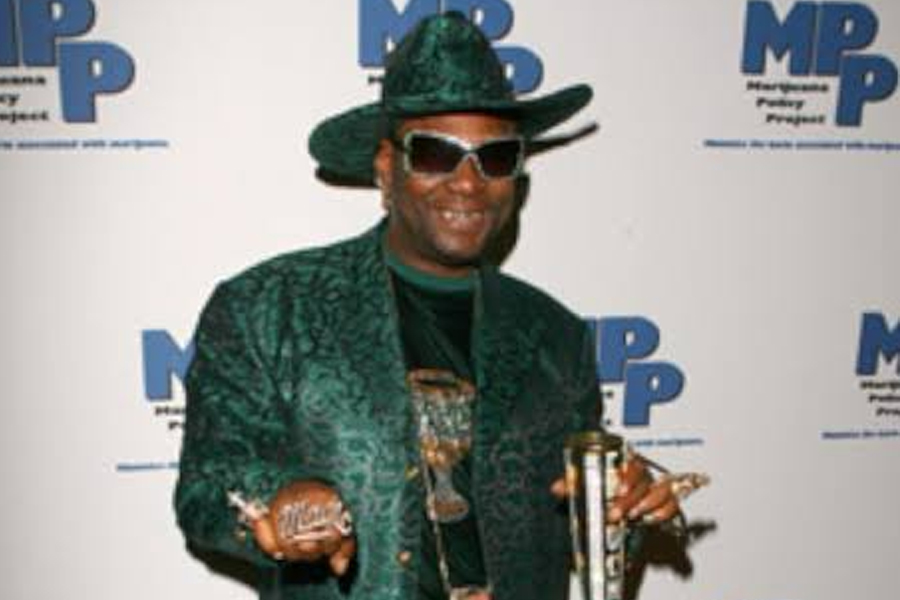
He later became famous as Don Magic Juan, a flamboyant figure associated with pimp culture, elaborate clothing, luxury cars, jewelry, and the Players Ball. Yet his life eventually took a dramatic turn. In 1985, he described experiencing a powerful religious conversion that caused him to leave pimping and enter Christian ministry.
That transformation became the defining tension of his public identity. The same man known for green-and-gold suits and the street philosophy of the “game” became a preacher, spiritual adviser, entertainer, and familiar personality within hip-hop.
Today, Bishop Magic Don Juan occupies a rare space between Chicago street history, gospel, fashion, comedy, film, and rap culture.
Childhood and Parents
Donald Campbell was raised as one of eight children in Chicago. His childhood was strongly influenced by his mother, Maggie Campbell, who was a devoted churchgoer and consistently encouraged her son to remain connected to faith.
Maggie reportedly left Bibles for him and continued treating him affectionately as her baby even after he became an adult and internationally recognizable personality. Her influence is especially interesting when viewed against the direction his early life eventually took.
His father, Levy Bryant, represented another side of the family’s story. Bryant operated a soul food restaurant near Madison and Ashland, owned buildings, and drove an impressive Buick. Campbell later remembered him as a man who demonstrated entrepreneurship and the importance of presenting oneself well.
Bryant died in 1963 from a blood clot, when Donald was still a child. That loss became one of the early events in a life filled with major changes.
His Sister Ann Bromfield and Family History
Among Bishop Magic Don Juan’s siblings, his older sister Ann Bromfield holds an especially important place in his public story.
Bromfield co-authored his 1994 autobiography, From Pimp Stick to Pulpit: The Life Story of Don Magic Juan. Her involvement was more than simply helping write a book. She had reportedly kept notes and diary-like records about her brother’s life since the early 1970s.
Those records helped preserve details from a period when Donald Campbell was developing the Don Magic Juan persona and becoming increasingly well known around Chicago.
He has also spoken about other siblings over the years, including brothers whom he later lost. However, detailed information about most of his brothers and sisters remains limited. The family has generally stayed much quieter than Bishop Magic Don Juan himself.
Marriage and Children
Bishop Magic Don Juan’s family life began relatively early. He was married in the late 1960s to a woman identified as Mary Lou in the acknowledgments of his autobiography.
During those early years, he became a father. Public accounts mention children including a son known as Whoopie and a daughter called Dutchie.
His family eventually became much larger. He has repeatedly described himself as having around 24 children, sometimes saying he has a couple dozen children and acknowledging that there may be additional children he does not know personally.
He has characterized himself as a “rolling stone,” a phrase that reflects the complicated family structure created during his years in the street lifestyle.
One son, Don Jr., was described around 2000 as a real estate agent in his 30s and as someone who collected memorabilia connected to his father.
Beyond these scattered details, the private lives of his children are not extensively documented. That distinction matters because Bishop Magic Don Juan has been highly public while many of his family members have chosen a quieter existence.
Entering the Pimping Lifestyle
At approximately 16 years old, Campbell entered the pimping lifestyle. He was influenced by people around him, the writings of Iceberg Slim, and popular films such as Super Fly.
Chicago’s West Side became his stage.
He developed a recognizable persona around Madison Street, eventually becoming known for his distinctive clothing, women, cars, jewelry, and theatrical personality. His record store, Don Juan’s Music World, also became associated with his activities.
The green-and-gold color combination became part of his identity. His famous phrase, “Green is for the money, gold is for the honeys,” effectively turned his wardrobe into a personal brand.
His image was never simply about clothing. It represented status, confidence, money, and visibility.
The Birth of the Players Ball
In approximately 1974, Bishop Magic Don Juan established the Players Ball. What began partly as a birthday celebration developed into a much larger gathering associated with pimps, players, entrepreneurs, entertainers, and people fascinated by the culture.
The Ball became a theatrical display of fashion and personality.
Fur coats, extravagant hats, custom suits, jewelry, luxury vehicles, colorful shoes, and elaborate accessories filled the scene. Competitions such as Pimp of the Year added another layer of status and recognition.
Bishop Magic Don Juan reportedly won Pimp of the Year numerous times, with some accounts placing the number as high as 13 consecutive years.
For me, the most interesting part of the Players Ball is how it eventually escaped the boundaries of its original subculture. It became a cultural meeting point where street mythology collided with music, fashion, comedy, and Hollywood.
The 1985 Religious Transformation
The most dramatic chapter in his biography arrived in 1985.
While in Hollywood and using PCP, marijuana, and alcohol, Bishop Magic Don Juan described experiencing a profound religious vision. Whatever one makes of the circumstances, he regarded the experience as a genuine spiritual awakening.
He said he quit pimping immediately.
The women who had worked for him were freed, and he redirected his attention toward Christianity and ministry. The transformation was so dramatic that his own nickname, “From Pimp Stick to Pulpit,” became an accurate summary of his journey.
He was eventually ordained by F. L. Johnson of the Christian Ministers Congress Non-Denominational Council and studied at Moody Bible Institute through night school.
Ministry and the Magic World Christian Kingdom Church
He established the Magic World Christian Kingdom Church of the Royal Family in the Austin neighborhood of Chicago in 1989.
People on the periphery of society were a major focus of the ministry. He worked with individuals who were frequently disregarded by conventional institutions and performed funerals for victims of drug abuse and violence.
He took an unusual approach.
He did not quite give up on his colorful look. Rather, he used vibrant apparel, jewelry, caps, and his exuberant personality to interact with others.
To support the church, he allegedly sold jewels and cars at different times. He also made an unsuccessful run for alderman in Chicago’s 29th Ward around 1991.
By about 1993, he had shifted his focus from running a traditional physical church to street ministry.
From Preacher to Hip Hop Personality
Bishop Magic Don Juan’s second transformation was almost as surprising as the first.
He became deeply connected with hip-hop and entertainment, particularly through his friendship with Snoop Dogg. The two met backstage at the Soul Train Awards, and their relationship eventually developed into a long-running friendship.
Snoop has publicly described Don Magic Juan as a spiritual adviser and credited him with influencing his thinking and lifestyle.
That connection helped introduce Bishop Magic Don Juan to a younger generation that knew little about his Chicago history but recognized the larger-than-life character appearing beside major rappers and celebrities.
His associations have extended to entertainers including Mike Tyson, Sean Combs, Lil Kim, Mariah Carey, Gina Gershon, and others.
Film Television and Music Career
His entertainment career has included appearances in documentaries, films, television programs, and music projects.
He appeared in American Pimp in 1999 and later appeared in films including Friday After Next, Old School, S.W.A.T., and Starsky & Hutch.
He also appeared on programs such as The Daily Show, Behind the Music, Viva La Bam, Flavor of Love, and Black-ish.
His music connections became another part of his unusual second act. He contributed spoken material and appearances to projects involving Snoop Dogg, Wiz Khalifa, 50 Cent, Twista, Da Brat, and others.
In 2006, he released the compilation Green Is for the Money, Gold Is for the Honeys, bringing his signature philosophy directly into the music world.
The Players Ball and Hip Hop Culture
The Players Ball developed a cultural life of its own.
OutKast’s 1993 song “Player’s Ball” helped cement the phrase in hip-hop history and connected the idea of the player with Southern rap’s emerging identity. The flamboyant aesthetic associated with pimp culture also appeared repeatedly in music videos, stage performances, comedy, and fashion.
The influence was not always celebratory. Shows such as Chappelle’s Show later transformed the concept into satire through the famous “Playa Haters’ Ball.”
That evolution tells me something important about the Players Ball. It became larger than its original purpose. It could be treated as history, fashion spectacle, comedy, mythology, entertainment, or controversy depending on who was looking at it.
Family Legacy and Private Life
Despite his public career, Bishop Magic Don Juan has never offered the world a complete map of his family.
His mother Maggie remains one of the clearest personal influences in his story. His father Levy Bryant represents an early example of entrepreneurship. His sister Ann Bromfield helped preserve his history through years of notes and eventually his autobiography.
His children form a much larger but less visible part of his legacy.
He has acknowledged having around 24 children, but individual information about most of them remains private or difficult to verify. That privacy contrasts sharply with his public persona, which has always welcomed attention.
For a man who spent decades performing a larger-than-life character, protecting parts of his family story may be one of the few ways he has maintained a boundary between Bishop Magic Don Juan and Donald Campbell.
Recent Years and Continuing Influence
Bishop Magic Don Juan continued to be involved in interviews, podcasts, entertainment appearances, ministry, and Players Ball events by the middle of the 2020s.
Rather than being just celebrity rumors, his narrative is being reexamined more and more as cultural history. His Chicago childhood, his children, his conversion, his relationship with Snoop Dogg, and the development of the Players Ball have all been covered in podcasts and in-depth interviews.
His legacy also received fresh attention during the Players Ball’s 50th anniversary period. In recognition of his unique journey from Chicago’s West Side to global hip-hop culture, Snoop Dogg and his spouse gave him a lifetime achievement award.
His trademark gold and green are still instantly identifiable. They serve as a link between his past as Don Magic Juan and his current identity as Bishop, much like a flag from a different age.
Bishop Magic Don Juan Net Worth and Finances
Reported estimates have placed his net worth at approximately $300,000, although his finances are not publicly documented in the detail available for major corporate entertainers.
His earlier lifestyle involved substantial spending on cars, jewelry, clothing, and luxury experiences. Later, his priorities shifted toward ministry, entertainment, appearances, events, and cultural projects.
His financial story therefore reflects the larger transformation of his life. He moved from pursuing wealth through the street economy to building a public identity around preaching, media, fashion, and entertainment.
FAQ
Who is Bishop Magic Don Juan?
Bishop Magic Don Juan is the professional name of Donald Campbell, a Chicago born preacher, former pimp, actor, fashion personality, and hip-hop cultural figure.
When was Bishop Magic Don Juan born?
He was born on November 30, 1950, in Chicago, Illinois.
Who were Bishop Magic Don Juan’s parents?
His mother was Maggie Campbell, a devoted churchgoer, and his father was Levy Bryant, who operated a soul food restaurant and owned property in Chicago.
How many siblings does Bishop Magic Don Juan have?
He was one of eight children. His older sister Ann Bromfield became particularly important to his biography because she helped write his 1994 autobiography.
Who is Ann Bromfield?
Ann Bromfield is Bishop Magic Don Juan’s older sister and the co-author of From Pimp Stick to Pulpit. She reportedly kept notes about his life for years before helping document his story.
How many children does Bishop Magic Don Juan have?
He has publicly said that he has around 24 children, although the exact number and complete family roster have never been clearly documented.
Who is Don Magic Juan’s wife?
He was married in the late 1960s to a woman identified as Mary Lou. No prominent current spouse is widely documented.
When did Bishop Magic Don Juan stop pimping?
He left pimping in 1985 after describing a powerful religious conversion experience in Hollywood.
What is the Players Ball?
The Players Ball is an event founded by Bishop Magic Don Juan in Chicago around 1974 that developed into a major gathering associated with pimp culture, fashion, entertainment, awards, and eventually hip-hop.
How is Snoop Dogg connected to Bishop Magic Don Juan?
Snoop Dogg has maintained a long friendship with Bishop Magic Don Juan and has publicly described him as a spiritual adviser and influential figure.
What movies has Bishop Magic Don Juan appeared in?
His film appearances include American Pimp, Friday After Next, Old School, S.W.A.T., and Starsky & Hutch, among others.
What is Bishop Magic Don Juan’s real name?
His birth name is Donald Campbell.
Why is Bishop Magic Don Juan important to hip hop culture?
His influence comes from the Players Ball, his distinctive fashion, his relationships with major entertainers, his appearances in music and film, and his role in preserving a particular chapter of Chicago street culture within mainstream entertainment.